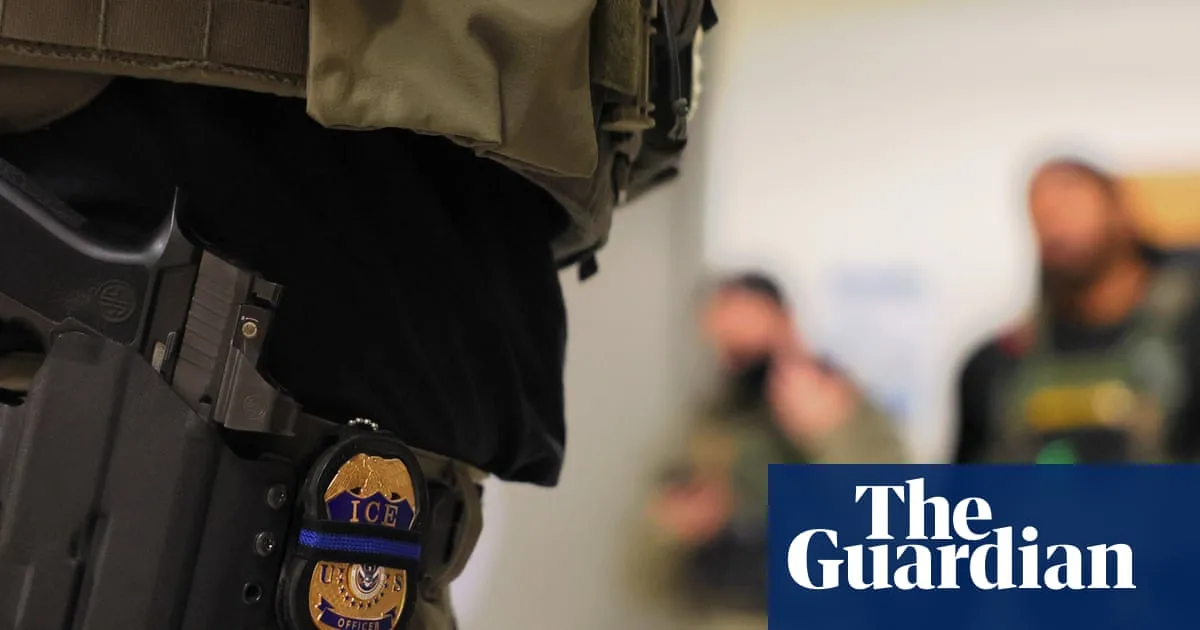
Trump's Immigration Crackdown Death Toll Rises Amid Minneapolis Unrest
Trump Immigration Crackdown Deaths Mount in Minneapolis

Trump's Immigration Crackdown Death Toll Rises Amid Minneapolis Unrest

The fatal shooting of a man in Minneapolis on Saturday has intensified scrutiny of President Donald Trump's aggressive immigration enforcement push, adding to a mounting death toll that includes at least six immigrants who have died in federal detention this month alone. This incident represents one of five shootings involving federal immigration agents during January operations, marking an unusually rapid pace of fatalities linked to the administration's crackdown.

Minneapolis Becomes Flashpoint for Enforcement Operations

Minneapolis has emerged as the central focus of the Republican president's immigration enforcement efforts this month, with approximately 3,000 federal agents deployed to the area. Despite sub-zero temperatures, thousands of protesters took to the streets on Friday to voice opposition to what Minnesota officials have described as an occupation, demanding the withdrawal of federal personnel from their communities.

The Trump administration is dramatically escalating immigration enforcement with a historic $170 billion budget allocated to immigration agencies through September 2029. While President Trump has defended the militarized operations as necessary to remove criminals from the United States, records indicate that many individuals arrested have been detained solely for possible civil immigration violations—the legal equivalent of traffic infractions.

Controversial Fatal Shootings Under Investigation

The man killed in Minneapolis on Saturday has been identified in news reports as Alex Pretti, a 37-year-old registered nurse and lawfully permitted gun owner who was a United States citizen. The Department of Homeland Security stated that a Border Patrol agent fired at Pretti after he resisted agents' attempts to disarm him, but local leaders have challenged this official account.

Bystander videos verified by Reuters show agents pepper-spraying Pretti and other protesters as he films them with his cellphone. No weapon is visible in the footage. After multiple agents wrestle him to the ground, one draws his weapon and multiple gunshots can be heard. This shooting followed the earlier death of Minnesota woman Renee Good this month, when U.S. Immigration and Customs Enforcement officer Jonathan Ross fired into her vehicle.

Within hours of that incident, Homeland Security Secretary Kristi Noem labeled Good a domestic terrorist who allegedly attempted to ram the ICE officer with her car, though the department has not presented evidence linking her to terrorism. Video evidence shows Ross fired as Good's vehicle moved past him.

Additional January Shootings Across Multiple States

Federal agents have been involved in three other shootings this month during immigration enforcement actions. The day after Good's death, a U.S. Border Patrol agent shot and wounded a Venezuelan man and woman in Portland, Oregon, during what DHS described as a targeted vehicle stop.

The Department of Homeland Security stated that the driver, Venezuelan immigrant Luis Nino-Moncada, attempted to run over agents before the shooting occurred, wounding both Nino-Moncada and his passenger, Yorlenys Zambrano-Contreras. The Justice Department subsequently charged Nino-Moncada with assaulting an officer, while Zambrano-Contreras pleaded guilty this week to entering the United States illegally in 2023.

On January 15, an ICE agent shot Julio Cesar Sosa-Celis in the leg in Minneapolis after DHS claimed he fled authorities. According to their initial statement, Sosa-Celis—a Venezuelan immigrant—and two other men struck an officer with a snow shovel and broom handle, prompting the shooting. However, court documents unsealed this week presented a different narrative, with an FBI affidavit revealing that ICE officers had scanned a license plate registered to a different person suspected of an immigration violation, leading them to chase the wrong individual before the alleged assault and shooting occurred.

Alarming Rise in Immigration Detention Deaths

At least six people have died in ICE detention centers since the beginning of 2026, following a two-decade high of at least thirty deaths in ICE custody last year. The death of Cuban immigrant Geraldo Lunas Campos has attracted particular scrutiny after federal authorities provided conflicting accounts of the circumstances.

ICE initially stated that Lunas died on January 3 at a Trump-era detention camp located on a United States military base in Texas after experiencing medical distress. Following a Washington Post report indicating the death would likely be classified as a homicide by the El Paso County medical examiner, DHS issued a revised statement claiming Lunas attempted suicide before resisting security officers and subsequently dying.

The medical examiner's report released this week determined the death was a homicide resulting from asphyxia due to neck and torso compression, according to the Post's coverage. On January 14, two additional immigrant detainees died: a Nicaraguan man found unresponsive at the military base site—known as East Camp Montana—and a Mexican man found unresponsive in a Georgia detention center.

Both deaths remain under investigation, though ICE has stated the Nicaraguan man, Victor Manuel Diaz, was presumed to have committed suicide. Other deaths occurred in Houston, Philadelphia, and Indio, California, according to ICE records.

President Trump has increased immigration detention to record levels, with 69,000 individuals held as of early January according to ICE statistics. The figures reveal that approximately forty-three percent of detainees picked up by ICE had no criminal charge or conviction, highlighting the broad scope of the enforcement operations.




