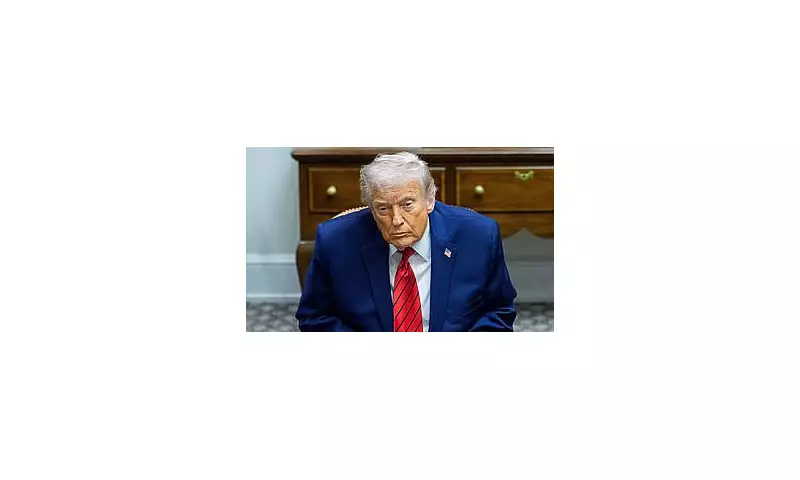
President Donald Trump has significantly widened the scope of his controversial travel ban, adding five new countries to the list in the wake of a fatal shooting involving the National Guard. The move marks a major escalation of a signature policy from his first term in office.
New Nations Face Full Travel Prohibition
The administration announced on Tuesday that citizens from Burkina Faso, Mali, Niger, South Sudan, and Syria will now face a complete ban on travel to the United States. This brings the total number of nations subject to full restrictions to 37, a list that is predominantly made up of African and Middle Eastern countries.
In a further expansion, the White House is imposing partial travel restrictions on an additional 15 countries. Travellers from Angola, Antigua and Barbuda, Benin, Côte d’Ivoire, Dominica, Gabon, Gambia, Malawi, Mauritania, Nigeria, Senegal, Tanzania, Tonga, Zambia, and Zimbabwe will face new limitations on entering the US.
Policy Resurrected and Expanded After Attack
This decisive action follows a pledge from the Trump administration to toughen American border security after a tragic incident over the Thanksgiving weekend. Two soldiers were shot in Washington, DC, an attack that has been directly linked to this policy shift.
Specialist Sarah Beckstrom, aged 20, was killed in the shooting. An Afghan immigrant has been charged with her murder. Staff Sergeant Andrew Wolfe, 24, was also seriously injured and remains in hospital, where he is undergoing rehabilitation after time in intensive care.
A Return to a Hallmark First-Term Policy
The latest expansion resurrects and broadens a key element of President Trump's initial immigration agenda. Back in June, he reinstated the ban, initially barring visitors from 12 countries and imposing heightened restrictions on those from seven others.
The original list included: Afghanistan, Myanmar, Chad, the Republic of Congo, Equatorial Guinea, Eritrea, Haiti, Iran, Libya, Somalia, Sudan, and Yemen. Tougher restrictions were also applied to visitors from Burundi, Cuba, Laos, Sierra Leone, Togo, Turkmenistan, and Venezuela.
The administration frames the sweeping measures as essential for national security, arguing they are a necessary response to threats and deficiencies in foreign nations' vetting procedures. Critics, however, condemn the policy as discriminatory and argue it does little to address genuine security concerns while damaging America's global standing.