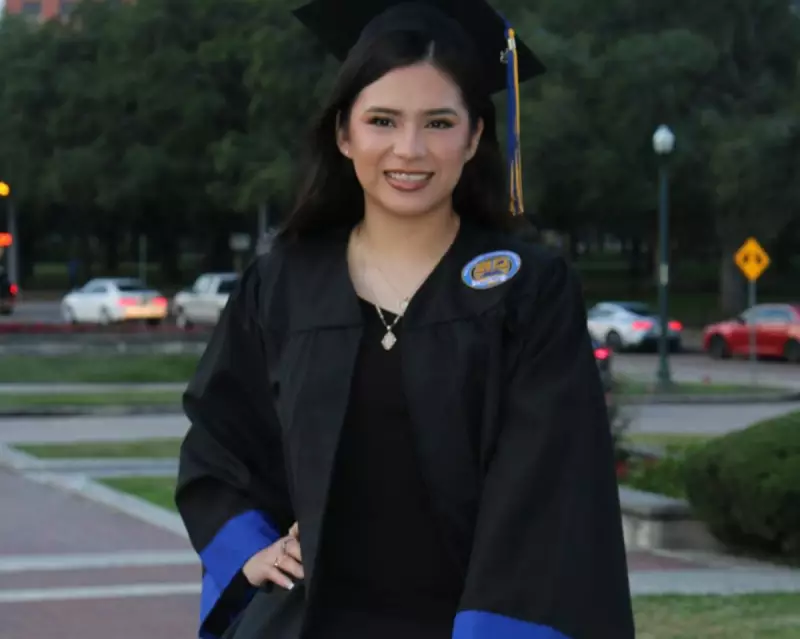
A 19-year-old university student's journey home for a Thanksgiving surprise turned into a nightmare when she was detained and deported to Honduras, a country she fled as a young child, in a move her legal team alleges violated a federal court order.
Thanksgiving Trip Ends in Handcuffs
Any Lucia López Belloza, a business student at Babson College near Boston, had not seen her family in Austin, Texas, since starting her first semester in August. A family friend gifted her plane tickets for a surprise Thanksgiving reunion. However, her plans unravelled at Boston airport on 20 November. After being told of an "error" with her boarding pass, she was met at customer service by what she believed were two Immigration and Customs Enforcement (ICE) agents, who handcuffed and arrested her.
"I thought: 'I was travelling to surprise my parents for Thanksgiving, and now the surprise will be that I won’t be there,'" López told the Guardian.
A Swift Deportation Defying a Judge's Order
After a phone call to her frantic parents, who secured a lawyer, a federal judge issued an emergency order on 21 November. This order barred her removal from the United States for at least 72 hours to allow for a case review. Despite this legal intervention, the following morning, López was shackled at her wrists, ankles, and waist and put on a flight to Honduras. She had left the Central American nation at the age of seven and has virtually no memory of it.
Her deportation on 22 November, less than 48 hours after her initial detention, has sparked international outcry. Her lawyer, Boston-based Todd Pomerleau, described the process as an "unconstitutional horror show."
"She wasn’t told why she was detained," Pomerleau stated. "She was shackled like she was some type of hardened criminal, and then deported to Honduras with no opportunity to have a court hearing or even talk to an attorney."
Life in Limbo Amidst Honduran Turmoil
López now finds herself in San Pedro Sula, Honduras's second-largest city, staying with her grandparents. The city she left as a child was, in 2014, considered the murder capital of the world. Her former neighbourhood, La Pradera, was one of its most violent districts.
Social scientist Elizabeth G Kennedy, who researches deportees in Central America, noted that gangs had forced multiple families to flee La Pradera. She highlighted the particular dangers for young women in Honduras, where gang violence is a main driver of femicides. "And now you have a young woman back in a country where it’s very dangerous to be a young woman, who was given no due process rights in the US," Kennedy added.
The Department of Homeland Security (DHS) stated that López, described as "an illegal alien," was arrested because she "entered the country in 2014 and an immigration judge ordered her removed from the country in 2015." A DHS spokesperson claimed she had "illegally stayed in the country since."
Pomerleau contests this, arguing neither he nor his client has ever been shown the removal order. He further claims that even if it exists, federal law typically limits enforcement arrests to a 90-day window after such an order is issued—"not 10 years later." He also emphasised that López has no criminal record.
Babson College has issued a statement addressing her case, confirming that "our focus remains on supporting the student and their family."
López, meanwhile, is trying to remain positive. "I want to be able to move forward and maybe continue my studies, whether here [in Honduras] or by finishing my semester at the university," she said. "What happened to me isn’t fair, because we went there to study and work hard, to move forward in pursuit of that American dream so many of us had."
Her legal team is now awaiting an official explanation from the US government as to why the emergency court order was disregarded. "We’re not stopping until we get her back," Pomerleau vowed.