
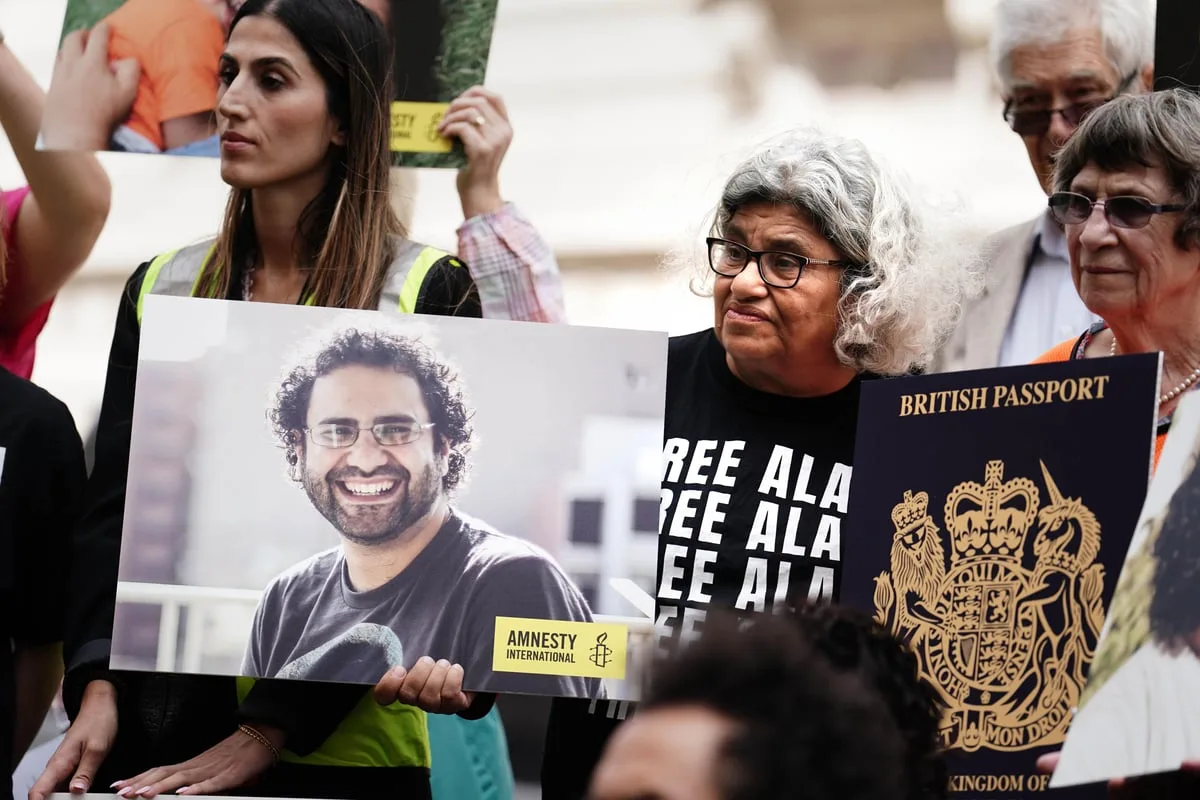
Reform UK has said the Conservatives “cannot be trusted” after the decision to grant Alaa Abd El-Fattah British citizenship. The activist, recently released after years of detention in Egypt, previously wrote tweets that appeared to show him calling for violence against Zionists and the police.
Mr Abd El-Fattah was granted UK citizenship in December 2021 under former Conservative prime minister Boris Johnson, reportedly through his UK-born mother. He has since apologised for the posts, saying he understood “how shocking and hurtful” his previous comments were.
Conservative shadow home secretary Chris Philp labelled the statement an “insincere apology” and called for Shabana Mahmood to strip Mr Abd El-Fattah of his citizenship. Speaking to Times Radio, Mr Philp said: “I don’t know whether ministers at the time were sighted on the individual facts of this case. All I can do is speak for what I know today, and that is that if I were home secretary today, I’d be revoking his citizenship and deporting him.”
A Reform UK spokesman said: “Alaa Abd El-Fattah was granted British citizenship in 2021 by Boris Johnson’s government. Liz Truss and James Cleverly both personally intervened on his case. Kemi Badenoch was minister of state for local government, faith and communities when Alaa Abd El-Fattah was granted citizenship. The current Tory shadow national security minister said she was ‘relieved’ this man was pardoned three months ago, and even now says all he must do is ‘apologise’. She is still the Tory shadow national security minister. The Tories would let in countless more like him given the chance. The Conservatives cannot be trusted.”
Alicia Kearns, the Conservative shadow national security minister, wrote on social media site X last September she was “relieved” by his pardon, adding: “His release is long overdue, and I pay tribute to his mother and sister who have fought non-stop to get him free.” In a post on Sunday, she said campaigners who supported his release “plainly were not aware of his grotesque tweets”, and that she felt “deeply let down and frankly betrayed”. She said it was “wholly improper for British citizens to be detained without due process by foreign states, however, Alaa must unequivocally apologise and make clear he now wholly rejects the hatred and antisemitism he expressed which is so wholly incompatible with British values”.
Mr Abd El-Fattah was imprisoned in Egypt on charges of spreading false news, in a process branded a breach of international law by UN investigators. He was pardoned by Egyptian president Abdel Fattah el-Sisi in September following years of lobbying by Conservative and Labour governments, and flew to the UK on Boxing Day. In his statement, he said: “I unequivocally apologise. (The posts) were mostly expressions of a young man’s anger and frustrations in a time of regional crises (the wars on Iraq, on Lebanon and Gaza), and the rise of police brutality against Egyptian youth. I particularly regret some that were written as part of online insult battles with the total disregard for how they read to other people. I should have known better.”




