A significant shift in American public opinion is emerging around immigration enforcement, with a new national poll finding that a majority now believes President Trump's aggressive deportation push has crossed a line.
Public Sentiment Turns Against ICE Presence
The survey, conducted in the wake of a fatal incident in Minneapolis, indicates that 51% of U.S. citizens believe the presence of Immigration and Customs Enforcement (ICE) agents in American cities has a negative impact. This finding directly challenges the administration's stance that such deployments enhance public safety.
The poll was commissioned following the controversial shooting of Venezuelan immigrant Renee Nicole Goodon by ICE agent Jonathan Ross in Minneapolis. A matching 51% of respondents deemed the use of force in that case to be inappropriate. The incident has become a flashpoint in the national debate over immigration enforcement tactics.
Minneapolis Incident Fuels Growing Concern
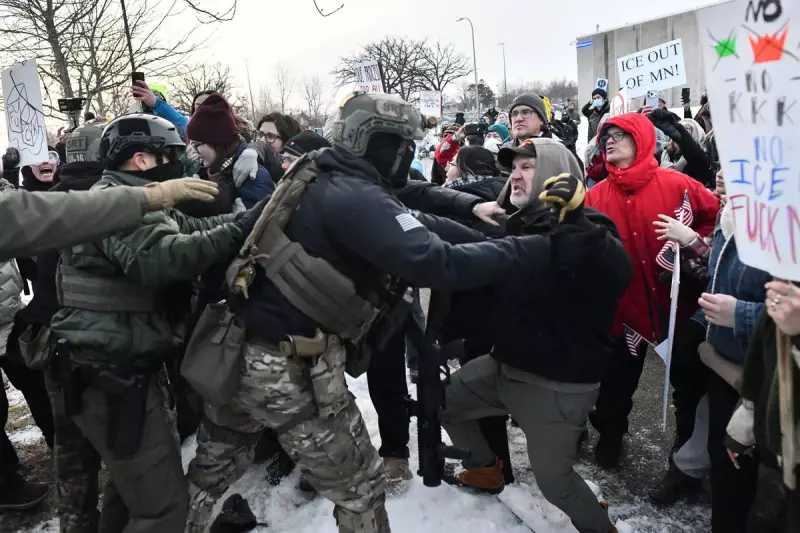
Tensions in Minneapolis remained high after the Goodon shooting, leading to ongoing demonstrations against ICE. During these protests, another man was shot and wounded by a federal immigration agent, further inflaming local sentiment and drawing national scrutiny to the conduct of federal officers.
The research also uncovered a broader anxiety about the government's handling of dissent. It found that 47% of Americans are more concerned about the federal response to protests than the protests themselves, suggesting unease with perceived heavy-handed tactics from authorities.
Majority View: Deportation Push Has 'Gone Too Far'
The most striking result centres on the overarching immigration policy. The poll reveals that 52% of Americans now believe the president's deportation drive has 'gone too far'. This marks a notable increase from a previous survey where 45% held that view, signalling a growing public unease with the scale and intensity of the administration's efforts.
This data, collected on Thursday 15 January 2026, paints a picture of a nation increasingly questioning the methods and scope of its immigration enforcement. The events in Minneapolis appear to have acted as a catalyst, crystallising doubts held by a slim but clear majority of the public. The findings suggest that the political landscape surrounding immigration is becoming more complex, even as the administration continues its stated mission.