
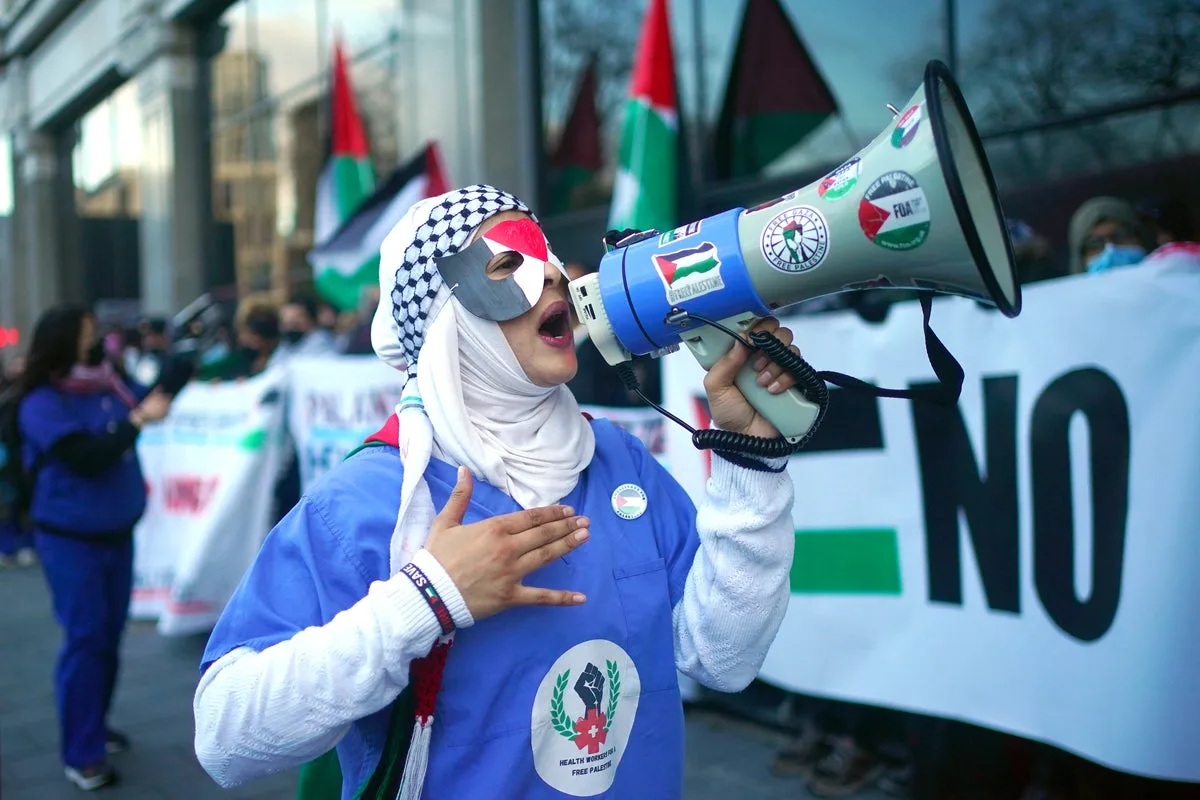
NHS staff should not wear political symbols such as badges supporting Palestine or Israel on their uniforms, according to a review into antisemitism in the health service. Lord John Mann, who led the eight-month examination, also said staff should not wear uniforms to political marches.
Speaking on BBC Radio 4's Today programme, Lord Mann said: 'If we take the example of a dentist, if I’m in the dentist’s chair and the dentist’s about to drill my teeth, I don’t expect my dentist to be wearing an “I love Palestine” badge, or indeed an “I love Israel” badge on their uniform.' He added that it would be for the NHS to decide what constitutes a political symbol.
The review found that some Jewish NHS staff have felt the need to hide their religious identity. Recommendations published on Thursday include improved reporting of racist incidents, updated equality and diversity training to include antisemitism and anti-Muslim hostility, and clear leadership across NHS trusts.
Lord Mann said: 'Jewish people have to be confident that they will receive the same treatment as everyone else... If people feel, as they do, that some have to hide their identity as patients or suffer in silence as staff, then the universality of the NHS is fundamentally breached.'
The review has been welcomed by the Royal College of Nursing. General secretary Nicola Ranger said: 'Today's renewed focus on tackling antisemitism and all forms of racism in the NHS is much needed.' Dean Royles, interim chief executive of NHS Employers, said the review 'reveals beyond any doubt that antisemitism and other forms of racism in the NHS are rising'.




