Minneapolis Council Member Vows to Resist ICE Amid Community Trauma
In the wake of a fatal shooting by federal immigration agents, Minneapolis city council member Aisha Chughtai has issued a powerful call for resistance against what she describes as a devastating federal crackdown. Chughtai, who represents the district where 37-year-old nurse Alex Pretti was killed, spoke of the profound despair gripping her community while vowing that their spirit remains unbroken.
A Community Under Siege
The incident occurred on Saturday when federal agents shot and killed Alex Pretti in south Minneapolis, marking the second such killing in the area this year. Chughtai arrived at the scene just four blocks from her home as an ambulance was transporting Pretti away. What followed was a harrowing display of federal force that has become all too familiar to residents of this immigrant-rich neighborhood.
"There have been three homicides in Minneapolis, and two of them have been perpetrated by ICE," Chughtai stated bluntly. "The number one deadly killer of Minneapolitans right now is ICE."
She described watching dozens of federal agents deploy chemicals liberally into crowds of residents, with teargas filling nearby apartment buildings and businesses. Agents tackled people on sidewalks and made violent arrests while preventing residents from moving freely through their own neighborhood.
Daily Fear and Resilience
For more than a month, south Minneapolis has endured what Chughtai characterizes as a campaign of destruction against the state's largest immigrant community. Federal agents roam the area daily, attempting to detain immigrants while arresting or deploying chemicals against those who try to protect their neighbors.
The psychological toll has been immense. "There's so much fear and grief, despair, anger, pain in our community," Chughtai explained. "So many folks are afraid of being in their homes, of leaving their homes, because they don't know if that will be the last time they ever see their loved ones."
Despite this atmosphere of terror, Minneapolis residents continue to demonstrate remarkable resilience. "Our spirit can't be broken here," Chughtai declared. "We're going to continue to show up for our neighbors."
Political Response and Community Action
As a local official, Chughtai is pursuing multiple avenues of response. She is pushing for local leaders to arrest and hold accountable those responsible for killing both Alex Pretti and Renee Good, another victim of federal violence. Along with the rest of the city council, she is calling on Minnesota Governor Tim Walz to declare a state of emergency and implement an eviction moratorium.
This housing protection is particularly crucial in her district, where approximately 80% of residents are renters, mirroring broader trends across Minneapolis. "We want to do every single thing we can to keep people safe in their homes and unified with their families," she emphasized.
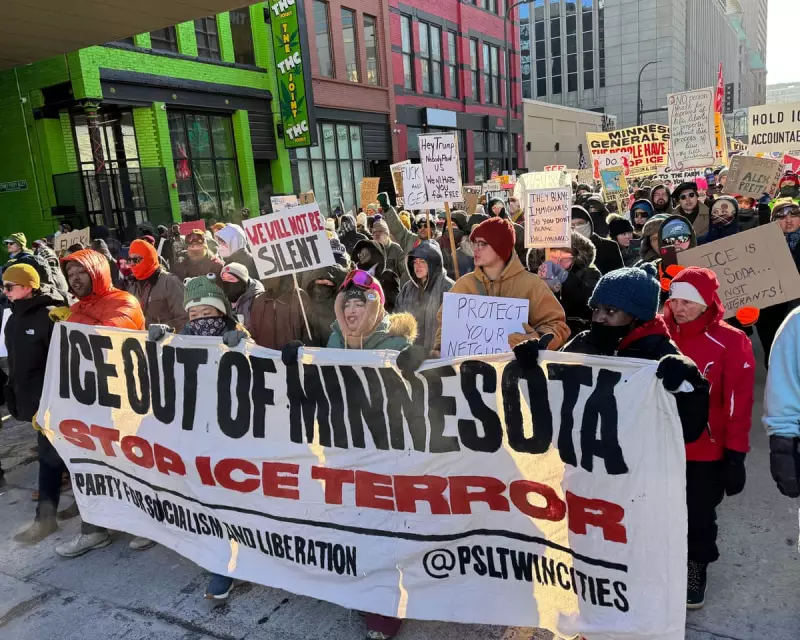
Chughtai urged Minneapolis residents to continue participating in neighborhood rapid response networks, pick up whistles, and receive training as legal observers. For those outside Minnesota, she emphasized the importance of amplifying accurate accounts of events on the ground and donating to local organizations providing assistance.
The Path Forward
"The only thing that's within our control as individuals right now is that we continue to show up, to resist, to be in the streets, to be in our neighborhoods," Chughtai asserted. "We must continue calling for ICE to leave our city, to leave our state. I think our state and local officials are unified in wanting to see that outcome, and we have to keep pushing until we get our city back, our state back."
Even if federal forces were to withdraw immediately—something the Trump administration has shown no indication of doing—the trauma inflicted on Minneapolis residents will have lasting effects. Children and adults alike have witnessed deaths, violence, and family separations that will require extensive recovery efforts.
Chughtai made clear that healing cannot begin until the federal presence ends. "I don't think that we can even begin to rebuild or recover from this grief and trauma that we've been experiencing now for two months until these people leave our state," she concluded, capturing both the urgency of the moment and the determination of a community refusing to be broken.