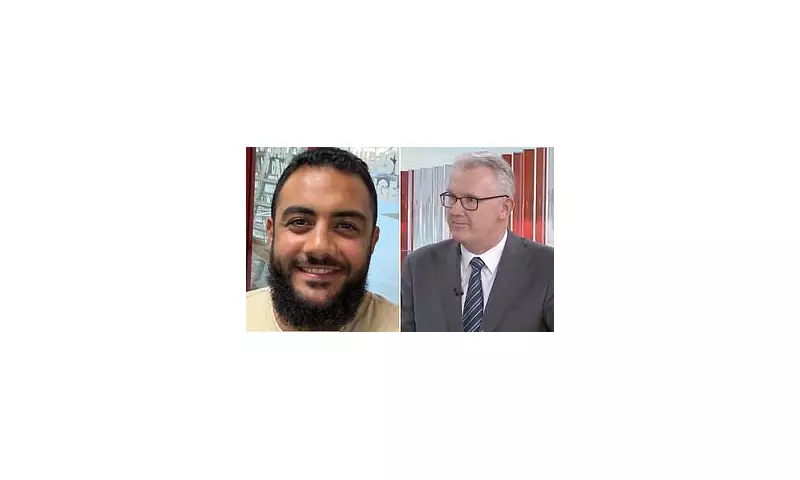
Home Affairs Minister Tony Burke has faced significant scrutiny after making an erroneous claim regarding the deportation status of a controversial religious figure during a television interview. The minister asserted that Sheik Ibrahim Dadoun, an Islamic preacher who publicly celebrated the October 7 terror attacks, had been removed from Australia, only for photographic evidence to contradict this statement shortly thereafter.
Television Interview Sparks Controversy
Appearing on Sky News on Tuesday afternoon, Minister Burke was discussing the Albanese Government's newly proposed anti-hate speech legislation and its potential implications for immigration policy. During the exchange, host Chris Kenny posed a hypothetical question: whether these new laws, if applied retrospectively to 2023, would have resulted in Sheik Ibrahim Dadoun being expelled from Australia for his inflammatory remarks.
Sheik Dadoun had notoriously praised the Hamas-led attack on Israel, which resulted in over a thousand fatalities, describing it as a 'day of courage' and expressing personal elation. In his response, Minister Burke confidently stated, 'I'm not in a position to give a legal opinion on everything but, as you know, we got him out of the country within a couple of days.' He further elaborated that for individuals on visas, the swiftest course of action is often to 'boot them and just get them out of Australia.'
Bunnings Photo Contradicts Minister's Assertion
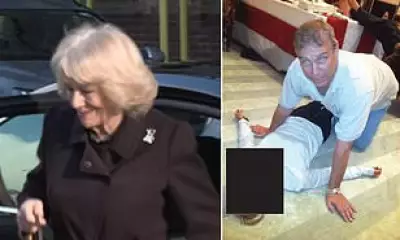
However, this claim was swiftly undermined when Sheik Dadoun shared a photograph on social media, taken just a week prior, showing him inside a Bunnings warehouse. The controversial preacher captioned the image, 'Sometimes when life gets a bit much, I go to Bunnings to de-stress. Yeah, I like tools and fixing things. Anyone else do the same?'
Sky News host Chris Kenny was quick to highlight the discrepancy, remarking that the 'minister obviously has no idea' about the actual situation. This revelation prompted immediate clarification from the minister's office regarding the confusion.
Clarification Points to Hearing Aid Misunderstanding
A spokeswoman for Minister Burke subsequently explained that the minister had misheard the name during the interview, confusing Sheik Ibrahim Dadoun with Khaled Beydoun. Beydoun, an American associate professor, indeed had his visitor visa revoked after making similar comments at a pro-Palestine rally in western Sydney, where he referred to October 7 as a day of 'considerable celebration.'
The spokeswoman attributed the error to the minister's hearing aid, noting that the two names 'sound very similar' and led to the mistaken identification. This clarification sought to contextualise the minister's incorrect statement, though it did little to mitigate the political embarrassment caused by the initial claim.
Broader Context of Anti-Hate Speech Legislation
During the same interview, Minister Burke addressed questions about whether hate preachers would face imprisonment under the proposed new laws. He affirmed, 'If they call for violence then yes,' while expressing governmental frustration that previous proposals lacked sufficient legal mechanisms to address rhetoric that falls just short of inciting violence.
The incident has sparked broader discussions about the accuracy of ministerial statements and the challenges of managing complex immigration and security issues. As the government advances its anti-hate speech agenda, this episode underscores the importance of precise information in public discourse.
Daily Mail has reached out to the Opposition for comment on the matter, though no response has been published at this time. The unfolding situation continues to attract attention, highlighting the delicate balance between free speech, national security, and governmental accountability in contemporary Australian politics.