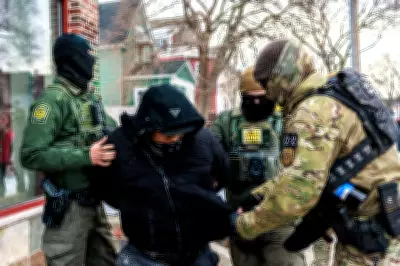
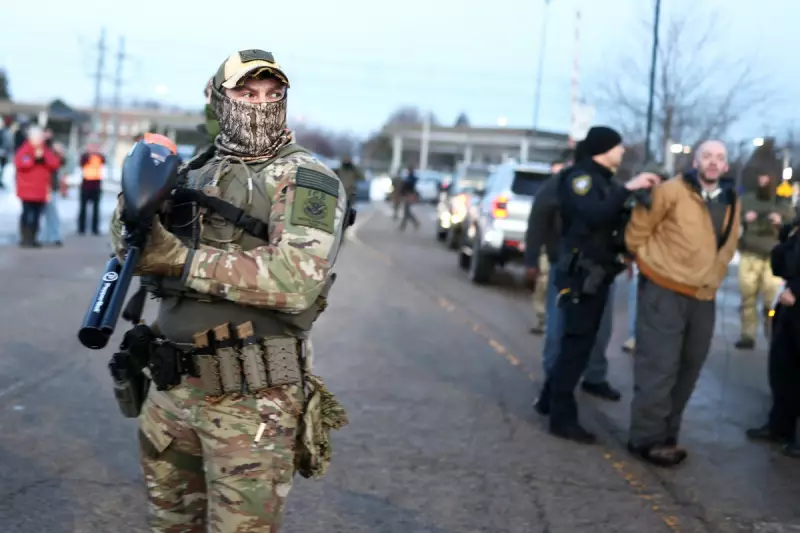
The US Department of Homeland Security has reignited a contentious legal debate by publicly reminding Immigration and Customs Enforcement officers they possess 'federal immunity' for actions taken in the line of duty. This move is widely seen as a defence of the ICE officer involved in the fatal shooting of 37-year-old Renee Good.
Administration's Immunity Assertion Faces Legal Scrutiny
In a social media post on Tuesday, DHS resurfaced a clip from October featuring Stephen Miller, the White House deputy chief of staff for policy. On Fox News, Miller stated, 'To all ICE officers: You have federal immunity in the conduct of your duties... no city official, no state official... can prevent you from fulfilling your legal obligations.'
This position was echoed last week by Vice President JD Vance, who told reporters the officer involved in Good's death has 'absolute immunity' from state investigation because he was engaged in federal law enforcement action.
However, constitutional law experts have strongly contested this interpretation. Michael J.Z. Mannheimer, a professor at Northern Kentucky University, told CNN the idea of absolute immunity for on-duty crimes is 'absolutely ridiculous.'
The Complex Legal Landscape of Federal Immunity
The legal principle at play often stems from the Supremacy Clause, which generally shields federal agents from state prosecution. Yet, this protection has clear limits. Emmanuel Mauleón, a University of Minnesota law professor, explained to TIME that immunity typically applies only when officers act within authorised, lawful duties.
In cases where actions violate state law or exceed official authority, prosecution remains possible. The challenge in the Good case, as noted by Mauleón, is that the federal government appears to be 'hampering the ability of the state to obtain critical evidence,' despite an open FBI investigation.
Separate from criminal liability is the doctrine of 'qualified immunity,' which protects officers from frivolous civil lawsuits. However, a pathway for charges exists under statutes covering 'deprivation of rights under colour of law,' used in the prosecution of Derek Chauvin for the murder of George Floyd. Former federal prosecutor Timothy Sini cautioned this is a 'very tough case,' requiring proof of willful intent to deprive rights.
DHS Use-of-Force Policy and Potential Avenues for Accountability
DHS policy permits force deemed 'objectively reasonable' to control subjects or in self-defence. While officers are instructed to avoid deadly force where possible, they may use it if they believe a subject poses an imminent threat of death or serious injury. The guidelines explicitly state: 'Deadly force shall not be used solely to prevent the escape of a fleeing subject,' unless that subject is believed to be a significant threat to others.
Legal experts suggest Good's family might explore civil actions, such as a Bivens claim or a suit under the Federal Tort Claims Act, to seek monetary damages from the federal government. As the debate continues, the administration's broad immunity claim sets a significant precedent for accountability in federal law enforcement operations.