
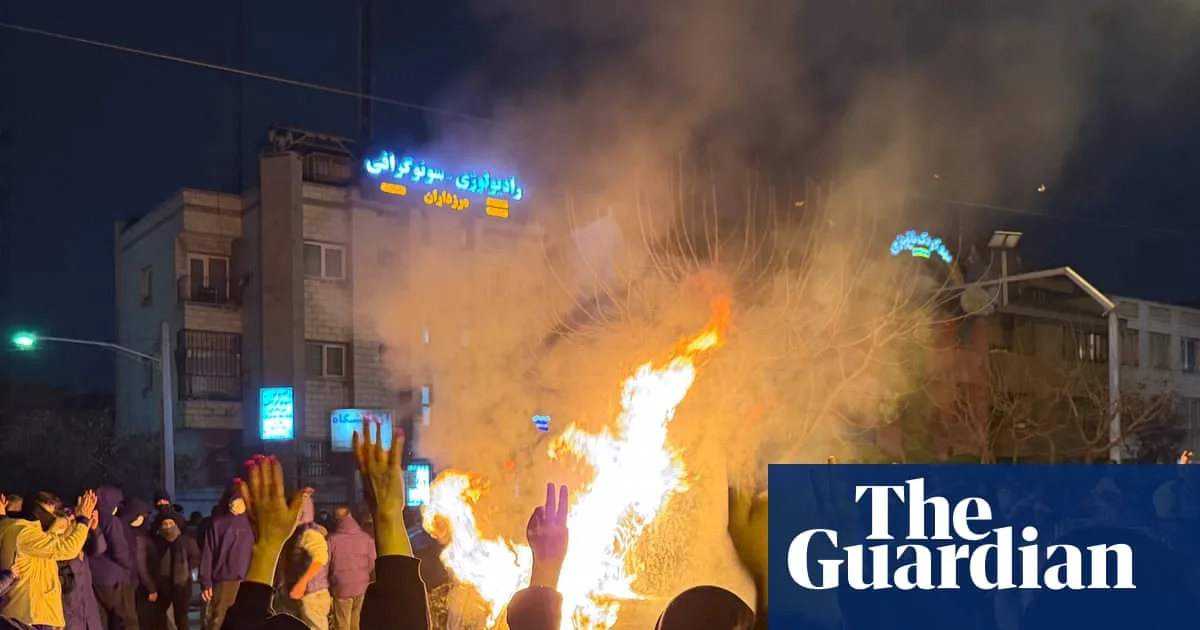
Payam, an Iranian Australian who left Iran at age 17 and now lives in Brisbane, received a call from his cousin last week with devastating news: his relative Eli had been killed during anti-government protests in Karaj, about 44km from Tehran. The regime had partially eased a communication blackout, allowing the call to get through.
According to Payam, Eli was standing next to her older sister during a protest on 8 January when she was shot dead. Another relative was required to open hundreds of body bags before she discovered the 39-year-old's body. 'She found her after 700 bodies,' Payam said, describing the ordeal as exhausting and heartbreaking.
Payam is among many members of Australia's Iranian community mourning loved ones killed in the regime's crackdown, but others have told Guardian Australia they are still waiting to hear from family due to the ongoing communication blackout. Footage from the Kahrizak forensic medicine centre in Tehran showed distressed families searching for relatives among body bags on the floor.
Eli's immediate family were given a choice: pay the equivalent of $9,000 to retrieve her body, or sign a form stating she was killed by civilians and not charged. Payam says they borrowed money to pay for the body. 'It’s really the anger and hate about the regime because they keep doing these things to people in Iran,' he said.
The protests, initially sparked by economic crisis, have widened into a broader anti-government movement. Payam's sisters, who still live in Iran, have been participating, and he says young people across the country want freedom and a better life. He now fears for his family and struggles to sleep, constantly checking the news.




