
At 6.15am, Jac Kovarik drives through south Minneapolis, scanning for federal immigration agents. The neighbourhood where Renee Good was killed by a federal officer has been eerily quiet, with bus stops empty of early shift workers. By 7am, only a few parents walk children to school, escorting neighbours' kids as well as their own, while volunteers with orange whistles watch for Immigration and Customs Enforcement (ICE) vehicles.
The Trump administration has mobilised 3,000 federal agents to Minnesota, outnumbering the Minneapolis police force five to one. Armed, masked agents have arrested people on commutes, at shops and outside churches. The Department of Homeland Security calls it the largest operation in its history. “Make no mistake, this is an occupation,” said Angela Conley, a Hennepin county commissioner.
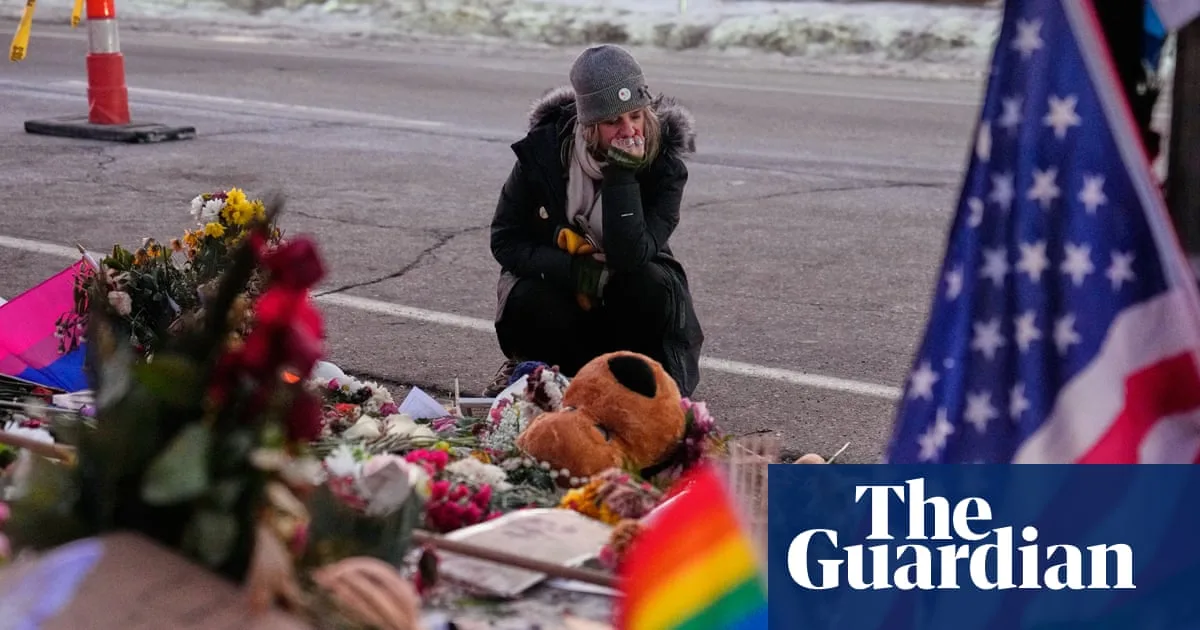
The operation has transformed the Twin Cities. “It’s affecting every aspect of daily life,” said Ryan Pérez of Copal, a nonprofit supporting Latine families. He was late to a meeting because ICE was outside his office on Tuesday; two immigrants and an observer were taken. Some agents have been operating since early December, with more deployed in January as the administration focused on Minnesota over high-profile fraud cases. Further mobilisation followed the killing of Renee Good, a US citizen, by an ICE agent.
Good’s killing spurred protests. President Trump threatened the Insurrection Act on Thursday, raising the prospect of sending troops to Minneapolis and St Paul. On Friday, the Department of Justice announced an investigation into Minnesota officials, including Governor Tim Walz and Mayor Jacob Frey, over an alleged conspiracy to impede federal agents. Rightwing influencers have also descended, amplifying xenophobic messages about Somalis and harassing businesses not connected to the fraud investigation.
Federal agents, who say they seek undocumented immigrants with criminal backgrounds, have used aggressive tactics to detain US citizens, legal residents and refugees without criminal records. The ACLU has filed a class-action lawsuit alleging racial profiling. “We are living in a nightmare,” said a teacher. Garrison Gibson, a Liberian man, was arrested after agents used a battering ram on his home; a judge ordered his release, but ICE re-arrested him the next day. Daisy Martinez said her husband Tomas was taken while driving their son to hospital for a tonsillectomy. “It’s almost as if he was kidnapped,” she said.




