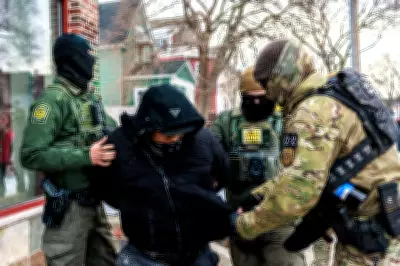
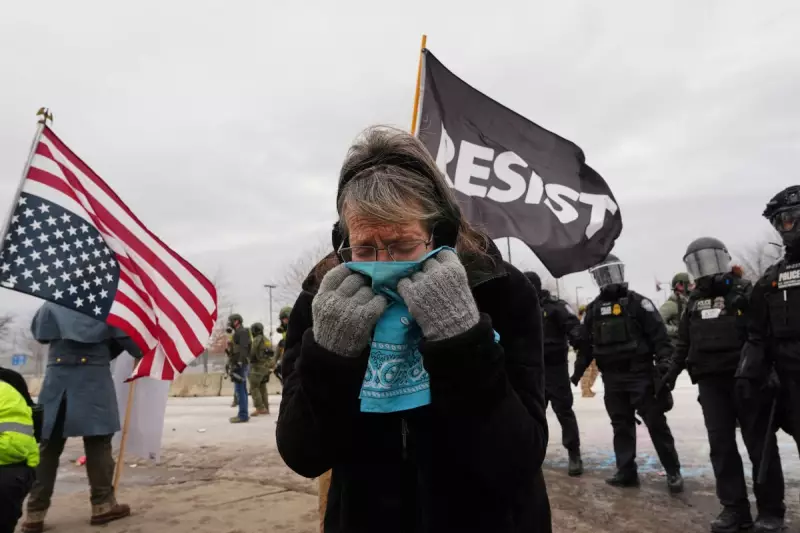
Federal immigration agents deployed to police protests in Minneapolis have employed aggressive crowd-control tactics, including aiming rifles at demonstrators and deploying chemical irritants, actions the government defends as necessary for officer safety. However, law enforcement experts are warning that these measures, carried out by agents without extensive crowd-management training, are dangerously escalating risks.
Aggressive Tactics and Escalating Tensions
The confrontations stem from a major immigration enforcement surge ordered by the Trump administration in early December, which sent more than 2,000 officers from across the Department of Homeland Security into the Minneapolis-St. Paul area. Many of these officers typically handle arrests, deportations, and criminal investigations, not volatile public demonstrations.
Videos and witness accounts reviewed by The Associated Press show federal agents breaking vehicle windows, pulling people from cars, and using tear gas and pepper spray during close encounters with protesters. Experts caution that while such tactics can be justified for targeted arrests, they carry heightened dangers when used on crowds.
Tensions were further inflamed after the fatal shooting of Renee Good, a 37-year-old woman, by an immigration agent last week. Federal officials have defended the agent's actions as self-defence, alleging Good weaponised her vehicle. Her death has intensified both protests and scrutiny of the federal response.
Experts Warn of Training Gaps and Dangerous Shift
This situation reflects a broader shift in how the federal government asserts authority during protests, relying on immigration agents for roles traditionally handled by locally-trained police. Ian Adams, an assistant professor of criminal justice at the University of South Carolina, stated, "It’s highly unlikely that your typical ICE agent has a great deal of experience with public order tactics or control."
Former Immigration and Customs Enforcement Director Sarah Saldaña noted the departure from standard practice. "There’s so much about what’s happening now that is not a traditional approach to immigration apprehensions," she said, adding that during her tenure, agents rarely dealt with crowds or protests.
In response to the tactics, the American Civil Liberties Union of Minnesota filed a lawsuit on Monday, 12 January 2026, seeking an emergency injunction to restrict federal agents' actions. The suit calls for limits on using chemical agents, pointing firearms at non-threatening individuals, and interfering with lawful video recording.
Calls for Accountability and Standard Practices
Despite DHS Secretary Tricia McLaughlin's assertion that ICE candidates receive training in conflict management and de-escalation, experts remain deeply concerned. Ed Maguire, a criminology professor at Arizona State University, reviewed recent federal training materials and called them "horrifying."
"We’re seeing routinely substandard law enforcement practices that would just never be accepted at the local level," Maguire said. "Then there seems to be just an absence of standard accountability practices."
Adams highlighted that modern policing has evolved to avoid force-first responses to protests, which often cause greater disorder. Local police, he argued, have a community compact that federal agents lack. "I think at the heart of this is the challenge of calling what ICE is doing even policing," Adams said.
As the situation continues, experts and former officials like Saldaña express concern about aggression on both sides, warning that the current approach risks turning volatile demonstrations into deadly encounters.