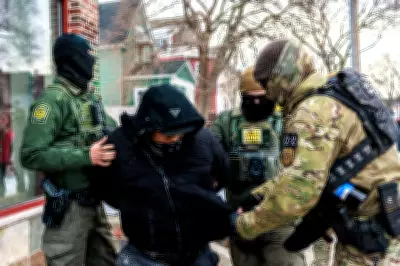
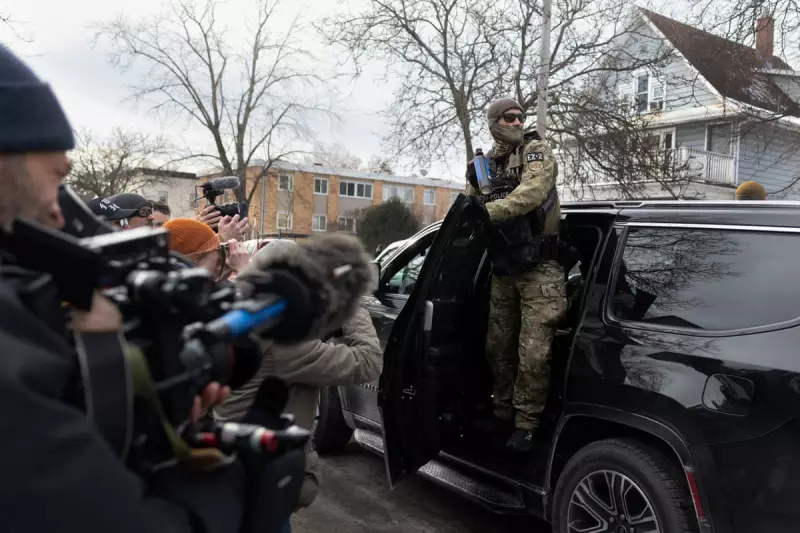
A powerful convergence of local and national media is ensuring the fallout from a fatal shooting by a federal immigration agent in Minneapolis, Minnesota, receives relentless coverage. The incident, which saw 37-year-old Renee Nicole Good killed on 7 January 2026, sparked immediate protests and placed the city's strong journalistic ecosystem at the forefront of a major national story.
A Resilient Local News Corps Drives Coverage
Despite widespread cuts to local newsrooms across the United States, Minneapolis benefits from a particularly resilient media market. This strength has guaranteed that the shooting of Renee Good and the subsequent clashes between protesters, police, and Immigration and Customs Enforcement (ICE) agents have been documented in depth.
Matt Carlson, a journalism professor at the University of Minnesota based in the city, highlighted the robust local infrastructure. He pointed to outlets like the Star Tribune newspaper, Minnesota Public Radio (MPR), and the Sahan Journal, which serves immigrant communities. The presence of these organisations, alongside national networks, means events are not occurring in a vacuum.
"I think we have the strongest media ecosystem of any city that’s parallel to our city," Carlson stated. He also noted that while 'parachute journalism' by national outlets is often debated, many in Minneapolis welcome the wider attention. "We know that we can’t stop what’s happening by ourselves," he added, predicting continued intense activity given former President Donald Trump's recent threats to invoke the Insurrection Act and send troops to the city.
Journalists on the Ground: 'Get There, Bear Witness, Ask Questions'
The response from news organisations was swift. Within hours of the shooting, correspondents from across the country descended on Minneapolis. Among them was CNN's Omar Jimenez, who arrived on the evening of 7 January, drawing on his prior experience covering the George Floyd protests in the same city in 2020.
"When it became clear that obviously this was going to be as big as it has become, that’s when a manager of mine kind of walked in and said, 'Hey, are you able to go to Minnesota as soon as possible?'" Jimenez recalled. His reporting later captured his crew fleeing from law enforcement during a protest on 8 January after a water bottle was thrown.
For Kathleen Hennessey, the new editor and senior vice-president of the Star Tribune, the shooting triggered an immediate, all-hands-on-deck response from her newsroom of roughly 200 people. They broke major stories, including being the first to publish the name of the ICE officer involved, Jonathan Ross. The decision drew a fierce criticism from Department of Homeland Security press secretary Tricia McLaughlin, who labelled the outlet "reckless".
"I encourage our newsroom to remember that nobody knows this place better than we do," Hennessey said, emphasising the value of deep local knowledge amidst a flood of national coverage.
Sustained Scrutiny as Tensions Continue to Flare
The media presence has fluctuated but remained significant. A second shooting by a federal officer on Wednesday, 14 January, of a man allegedly attempting to flee arrest, reignited protests and coverage. The following day, a CNN crew was hit with projectiles while covering an anti-ICE demonstration.
Other journalists have maintained a prolonged focus. Alex Tabet, a political reporter for MS NOW, arrived in Minneapolis at 1am on 7 January and was among the first TV crews on the scene. Nicole Sganga, a homeland security correspondent for CBS News, was already in the city, having recently interviewed Homeland Security Secretary Kristi Noem. Sganga's motto underscores the journalistic imperative: "get there, bear witness, ask questions."
At Minnesota Public Radio, deputy managing producer Megan Burks described the challenge of finding a "new rhythm" as events rapidly evolve. "Just as it felt like we were settling into a manageable rhythm, this new twist came and now we’re back to trying to figure out what is our new normal," she said after the second shooting.
The consensus among journalists and editors is that the story is far from over. With ongoing deportation enforcement actions, nightly protests, and high political stakes, Minneapolis is set to remain a focal point for media scrutiny, with local newsrooms providing the essential, ground-level perspective.