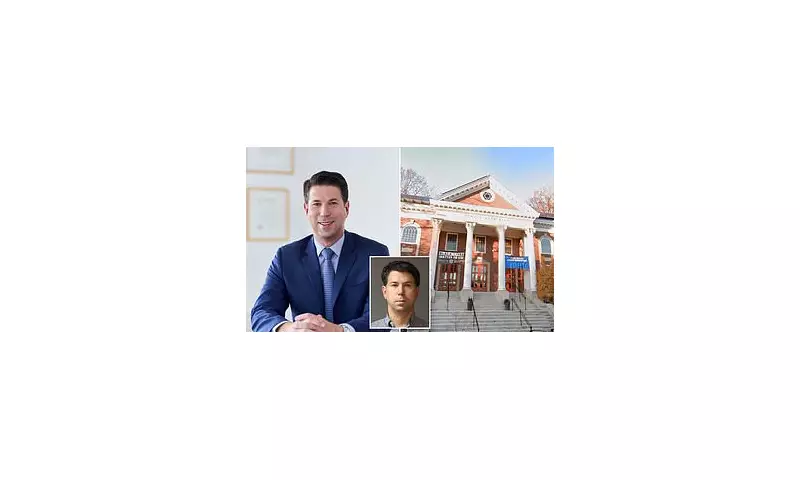
A visiting professor at Harvard Law School has agreed to leave the United States voluntarily after pleading guilty to charges stemming from an incident where he fired an air rifle outside a synagogue in Massachusetts.
The Incident and Arrest
Carlos Portugal Gouvea, 43, admitted to the illegal use of an air rifle after discharging the weapon outside Temple Beth Zion in Brookline. The event occurred on October 2, which was the eve of Yom Kippur, a significant holy day in Judaism. Upon his arrest, Gouvea told police he was not targeting the Jewish community but was instead 'hunting rats' near the synagogue.
Despite his claims, the discharge of the weapon caused a chaotic scene. Security personnel intervened, leading to a brief physical struggle over the rifle. A shot from the weapon reportedly shattered a car window, after which Gouvea fled to his nearby home.
Legal Proceedings and Immigration Consequences
Initially charged with multiple offences including discharging a pellet gun, disorderly conduct, and malicious damage, Gouvea ultimately pleaded guilty to a single charge of illegal air rifle use. Following this guilty plea, he was arrested by ICE Boston Enforcement and Removal Operations (ERO).
Gouvea, a legal resident on a J-1 temporary non-immigrant visa, saw his visa revoked by the State Department two weeks after the incident. According to the Department of Homeland Security, he agreed to return to his native Brazil voluntarily to avoid formal deportation proceedings by the administration.
Institutional Fallout and Broader Context
Harvard University placed Gouvea on leave immediately after his arrest. The timing was sensitive for the institution, which was concurrently in negotiations with the federal government over the restoration of more than $2.4 billion in funding. This funding had been stripped earlier in the year amid allegations the university had failed to adequately crack down on antisemitism on campus following the Israel-Hamas war.
While police investigators stated they did not believe Gouvea targeted the synagogue, a DHS spokesperson framed the deportation differently. Tricia McLaughlin stated, 'There is no room in the United States for brazen, violent acts of anti-Semitism like this', emphasising that working in the US is a privilege, not a right.
This case joins a growing list of individuals who have had visas rescinded this year over allegations related to antisemitism.