
In a significant legal development, the European Union's highest court has delivered a rare judgement supporting a Syrian refugee's appeal for damages against the EU's border agency, Frontex. The ruling, issued on Thursday 18 December 2025, is seen as a landmark decision that could pave the way for thousands of other migrants to seek justice.
A Historic Legal Victory
The Court of Justice of the European Union (CJEU), based in Luxembourg, sided with Alaa Hamoudi, sending his case back to the General Court for a fresh examination. The court found that the lower court had failed to properly assess his claim of being illegally expelled from Greece to Turkey in April 2020 alongside 21 other migrants, including children.
Judge Ben Smulders stated in a video announcement that the evidence presented by Hamoudi's legal team was "sufficiently detailed, specific and consistent." While a final verdict is pending a new assessment, Hamoudi's lawyers hailed the decision as historic.
"Hopefully this will bring an end to the de-facto legal impunity of Frontex," said Iftach Cohen, who leads Hamoudi's legal team with Francesco Gatta. He emphasised that Hamoudi's "courage and audacity" could benefit tens of thousands subjected to similar pushbacks.
Hamoudi's Harrowing Ordeal
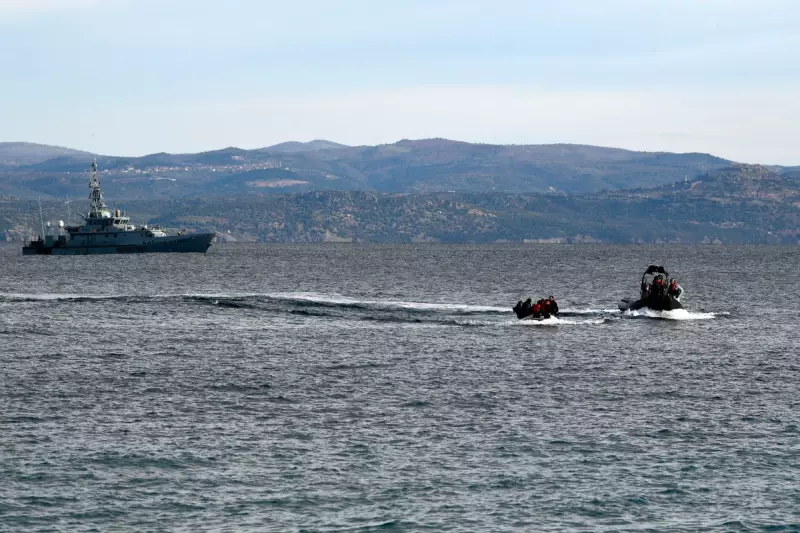
According to his testimony, Hamoudi landed on the Greek island of Samos on 28 April 2020. Shortly after arrival, police confiscated the group's phones and forced them onto a life raft. They were then towed into Turkish waters and left adrift for 17 hours before rescue by the Turkish coast guard.
Hamoudi asserts that a Frontex surveillance plane flew over the scene twice during the incident. "I was struggling between death and life," he told the Associated Press from his home in Mannheim, Germany. This experience motivated his lawsuit.
Following detention by Turkish authorities, Hamoudi eventually succeeded in reaching Germany, where he reunited with family. His lawyers submitted video evidence allegedly showing the group on Greek soil before being forced back to sea. Investigations by Der Spiegel and a damning EU anti-fraud agency report have supported claims of Frontex involvement in covering up pushbacks in Greece.
Setting a New Precedent for Evidence
The CJEU's ruling establishes a crucial new precedent regarding the burden of proof on asylum-seekers in cases against powerful EU agencies. The court acknowledged the severe power imbalance between migrants and Frontex.
Judge Smulders noted that expecting victims to gather extensive evidence was often "very difficult, if not impossible," a standard that could effectively grant Frontex immunity. This adjustment is a major shift in how such claims will be evaluated.
Niamh Keady-Tabbal, a researcher at Maynooth University, stated the ruling could "challenge the way Frontex has been structured to evade accountability." She accused Frontex of being instrumental in enabling expulsions by detecting vessels and handing responsibility to national authorities.
Frontex Response and Ongoing Scrutiny
In a written statement, Frontex responded that the ruling "does not decide who is at fault" but makes clear that courts expect close scrutiny where the agency is involved and that fundamental rights must be taken seriously.
The agency defended its continued operations in Greece, stating it chose "engagement over withdrawal" to provide oversight and pressure for change. "We do not ignore concerns and we do not look away," Frontex said, vowing to improve transparency and ensure dignified treatment.
However, critics and human rights advocates contest this, arguing Frontex has deliberately left scenes of violations to avoid liability. They have long called for the agency to suspend operations in Greece under its own regulations when rights violations occur.
Hamoudi, reflecting on the ruling, called it an "important step toward justice" for others who suffered similarly but could not fight back. As illegal pushbacks continue across Europe, this legal challenge marks a pivotal moment in the struggle for accountability in EU migration policy.