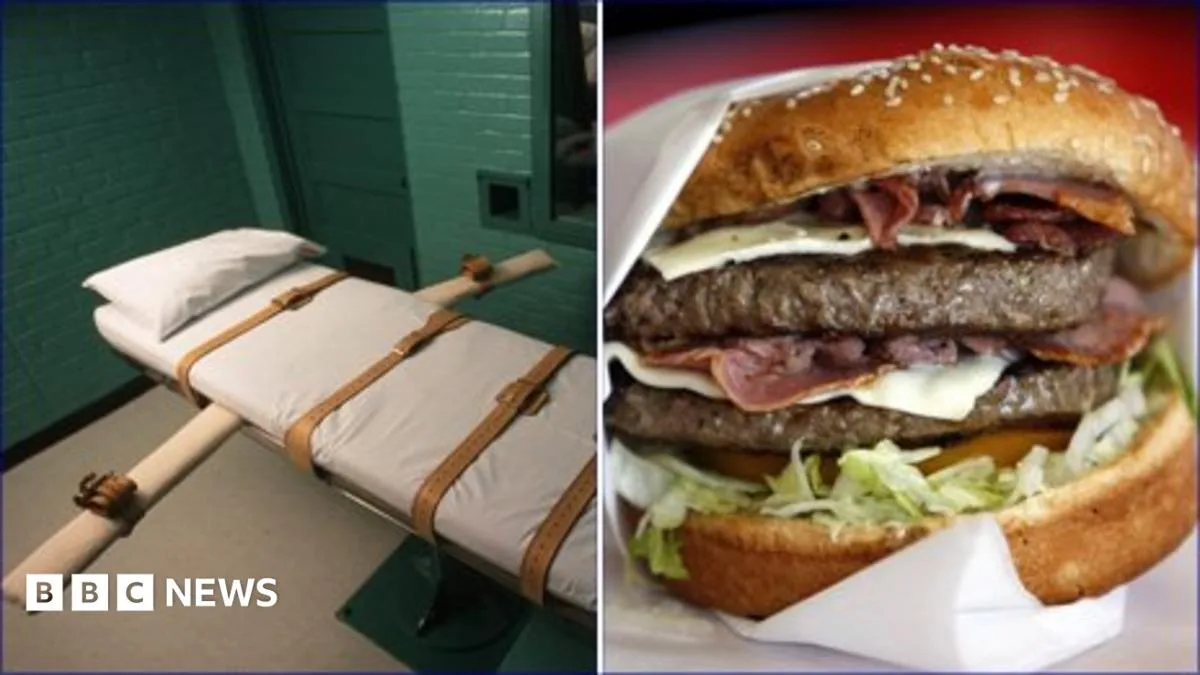
The state of Texas has ended the practice of offering death row inmates a choice of last meal, following outrage over an extravagant request from a convicted white supremacist executed this week. Lawrence Brewer, put to death by lethal injection on Wednesday, ordered two steaks, a triple-meat cheeseburger, a cheese omelette, a large bowl of fried okra, three fajitas, a pint of ice cream and a pound of barbecue meat. He ate none of it.
The Texas Department of Criminal Justice said it would now offer condemned prisoners the same cafeteria food as other inmates, heeding a request from state Senator John Whitmire. Whitmire said his push was driven by moral concerns, not financial ones. He strongly disagreed with critics who described the change as petty and mean-spirited.
Legal analysts say the last meal ritual is intended not to comfort the condemned but to soften for society the harsh reality of a state-sanctioned killing. Virginia death penalty lawyer Jon Sheldon, who has sat with three condemned men before their executions, noted that in his experience, inmates rarely eat the meal. 'It's either not ordered, or it's ordered and it's not eaten,' he said.
A review of last meal requests in Texas between 1982 and 2003 found that grilled or fried foods like burgers, fried chicken or steaks were most popular. Professor Phoebe Ellsworth of the University of Michigan suggested that such choices reflect a desire for a last sensual reminder of home, particularly among inmates from poor backgrounds. Many inmates forgo the meal entirely, whether out of defiance, lack of appetite, or for spiritual reasons.
Other US states have different policies. Florida budgets $40 per inmate for last meals, which must be purchased locally. Oklahoma gives prisoners only $15, subject to the warden's approval, and the meal must be bought from restaurants near the death chamber in McAlester. Alcohol is prohibited, and requests for cigarettes and bubble gum have been turned down.