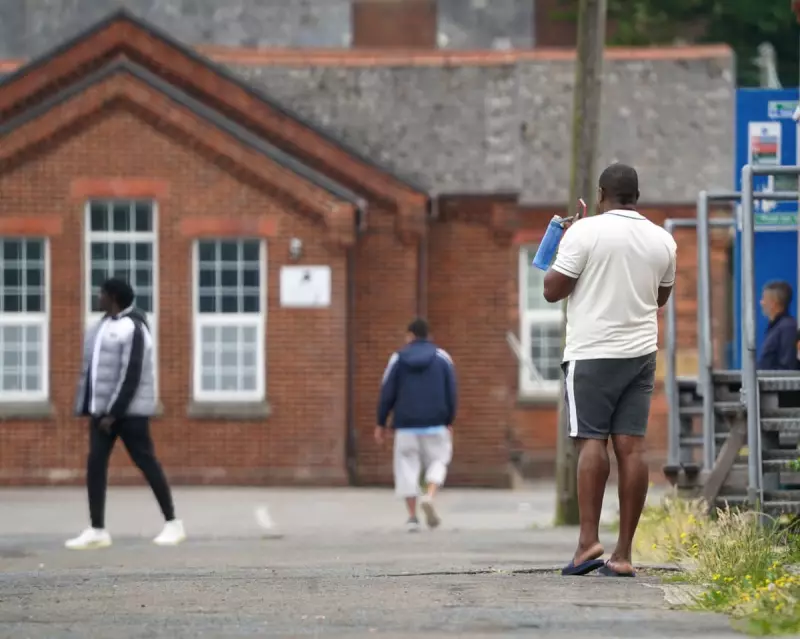
The UK's first and longest-serving military barracks used to accommodate asylum seekers has officially closed its doors, ending a nearly six-year chapter mired in controversy and legal challenges.
A Troubled History from the Outset
Napier barracks in Folkestone, Kent, opened in September 2020 alongside the since-shuttered Penally barracks in Wales. Designed to hold around 400 men, the site quickly became a flashpoint for criticism over living conditions and safeguarding failures. The facility was intended as a cost-saving alternative to hotel accommodation, a move criticised by far-right groups but also condemned by refugee charities and the courts.
Problems emerged almost immediately. In the early months, residents reported a lack of basic amenities, including drinking water, and furniture reportedly salvaged from old stable blocks. The most severe crisis hit when a mass Covid-19 outbreak infected approximately 200 men—half of the site's occupants at the time. Fears of contagion were so intense that some men chose to sleep outside in sub-zero temperatures rather than risk infection in crowded dormitories.

Legal Challenges and Community Response
The barracks' operation was fundamentally challenged by a damning High Court ruling, which found the Home Office had failed to meet minimum standards for housing asylum seekers. This followed a safeguarding inquiry launched by Kent County Council due to profound concerns over conditions. The site also witnessed far-right protests, fires, and hunger strikes by residents.
Initially, men were housed at Napier for an indefinite period, a policy that exacerbated distress. The Home Office later introduced a 90-day limit, which residents said made their stay more bearable. Following the High Court judgment, the barracks were briefly emptied for repainting but reopened within days.
Sally Hough, who ran the Napier drop-in centre providing support, described the closure as a day of "very mixed emotions." She stated, "The camp itself, the buildings, the shambolic management, have left their mark on those that stayed there." However, she praised the Folkestone community, noting that former residents often returned to visit, and men had recently volunteered on local conservation projects.
Lessons Not Learned?
Charities have welcomed the closure but warned against repeating the model. Charlotte Khan, Head of Advocacy at Care4Calais, said, "Former military sites are not suitable accommodation for refugees who have fled war, torture and persecution. They are re-traumatising, and harm people’s health and wellbeing." She urged the government to learn that "people want, and should, be accommodated in communities, not camps."
The government, however, appears committed to the barracks model. A Home Office spokesperson expressed fury at the use of hotels for asylum seekers, stating, "This government will close every asylum hotel. Work is well under way, with more suitable sites being brought forward to ease pressure on communities and cut asylum costs."
The Napier site will be handed back to the Ministry of Defence in January 2026 and is slated for redevelopment into housing by Taylor Wimpey. Its closure marks the end of a specific, contentious experiment in UK asylum accommodation, but not necessarily the end of the policy it represented.