
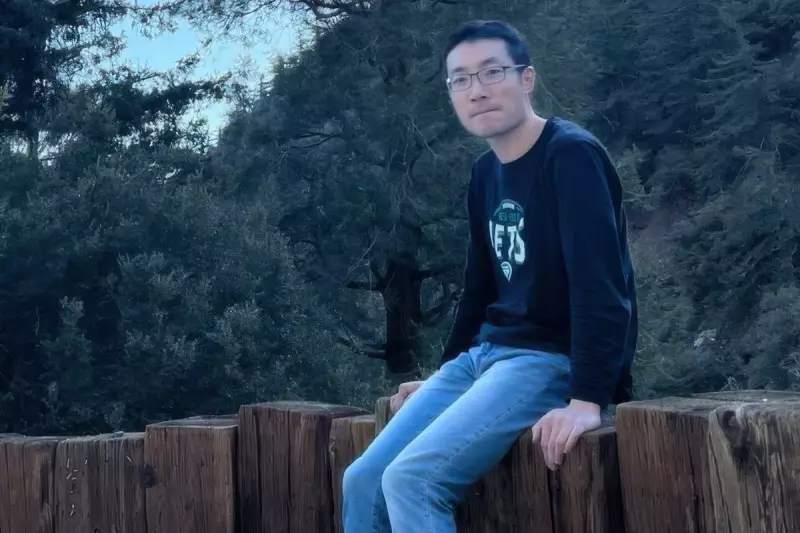
Chinese Asylum Seeker Who Exposed Xinjiang Abuses Fights Deportation from US
Guan Heng, a Chinese national who exposed human rights abuses in his homeland, is fighting to remain in the United States as he faces potential deportation. The 38-year-old has been in US custody since August after being caught in an immigration enforcement operation, with his fate now resting on a judge's decision regarding his asylum appeal.
From Whistleblower to Detainee
Guan sought asylum in the United States after fleeing China more than four years ago to publish video footage of detention facilities in China's Xinjiang region. "I would be prosecuted, I would be jailed, I would be tortured. All of that could happen," Guan told The Associated Press from the Broome County Correctional Facility in New York. He added that he dares not even consider what might happen if he were returned to China.
The Department of Homeland Security initially attempted to deport him to Uganda in December, but abandoned the plan after his situation attracted public attention and concern on Capitol Hill. Despite this temporary reprieve, Guan's future remains uncertain as immigration authorities continue to pursue his removal.
A Broader Pattern of Asylum Erosion
Guan represents one of tens of thousands of asylum seekers caught up in mass deportation efforts during the past year, despite having what they believe to be legitimate claims for protection. Federal data reveals that 170,626 asylum seekers were ordered deported in 2025 alone, representing approximately one-third of the half million people the Trump administration ordered removed last year.
Vanessa Dojaquez-Torres of the American Immigration Lawyers Association expressed deep concern about this trend. "We are very worried about the number of asylum seekers that will be sent back to extremely dangerous conditions," she said. "It's worrying to see that an institution like asylum is being so eroded."
The Journey to Exposure
In 2020, Guan secretly filmed detention facilities in Xinjiang, contributing to mounting evidence of what activists describe as widespread human rights abuses in the region. The Chinese government has consistently denied these allegations, claiming instead that it operates vocational training programs to help local residents develop employable skills while addressing radical ideologies.
Realizing he needed to leave China to safely publish his footage, Guan first traveled to Hong Kong before making his way to Ecuador, the Bahamas, and eventually Florida by October 2021. By the time he arrived in the United States, he had already released most of his video evidence on YouTube.
Life in America and Current Detention
After settling in Queens, New York, Guan attempted to build a stable life, working as an Uber driver and making deliveries once he obtained a work permit. He deliberately severed contact with nearly all his relatives in China to protect them from potential police harassment, cherishing the freedom from fear he experienced in America.
His situation changed dramatically when Donald Trump returned to the White House and launched his mass deportation campaign. Guan was encountered by ICE agents during an operation targeting his housemates in a small town outside Albany. Tricia McLaughlin, a DHS spokesperson, stated that ICE encountered Guan while assisting the FBI in executing a criminal search warrant, describing him as "an illegal alien from China" who entered the US illegally.
Political Attention and Due Process Concerns
Representative Raja Krishnamoorthi, a member of the House Select Committee on the Chinese Communist Party, has urged Homeland Security Secretary Kristi Noem to release Guan and approve his asylum request. In a statement referencing Guan's case, the Illinois Democrat called for "careful adherence to due process and America's long-standing commitment to protecting human rights whistleblowers."
Kathleen Bush-Joseph, a policy analyst at the Migration Policy Institute, noted that the Trump administration is making a concerted effort to remove asylum seekers. Rather than allowing them to remain in the country while their cases progress, immigration authorities are closing cases and issuing removal orders to facilitate rapid deportations.
Broader Immigration Challenges
The data reveals additional concerning trends, with 31% of asylum applications marked as abandoned in 2025, a significant increase from the 11% abandonment rate recorded between 2010 and 2024. Bartlomiej Skorupa of Mobile Pathways explained that cases typically receive an "abandoned" designation when applicants miss appointments, though the precise reasons for the recent surge remain unclear.
In cities across the United States, some immigrants have stopped attending routine hearings after immigration agents began making arrests directly in courtrooms, effectively turning these legal proceedings into deportation traps.
Faith in American Democracy
Despite his current predicament, Guan maintains faith in American democratic institutions. He understands why President Trump has adopted such a radical immigration approach, suggesting that "the past immigration policy was too lax and caused resentment from many people." Guan considers such policy fluctuations to be "normal" in a democratic society, where any issue naturally generates both support and opposition.
"I also have come to know that people in all parts of the country are protesting the government's too aggressive behavior," Guan noted, adding that local residents who don't know him personally have shown their support. "So these things, in total, have allowed me to experience the social atmosphere under the US democratic system. At the same time, I've felt the warmth of US society."
Should he be released, Guan expressed his desire to cherish the opportunity to remain in the United States and contribute meaningfully to his new community. "I would like to do meaningful things," he said. "I hope to establish some connections with others so that I can help others."
The Chinese Embassy in Washington did not immediately respond to requests for comment regarding Guan's case or his fears about potential deportation to China.