The Australian government has implemented a significant immigration policy shift, blocking entry for over 7,000 Iranian nationals holding temporary visas. This decisive action stems from heightened concerns that these individuals may face difficulties or reluctance in returning to Iran amidst the escalating conflict in the Middle East.
Government Announces Visa Suspension
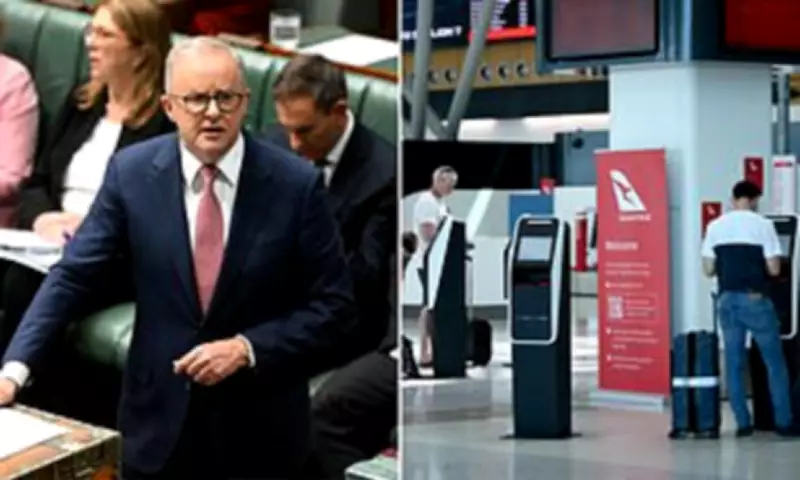
Home Affairs Minister Tony Burke formally announced the suspension on Wednesday, specifically targeting holders of the subclass 600 visitor visa. Minister Burke emphasised that this measure provides the government with crucial time to properly evaluate the volatile situation while maintaining provisions for flexibility in limited, exceptional circumstances.
'A considerable number of visitor visas were granted prior to the outbreak of conflict in Iran. It is likely that many of these visas would not have been issued under current conditions,' Mr Burke stated. He further clarified the government's position, asserting, 'Decisions regarding permanent residency in Australia should be the result of deliberate government policy, not an accidental outcome of pre-booked travel plans.'

Legislative Powers and Policy Rationale
The policy change was enabled by legislative amendments passed by parliament in March, which granted expanded powers to the Home Affairs Minister. The government maintains that it is closely monitoring international developments and will adjust migration settings as necessary to preserve an orderly, fair, and sustainable immigration system.
However, the move has attracted criticism from political opponents and community advocates. Critics argue the suspension is strategically designed to prevent Iranians from arriving in Australia and subsequently lodging onshore asylum claims, citing fears for their personal safety. This concern was highlighted earlier in March when several members of the Iranian women's football team sought asylum upon arrival.
Political and Community Reaction
Greens senator David Shoebridge condemned the decision, revealing that approximately 7,200 Iranians with valid temporary visas are now barred from entering. 'Today's announcement reveals with absolute clarity the Albanese government's stance on the safety of the Iranian people—they are shutting the door on protection for those holding visas to enter our country,' Senator Shoebridge declared.
Kambiz Razmara, Vice-president of the Australian Iranian Society of Victoria, offered a more nuanced perspective. He acknowledged that the Labor government has typically shown sympathy towards the Iranian community but expressed concern that 'knee-jerk' policy changes often disproportionately impact innocent individuals.
'The government faces an immensely difficult task. We understand the necessity of border protection and the need to respond to unfolding events,' Mr Razmara told AAP. 'Unfortunately, innocent people invariably become caught in the crossfire. We find ourselves in the midst of this challenging situation.'
Exemptions and Implementation Details
The suspension will remain in force for a period of six months but includes several key exemptions. These exceptions apply to visa holders who are already physically present in Australia, or those who are the spouse, de facto partner, or dependent child of an Australian citizen, permanent visa holder, or resident without time limitations.
Additionally, parents of a child under 18 years of age who is already in Australia will be exempt. In limited cases, the government may issue a Permitted Travel Certificate, allowing select Iranians to enter on a temporary visa. Travellers who commenced their journey to Australia before the policy took effect, including those transiting through a third country for less than 24 hours, will generally be issued this certificate automatically and need not apply separately.
Community Concerns and Broader Implications
Mr Razmara raised practical concerns regarding the exemption process, particularly the lack of clear timeframes for decisions, which could affect individuals already en route to Australia. 'I have not seen any stipulated time limits mentioned, and it is unclear what happens if a permit is not granted in time,' he noted.

Contrary to some assumptions, Mr Razmara expressed doubt that a significant number of Iranians would travel to Australia primarily to seek asylum. 'Given Australia's historical treatment of asylum seekers, I do not believe there remains a strong appetite for people to attempt to come here for that purpose,' he stated.
He identified a different, perhaps more pressing, concern for the community: the potential for members or affiliates of the Iranian regime to enter Australia on temporary visas. 'The greater risk involves individuals who may have connections to the regime and could act as foreign agents, attempting to influence actors within Australia,' Mr Razmara explained. 'One would hope that if innocent people are adversely affected, the government at least succeeds in preventing cronies of the regime—those responsible for violence in Iran—from settling here.'
The policy underscores the complex interplay between international conflict, national security, immigration control, and humanitarian considerations, placing the Australian government in a position where it must balance these often-competing priorities.