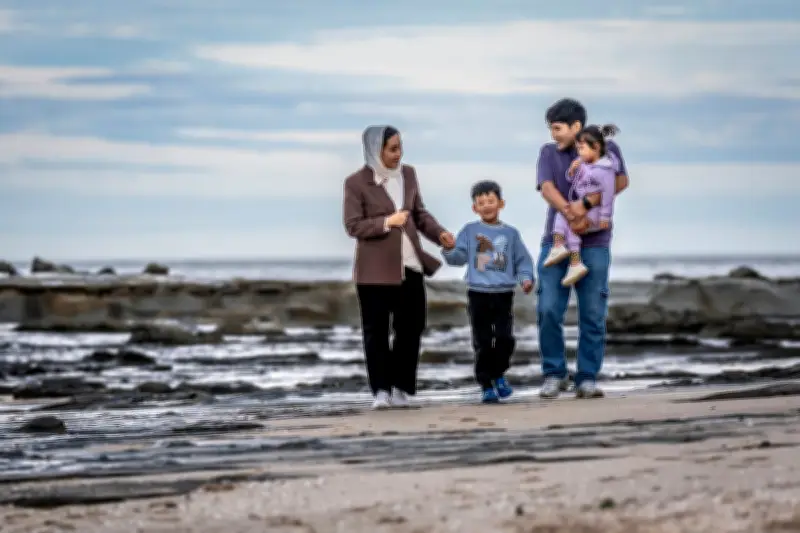
In the chill of winter, Mohammad Ibrahim stood before the people of Apollo Bay, Victoria, and expressed his gratitude. 'Thank you,' he said. 'Today I am proud to call Australia my home.' The town had rallied for four years to save him and his family, whom they had never met.
A Town's Determination
Apollo Bay residents raised funds for food and clothing, lobbied politicians, and contacted journalists to ensure Australia upheld its obligations. 'Never underestimate the power of kindness,' Ibrahim told the audience. 'What may seem like a small action can become the difference between hope and despair.'
Flight from the Taliban
During Australia's longest war in Afghanistan, Ibrahim worked as an interpreter for a government-sponsored aid project in Uruzgan province. The program built schools, taught girls to read, vaccinated children, and trained midwives. But when Afghanistan fell to the Taliban in 2021, Ibrahim was abandoned.
Branded an 'infidel' as a Hazara who served Western forces, he fled with his wife, Amina, their son, Daniel, and toddler, Helen. For four years, they hid in caves, remote villages, and tiny rooms in Kabul, moving frequently to avoid Taliban sweeps. They crossed into Pakistan, spending three freezing nights at the border.
The Rescue Effort
The Apollo Bay Rural Australians for Refugees group wrote countless letters, called ministers, and raised money. They connected Ibrahim with journalists and secured his recognition under Australia's locally engaged employee program. A high-level government intervention prioritized his case.
With 36 hours before their Pakistani visas expired, the family received four Australian humanitarian visas. They flew out at 9:30 am on a Thursday; their visas expired at noon. 'Two and a half hours to spare,' Ibrahim recalled.
A New Life
Now in Australia, the children attend school for the first time, and Ibrahim and Amina take English lessons. 'Many times we lost hope,' Ibrahim said. 'But people we had never met decided that our lives mattered. That kindness changed everything.'
Contrasting Visions of Australia
Hours before Ibrahim spoke, Pauline Hanson addressed the National Press Club, advocating for 'monoculturalism' and claiming to speak for real Australians. But in Apollo Bay, a different Australia emerged—one that is welcoming, generous, and celebrates diversity. 'There are places like this all over the country,' the article notes, highlighting quieter conversations that are gently changing the world.