
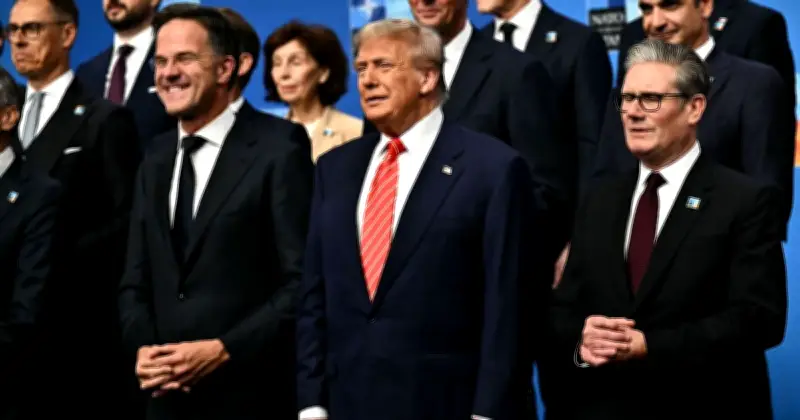
Russia could launch a major provocation timed with next week's NATO summit to disrupt the agenda, grab headlines and intimidate member states, Tobias Ellwood has predicted. The 36th NATO summit will take place on July 7 and 8 in Ankara, Turkey, with world leaders including US President Donald Trump and Ukrainian President Volodymyr Zelensky attending.
Ellwood's Warning
Mr Ellwood told Express.co.uk: “I predict there will be a major attack somewhere at NATO during the anchor summit next week to affect the agenda, take the headlines, intimidate, and wreck the conference itself.” The former defence minister framed the warning within Russia’s pattern of grey-zone operations designed to exploit Western vulnerabilities elsewhere rather than targeting the gathering directly.
Russia's Grey-Zone Tactics
Mr Ellwood said Moscow watches for gaps in capabilities and times actions to maximise political impact. He highlighted ongoing coercion: “Russia is actively observing the weaknesses and gaps in our capabilities, and they will exploit them.” He noted that such moves are conducted “behind the scenes” while the public remains largely unaware.
Infrastructure Vulnerabilities
This fits a broader strategy of testing resolve. Mr Ellwood pointed to hybrid tactics, including potential infrastructure attacks. Britain’s exposure includes 62 critical undersea cables: “We are 62 explosions away from Britain being absolutely crippled with no lights, electricity, or water.” He also raised the risk of low-cost drone strikes, such as on Portsmouth: “You could easily see Shahed drones... being launched off a shadow trawler... They could smack straight into our ships in Portsmouth.”
NATO's Posture Criticised
On NATO’s posture, Mr Ellwood was critical: “You cannot have a re-emerging superpower invade part of Europe and have NATO do nothing about it. Essentially, that is what NATO did; they sat on their hands.” He linked the risks to wider Western drift: “We have shunted everything to the right. We are preparing to be war-ready after the war has already come and gone.” Defence plans repeatedly reference 2035 readiness despite earlier warnings of threats by 2030.
Call for Public Awareness
Mr Ellwood called for greater public awareness and political courage: “If the British people are not demanding it on the doorstep, no MP is going to vote to divert money away from a local school or hospital.” He advocated reallocating from welfare budgets and modest tax increases to close capability gaps.
Broader Context
The predicted timing around the NATO summit reflects Russia’s aim to influence outcomes and expose divisions, especially amid US retrenchment. Mr Ellwood has repeatedly warned of a slide into broader conflict through proxy wars and grey-zone activities. In his book Ten Steps to Prevent World War 3, Mr Ellwood sets out practical actions to counter the trajectory, including strengthening alliances, rebuilding hard and soft power, and reasserting statecraft. The 2026 publication argues the post-Cold War complacency must end if the West is to avoid a fragmented, more dangerous world order. Mr Ellwood, drawing on his military service and ministerial experience, emphasised the need to move from denial to deterrence before vulnerabilities are further exploited.




