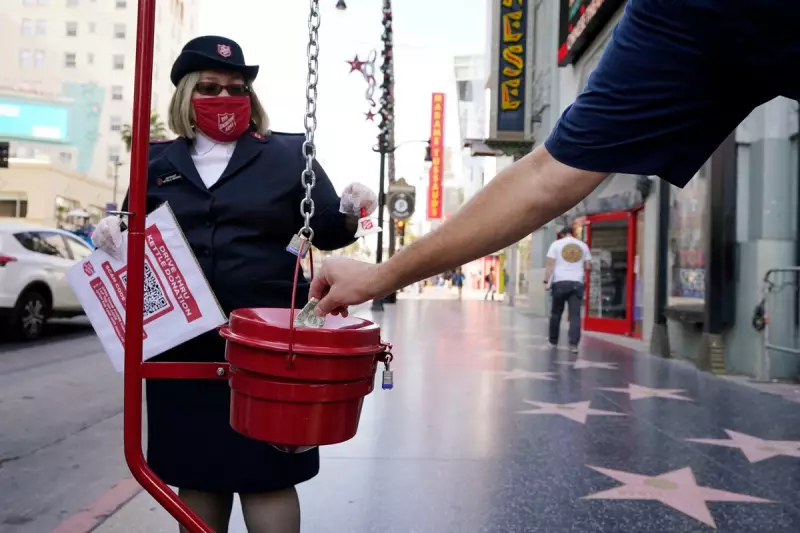
This year's GivingTuesday arrives with charities on both sides of the Atlantic holding their breath. The annual day of giving, which follows the Thanksgiving weekend, has become a cornerstone of nonprofit fundraising, but organisations are navigating a tricky mix of economic pressures and shifting donor habits. What began as a simple social media hashtag in 2012 has exploded into a global phenomenon, yet its future success is never guaranteed.
The Evolution of a Global Giving Movement
The #GivingTuesday movement was originally a project of New York's 92nd Street Y back in 2012. It became an independent nonprofit in 2020 and has since grown into a vast network of community-led initiatives worldwide. The central organisation now also coordinates research into charitable behaviour, compiling data from payment processors, crowdfunding platforms, and donor-advised funds to paint a picture of global generosity.
For charities, the day represents a critical launchpad for the year-end fundraising season, a time when many seek to secure the bulk of their budget for the coming year. In 2024, the event's success was clear: donations on GivingTuesday reached a staggering $3.6 billion, marking an increase from the two previous years and solidifying its place in the philanthropic calendar.

Economic Headwinds and New Incentives
Charities are acutely aware of the challenges facing potential donors. Soaring living costs may well affect the capacity of smaller, everyday givers, potentially reducing either the size of their donations or the number of causes they can support. Simultaneously, many service providers report skyrocketing demand for aid, compounded by cuts to government support programmes.
However, a recent legislative change could provide a counterbalance. President Donald Trump's July tax and spending legislation introduced a new charitable deduction – up to $1,000 for individuals and $2,000 for married couples filing jointly. This measure is designed to incentivise more households to participate in charitable giving.
For major donors, a strong stock market often signals greater generosity. These substantial benefactors now form an increasingly vital part of the donation landscape and are statistically more likely to give than those in less secure financial positions, according to a study from Indiana University.
How to Make Your Giving Count
In response to the uncertain climate, many charities are promoting matching gift schemes, where a major donor agrees to multiply contributions, sometimes by as much as five times. This tactic aims to demonstrate the amplified impact of every pound or dollar given.
Asha Curran, CEO of the GivingTuesday nonprofit, suggests a simple yet powerful approach for donors unsure where to start. "Observe what friends, family, or colleagues are supporting and consider matching their gift," she advises. "It's a double act of generosity. You're giving to the cause and you're also saying, 'I care about what you care about.'"
There is no single right way to participate. Donors can choose to support large international NGOs, community-based organisations where the impact is felt locally, or even contribute directly to individuals through mutual aid networks. Many nonprofits particularly value donors who commit to smaller, regular monthly gifts, as this predictable income stream aids long-term planning far more than a one-off year-end sum.
Ultimately, GivingTuesday has grown far beyond its social media origins. It has cemented itself as a durable, global event dedicated to putting generosity, volunteering, and civic participation at the heart of the holiday season. Whether it can surpass last year's remarkable $3.6 billion total remains to be seen, but its role as a catalyst for good is now firmly established.