White House Press Secretary Defends Iran Strike Decision Amid Scrutiny
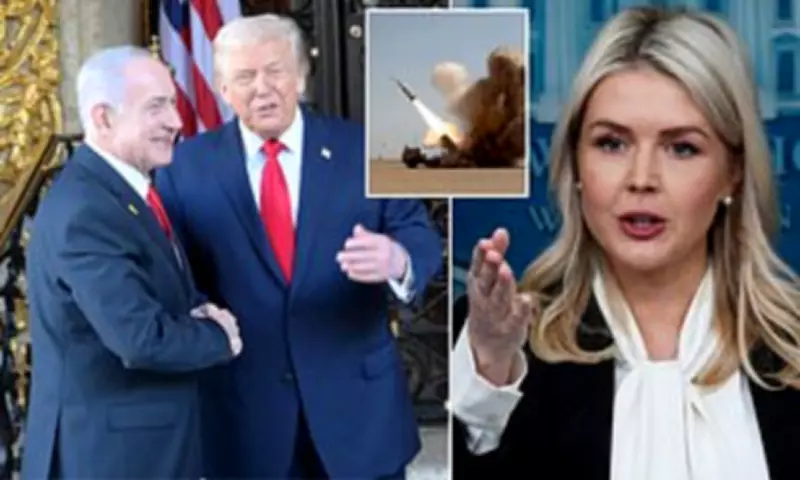
White House Press Secretary Karoline Leavitt has moved to clarify the administration's rationale for the recent military strikes against Iran, following widespread confusion and criticism over who faced an 'imminent threat' from the Islamic Republic. The offensive, launched by President Donald Trump in conjunction with Israel, has come under intense scrutiny since its inception.
Leavitt's Justification for the Offensive
During Wednesday's White House press briefing, Leavitt elaborated on the decision-making process behind the attacks. 'This decision to launch this operation was based on a cumulative effect of various direct threats that Iran posed to the United States of America,' she stated. 'The President's feeling, based on fact, is that Iran does pose an imminent and direct threat to the United States of America.'
She attributed this assessment to Iran's expanding missile programs, its persistent pursuit of nuclear weapons, and the dangers these pose to US and allied forces stationed in the Middle East. Leavitt emphasized that Trump was determined to join Israel in its initial salvo, which she described as 'obviously' the correct course of action.

Contrast with Secretary of State Rubio's Remarks
Leavitt's explanation starkly contrasted with earlier comments from Secretary of State Marco Rubio, which sparked fury across the political spectrum. Republicans and Democrats alike accused the US of being dragged into the conflict by Israel. On Monday, Rubio told reporters that the strikes were prompted by an 'imminent threat' to American troops and assets.
'We knew that there was going to be an Israeli action. We knew that would precipitate an attack against American forces,' Rubio said. 'And we knew that if we didn't preemptively go after them before they launched those attacks, we would suffer higher casualties.'
His remarks incensed numerous Democratic lawmakers and conservatives, including former Republican Congresswoman Marjorie Taylor Greene and commentators Matt Walsh and Megyn Kelly. The following day, Rubio backtracked, claiming he was misrepresented by a 'rogue video clipping job' and had clearly identified Iran's missile program as the imminent threat.
Operation Epic Fury's Objectives and Impact
Leavitt reiterated the mission objectives for the offensive, dubbed Operation Epic Fury, echoing past remarks from Secretary of War Pete Hegseth. The goals include:
- Destroying the Iranian Navy
- Razing the regime's ballistic missile capabilities
- Ensuring Iran's terrorist proxies cannot destabilize the region
- Preventing Iran from ever obtaining a nuclear weapon
'It's safe to say that, thus far, Operation Epic Fury has been a resounding success,' Leavitt declared. The five-day offensive has resulted in nearly 50 top Iranian officials killed, including longtime leader Ayatollah Ali Khamenei and numerous religious figures. However, it has also plunged the Middle East into chaos, with Iran retaliating against half a dozen countries, including Israel, the United Arab Emirates, Qatar, Kuwait, Oman, and Saudi Arabia.
Casualties and Broader Implications
The conflict has taken a significant human toll. According to Iran's Foundation of Martyrs and Veterans Affairs, at least 1,045 people have been killed in Iran as of Wednesday. In Israel, 11 deaths have been reported, while Lebanon's health ministry confirms over 50 fatalities. On the US side, at least six troops have lost their lives.
Leavitt repeatedly dismissed inquiries about whether regime change in Iran is a goal of the operation. Additionally, she noted that the president has not ruled out deploying US ground troops in Iran. When questioned about potential Israeli pressure to join the strikes, Trump asserted this week that he might have 'forced their hand' instead.
The administration's mixed messaging and the escalating violence underscore the complex geopolitical stakes involved, as the White House continues to defend its actions amid mounting domestic and international criticism.