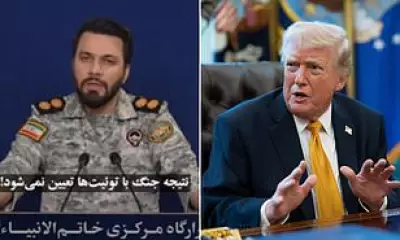
Clive Stafford Smith, a prominent human rights lawyer, has issued a stark warning that the West's current actions against Iran are dangerously repeating recent historical blunders, leading only to greater chaos in the Middle East. In a critical analysis, he argues that lessons from past interventions remain unlearned, with catastrophic consequences for the region.
Historical Patterns of Failure
Stafford Smith points to the prolonged conflict in Afghanistan as a prime example of misguided policy. The so-called "war on terror" resulted in the longest American war in history, costing up to an estimated $6 trillion and claiming tens of thousands of lives. Despite this immense expenditure and loss, the Taliban has regained control, establishing what he describes as an increasingly gender-apartheid state and deepening alienation from the Western world.
He emphasises that this pattern is consistent across Western interventions since the new millennium. The United States, the United Kingdom, and their allies have repeatedly condemned regimes, launched missile strikes from drones, and inadvertently fostered greater instability. Each intervention concludes with withdrawal and lamentation over the failure to transform nations into democratic utopias.
Excuses and Realities
According to Stafford Smith, justifications for military action have often been overstated. In Afghanistan, the pretext was the September 11 attacks, despite limited evidence linking Afghans to the events. In Syria, the focus shifted to combating ISIS. Now, Iran is portrayed as an imminent global threat. He critiques these rationales, quoting musician Michael Franti: "You can bomb the world to pieces, but you can't bomb it into peace."
The lawyer warns that catastrophe looms over Iran, with many innocent people likely to suffer due to the escalating tensions involving figures like Donald Trump and Benjamin Netanyahu. He highlights the lack of coherent planning in the Trump administration's approach, dubbed "Operation Epic Fury," which appears reliant on relentless bombing without a viable strategy for post-conflict governance or peace.
Leadership and Principles in Question
Stafford Smith expresses particular disappointment in UK Prime Minister Sir Keir Starmer. Initially, Starmer opposed the conflict with Iran but reversed his stance after criticism from Trump. As a former human rights lawyer, Stafford Smith urges Starmer to uphold his principles and develop a thoughtful plan, rather than succumbing to political pressure. He references historical precedents, such as Harold Wilson's refusal to involve the UK in the Vietnam War, which is now viewed as a wise decision.
Alternative Approaches: The Marshall Plan Example
The article advocates for investment over destruction, citing the Marshall Plan as a successful model. After World War II, instead of implementing the harsh Morgenthau Plan—which proposed dismantling German industry and could have led to millions of deaths—the Marshall Plan invested the equivalent of $150 billion in today's money into Europe. This fostered economic growth in West Germany, contributing to stability and peace.
Stafford Smith suggests that if a fraction of the $6 trillion spent on bombing Afghanistan had been allocated to its development, the country could have been transformed into a prosperous nation, saving thousands of lives. He laments that history is repeating itself, with no clear strategy in place and the "dogs of war" unleashed once more.
In conclusion, he calls for public mobilization, such as a million-person march against Middle East conflicts, while cautioning that such sensible opposition risks being unfairly equated with terrorism. Clive Stafford Smith OBE, a Gresham College Professor of Law, will further discuss these issues in a free lecture on recent Middle Eastern wars.