Tourists visiting Milan during the 2026 Winter Olympics encountered a deeply disappointing situation when access to Leonardo da Vinci's iconic masterpiece, The Last Supper, was completely closed to the public for three and a half consecutive days. This unexpected closure left numerous international visitors stranded behind police cordons, unable to view one of the world's most revered artistic treasures.
Complete Closure Without Explanation
A sign posted outside Il Cenacolo Vinciano, the museum housing the painting, announced that the landmark would be closed all day on February 5th, 6th, and 7th, plus the morning of February 8th. The notice provided no reason for this extended closure, and staff members informed Associated Press reporters that they were not authorised to offer any information about the situation.
VIPs Received Special Access
While ordinary tourists faced disappointment, multiple groups of VIPs received exclusive access to The Last Supper during the closure period. According to a statement from his office, US Vice-President JD Vance and his family visited the masterpiece on Saturday morning, following his meeting with Italian Prime Minister Giorgia Meloni and attendance at the Winter Olympics opening ceremony.

Mr Vance, who converted to Catholicism in 2019 and has spoken about finding spiritual fulfilment through his faith, previously visited Rome and Vatican City during Holy Week last year. He was among the final world leaders to meet Pope Francis before his passing, with their Easter Sunday meeting occurring after diplomatic tensions regarding the Trump administration's migrant deportation policies.
International Delegations Also Granted Entry
Angelo Crespi, director of Grande Brera which oversees both The Last Supper and the Brera Art Gallery, confirmed that numerous foreign delegations had visited both institutions in recent days. These included representatives from China, Poland, Hungary, and Bulgaria.
"We interpret our role responsibly, not only in terms of tourism but also in terms of international relations," Mr Crespi stated in an official declaration regarding the special access arrangements.
Tourist Frustration Mounts
Antonio Rodríguez, who travelled from Spain with friends specifically for a weekend visit to Milan, expressed his group's disappointment at being unable to see the painting or the adjacent Santa Maria delle Grazie church. "We didn't know we would face this," Mr Rodríguez explained. "We would have gone somewhere else in the city if we had known about the closure."
Luisa Castro, a Filipina who has resided in Milan for two decades, had planned to visit Santa Maria delle Grazie with friends. "We are Catholics from the Philippines and we seldom have time to visit a church like this," she lamented. "Unfortunately, the vice-president of America came to see The Last Supper and we could not enter."
Transport Disruption Adds to Problems
The area surrounding the religious site experienced significant traffic diversions on Saturday, with public transportation services also disrupted. Fedeli Gioia, a local resident, complained about the lack of notice regarding tram route changes. "This whole area is blocked because someone is going to see Il Cenacolo? And where does that leave us citizens?" she questioned.
The Painting's Historical Significance and Conservation
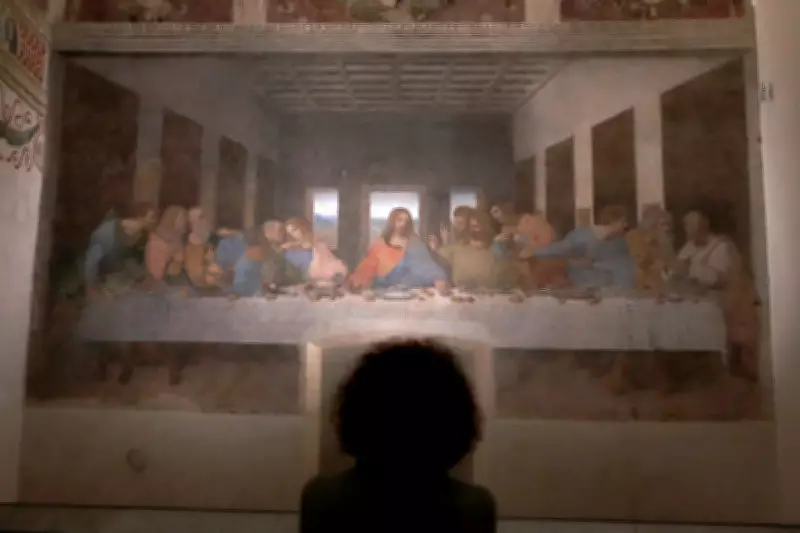
Painted by Leonardo da Vinci between 1494 and 1498, The Last Supper resides within the refectory of Santa Maria delle Grazie, a church and Dominican convent still actively used by friars. The masterpiece has survived numerous challenges throughout its history, including deterioration from Leonardo's unconventional dry painting technique, damage when the refectory served as a stable during Napoleon's occupation of Milan, and severe destruction when Allied bombing struck the complex in 1943 during World War II.
Today, the painting is preserved under strict conservation conditions, with visits limited to approximately 15 minutes for maximum groups of 40 people at a time. Temperature and humidity levels are meticulously controlled to protect the vulnerable artwork.

Previous Controversial Appearances
The Last Supper made a controversial appearance during the 2024 Paris Olympics opening ceremony, where a scene evoked the painting with DJ Barbara Butch wearing a silver headdress resembling a halo while flanked by drag artists and dancers. France's Catholic bishops criticised the presentation as mocking Christian symbolism, and the Vatican expressed that it "deplored the offense" caused to Christians by the scene.
Tourists Make the Best of a Bad Situation
Despite their disappointment, some tourists attempted to appreciate the site from a distance. A group of Japanese visitors photographed the church from behind the police cordon while listening to their guide's explanations in the middle of the street. The painting, described by Renaissance writer Giorgio Vasari as "a beautiful and marvellous thing," continues to draw art enthusiasts and devout Catholics alike, even when they can only view it from afar.
Da Vinci's masterpiece depicts the dramatic moment after Jesus tells his apostles "One of you will betray me," with the artist's innovative composition placing Jesus at the centre and arranging the apostles in four distinct groups of three figures each. This artistic interpretation has become one of the most recognisable religious images in Western art history.