Vance Erases Armenian Genocide Reference During High-Stakes Caucasus Diplomacy
US Vice President JD Vance has provoked controversy by deleting a social media post that honoured the victims of one of history's largest systematic slaughters of Christians. The incident occurred during the final day of his diplomatic visit to the Republic of Armenia, casting a shadow over Washington's expanding engagement in the strategically vital Caucasus region.
Memorial Visit and Subsequent Deletion
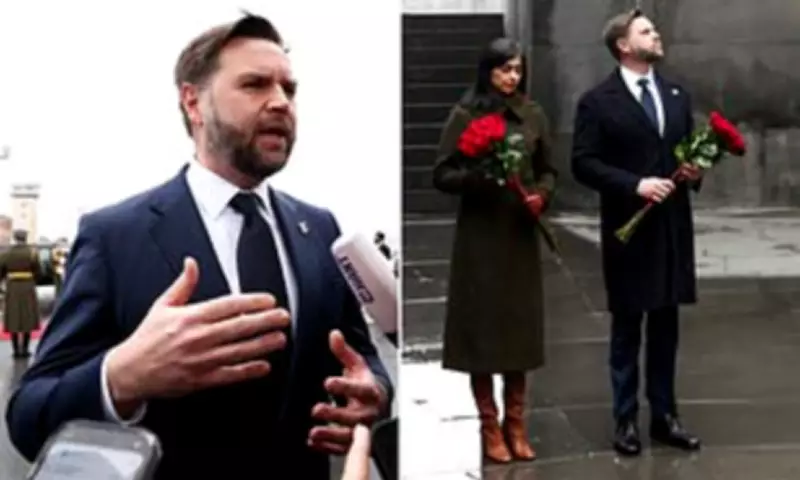
The Vice President concluded his official trip to Armenia on Tuesday with a solemn stop at the Armenian Genocide Museum in Yerevan, accompanied by Second Lady Usha Vance. Vance's official vice presidential account on the platform X initially posted a video documenting the occasion, explicitly stating that the couple "attended a wreath-laying ceremony at the Armenian Genocide memorial to honor the victims of the 1915 Armenian genocide."
This original post was subsequently deleted and replaced with a carefully worded statement that removed any direct mention of the Christian genocide. The revised communication from Vance's press secretary, Taylor Van Kirk, simply noted: "The Vice President and his wife lay flowers at the eternal flame and sign the guest book on the final day of their visit to Armenia."

Historical Context and Ongoing Denial
The historical event referenced involves the systematic killing of more than 1.5 million Christian Armenians by the Ottoman Turks between 1915 and 1923. Modern Turkey, the successor state to the Ottoman Empire, continues to vehemently deny that these atrocities constituted genocide and routinely condemns international efforts to formally recognise the mass slaughter. Notably, Vance, who identifies as a devout Christian, did not officially recognise the genocide during his visit to Armenia.
Diplomatic Balancing Act
The timing of the deletion is particularly sensitive given Vance's immediate travel itinerary. Shortly after visiting the memorial, the Vice President departed for Azerbaijan, a close ally of Turkey that also refuses to recognise the Armenian Genocide. A spokesperson for Vance attributed the initial tweet to a staff error, explaining: "This is an account managed by staff that primarily exists to share photos and videos of the Vice President's activities."
Vance's visit marked a significant diplomatic milestone, as he became the highest-ranking US official ever to visit Armenia. His two-day trip focused heavily on the Trump administration's recent peace negotiations between Armenia and Azerbaijan, which successfully ended a nearly four-decade-long war between the two Caucasus rivals. Former President Donald Trump has frequently cited this agreement as a principal foreign policy achievement.
Strategic Agreements and Regional Influence
During his stay in Yerevan, Vance signed a consequential deal with Armenian Prime Minister Nikol Pashinyan. This agreement establishes a pathway for substantial US investment in the construction of a nuclear power plant in Armenia, signalling deeper economic ties. Conversely, in Azerbaijan, Vance met with the country's long-standing President Ilham Aliyev and inked a strategic partnership deal encompassing enhanced economic and security cooperation with Washington.
These concerted diplomatic efforts under the Trump administration indicate a clear American strategy to expand its influence in a region historically dominated by Russian power. This shift represents a notable departure from previous US policy stances. Under former President Joe Biden, the United States officially recognised the Armenian Genocide in April 2021, with Biden becoming the first US president to employ the term "genocide" in an official annual commemorative statement regarding the slaughter.
The deletion of the genocide reference, therefore, occurs against a complex backdrop of historical acknowledgment, regional alliances, and great-power competition, highlighting the delicate balancing act required in modern US foreign policy within the volatile Caucasus.