The world's last major nuclear arms control agreement, the New START treaty, has officially expired, marking a pivotal moment in global security. For the first time in over fifty years, the United States and Russia now operate without any formal limits on their vast atomic arsenals, sparking significant international concern about the potential for an unconstrained nuclear arms race.
A Critical Juncture in Nuclear Diplomacy
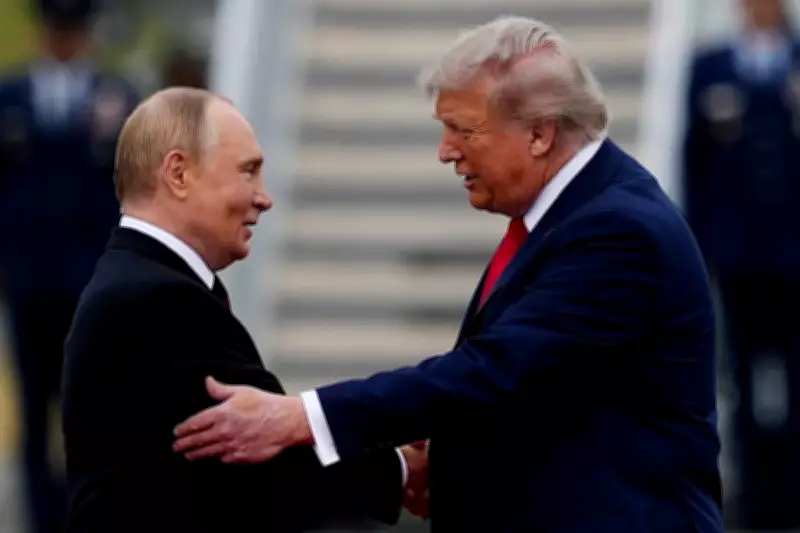
This development follows a period of diplomatic uncertainty. Last year, Russian President Vladimir Putin expressed a willingness to maintain the treaty's established limits for an additional twelve months, contingent upon Washington's agreement. However, the United States, under the leadership of Donald Trump, remained undecided regarding its extension, leaving the pact's future in limbo.
Diplomatic Communications and Strategic Posturing
Kremlin adviser Yuri Ushakov revealed that President Putin discussed the treaty's impending expiry with Chinese leader Xi Jinping just one day before the lapse. Ushakov noted a conspicuous lack of response from Washington concerning Putin's proposed extension offer. He assured that Russia would proceed with caution, stating the nation "will act in a balanced and responsible manner based on thorough analysis of the security situation."

In a formal statement issued on Wednesday night, Russia's Foreign Ministry declared that "under the current circumstances, we assume that the parties to the New START Treaty are no longer bound by any obligations or symmetrical declarations within the context of the Treaty, including its core provisions, and are fundamentally free to choose their next steps." This declaration underscores the new, unregulated reality in strategic arms control.
The Legacy and Structure of New START
The New Strategic Arms Reduction Treaty was originally signed in 2010 by then-President Barack Obama and his Russian counterpart, Dmitry Medvedev. It imposed strict caps, limiting each side to a maximum of 1,550 deployed nuclear warheads and no more than 700 missiles and bombers. The agreement was designed to last until 2021 but received a five-year extension, pushing its expiry to this week.
Verification and Recent Challenges
A cornerstone of the pact was its provision for comprehensive on-site inspections to verify compliance. However, these critical verification measures were halted in 2020 due to the global COVID-19 pandemic and were never reinstated, creating a transparency gap in the treaty's final years.
In February 2023, President Putin took the significant step of suspending Moscow's participation in the treaty's inspection regime. He justified this move by arguing that Russia could not permit U.S. inspections of its nuclear facilities while Washington and its NATO allies were openly pursuing strategic goals in Ukraine. Despite this suspension, the Kremlin emphasised it was not withdrawing from the pact entirely and pledged to continue respecting its nuclear weapon caps.
Warnings of Instability and Proliferation
In a bid to avert the current situation, Putin offered in September to adhere to New START's limits for one additional year. This proposal was intended to create a window for both nations to negotiate a successor agreement. He warned that allowing the treaty to expire would be profoundly destabilising and could potentially accelerate nuclear proliferation globally.
New START represented the final chapter in a long series of bilateral U.S.-Russian nuclear arms reduction agreements. With its lapse, that entire framework of mutual limitation has now been terminated, leaving a formidable diplomatic and strategic vacuum at the heart of global nuclear security.