US and Iran Commence High-Stakes Talks in Oman Amid Escalating Tensions
Direct negotiations between the United States and Iran have officially begun in Oman, marking a critical diplomatic engagement between the long-standing adversaries. The talks, which started on Friday, unfold against a backdrop of stark warnings from both sides, with Washington explicitly refusing to dismiss the possibility of military intervention should diplomacy falter. Concurrently, the Islamic Republic has issued a firm declaration of its readiness to protect its sovereignty against what it terms 'any excessive demands' from the American side.
Diverging Agendas and Core Issues Under Discussion
While Iran maintains that the Oman-mediated discussions are exclusively centred on its nuclear programme, the United States has broader objectives. American officials intend to address Tehran's support for militant factions across the Middle East and its advancing ballistic missile capabilities. These additional concerns represent significant points of contention, as Iran has historically resisted expanding the dialogue beyond nuclear matters.
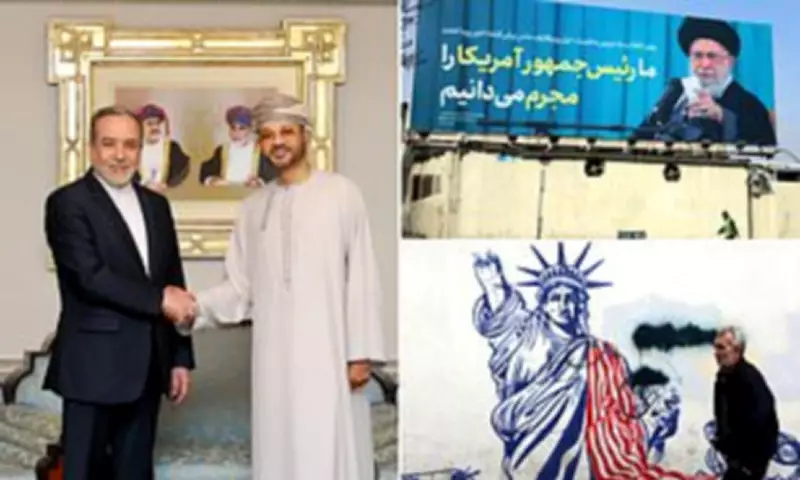
This round of talks is notably the first direct engagement between the two nations since the United States participated in Israeli military strikes targeting Iranian nuclear facilities in June. The delegations are led by President Donald Trump's Middle East envoy, Steve Witkoff, and Iranian Foreign Minister Abbas Araghchi, with Oman serving as the neutral mediator facilitating the complex discussions.

Firm Stances and Public Statements from Both Camps
Iranian state media confirmed the commencement of negotiations, broadcasting statements from Foreign Minister Araghchi. He emphasised Tehran's 'full readiness to defend the country's sovereignty and national security against any excessive demands or adventurism' by the United States. In a post on the social media platform X, Araghchi elaborated, stating, 'Iran enters diplomacy with open eyes and a steady memory of the past year. We engage in good faith and stand firm on our rights.'
He further underscored the prerequisites for a sustainable agreement, adding, 'Commitments need to be honoured. Equal standing, mutual respect and mutual interest are not rhetoric – they are a must and the pillars of a durable agreement.'
On the eve of the talks, Iran expressed a 'responsibility not to miss any opportunity to use diplomacy' to maintain regional peace. It voiced hope that Washington would approach the discussions 'with responsibility, realism and seriousness.'
American Objectives and the Shadow of Military Force
The United States delegation arrived with a clear objective, as articulated by White House Press Secretary Karoline Leavitt. She stated the intent to explore 'zero nuclear capacity' for Iran, a highly ambitious goal given the current state of Iran's nuclear infrastructure. Leavitt also issued a pointed warning, noting that President Trump possesses 'many options at his disposal aside from diplomacy,' a clear allusion to potential military action.
President Trump himself commented on the situation, remarking, 'They're negotiating. They don't want us to hit them, we have a big fleet going there,' in reference to a US aircraft carrier group he has frequently described as an 'armada.' While Trump initially threatened military retaliation over Iran's harsh crackdown on domestic protests, his recent rhetoric has pivoted to prioritising constraints on the Iranian nuclear programme, which Western powers suspect is aimed at developing atomic weapons.
Regional and International Reactions to the Diplomatic Effort
The high-stakes meeting has drawn attention and commentary from global leaders. US Vice President JD Vance indicated in an interview that Trump would 'keep his options open,' balancing diplomatic outreach with the readiness to employ military means if necessary. German Chancellor Friedrich Merz, speaking from Doha, urged Iran's leadership to 'truly enter talks,' highlighting a 'great fear of military escalation in the region.'

Turkish President Recep Tayyip Erdogan expressed cautious optimism, stating he observed that the parties 'want to make room for diplomacy' and that conflict was 'not the solution.' China voiced its support for Iran defending its national interests and opposed 'unilateral bullying,' aligning with its broader foreign policy stance.
Logistical Disagreements and Strategic Posturing
Preparations for the talks were not without friction. Disagreements emerged over whether regional countries should be included and if the agenda should formally encompass Iran's support for militant groups and its missile programmes. According to reports from the New York Times, citing unnamed Iranian officials, the United States conceded to exclude regional actors. However, the discussions are expected to address missiles and militant support 'with the goal of coming up with a framework for a deal,' even as the primary focus remains nuclear issues.
The US-based Institute for the Study of War offered a pessimistic assessment, noting, 'Iran continues to show inflexibility toward addressing US demands, which reduces the likelihood that Iran and the United States will be able to reach a diplomatic solution.'
Military Maneuvers and Threats of Retaliation
Amid the diplomatic overtures, military posturing continues unabated. The United States has deployed a naval group, spearheaded by the aircraft carrier USS Abraham Lincoln, into the region, a move interpreted as reinforcing its threat of force. The Wall Street Journal reported that the head of US military forces in the Middle East would join the talks, further underscoring the linkage between diplomacy and military strategy.
Iran has consistently promised a forceful response to any American aggression. Army spokesman General Mohammad Akraminia issued a stark warning via state television, declaring, 'We are ready to defend and it is the US president who must choose between compromise or war.' He ominously noted that Iran possesses 'easy' access to US military bases throughout the region, signalling the potential for immediate and widespread retaliation if hostilities erupt.
The talks in Oman therefore represent a fragile and pivotal moment, where the paths of diplomacy and conflict intersect, with the outcomes holding profound implications for regional stability and global non-proliferation efforts.