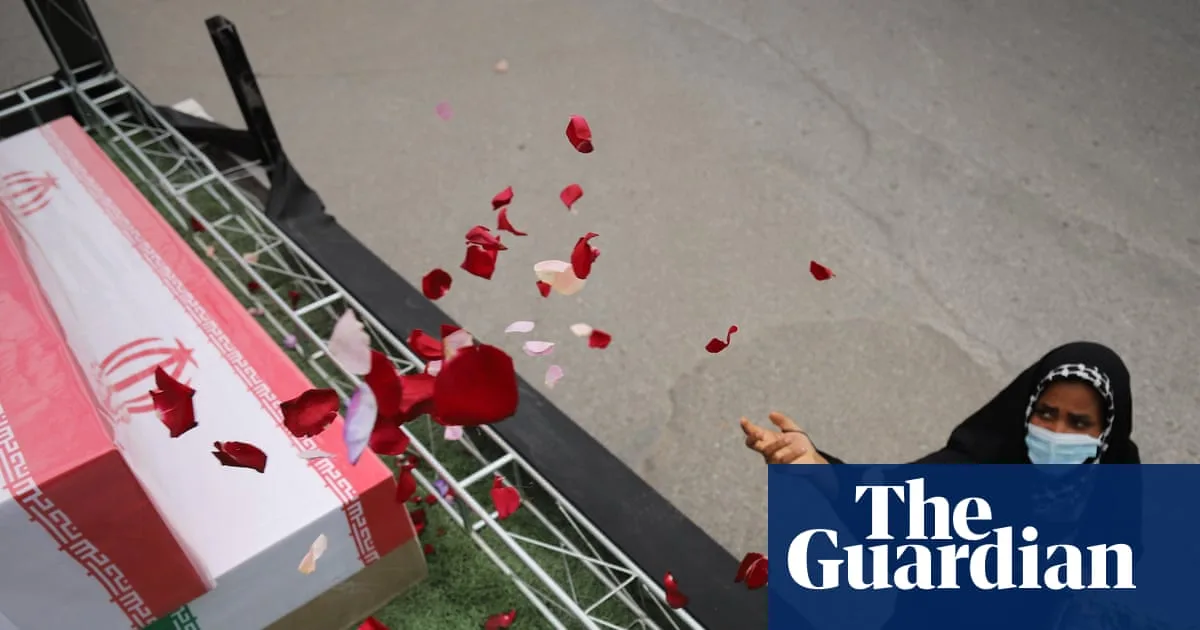
A preliminary US military investigation has reportedly concluded that Washington was responsible for a deadly Tomahawk missile strike on an Iranian elementary school in February, which killed at least 175 people, most of them children. The New York Times, citing unnamed US officials and others familiar with the initial findings, reported that the strike on the Shajarah Tayyebeh elementary school in Minab on 28 February was the result of a targeting mistake by US military planners.
The findings appear to confirm assertions by Tehran, which had produced video footage of the strike and fragments of US-made missile parts, despite President Donald Trump’s efforts to blame Iran for the attack. According to the report, the inquiry—which has yet to be completed—found that officers at US Central Command created the target coordinates using obsolete data provided by the Defense Intelligence Agency.
Independent analysis had already pointed strongly to US culpability. Bellingcat, an investigative collective, geolocated a video released by Iranian state media showing a missile hitting a location in Minab, matching buildings, water towers, trees and roads with satellite images. The missile was identified as a Tomahawk, which munitions experts say indicates a US strike, as Israel is not known to possess such missiles.
Historic satellite imagery shows that while the school building was once part of a wider Islamic Revolutionary Guards Corps (IRGC) complex, it had been walled off for at least nine years and had clear visual indications of being an educational facility, including colourful murals and small sports fields. There is no indication it was a military-use building at the time of the strike.
President Trump had claimed on Saturday that Iran was responsible, stating, “In my opinion, based on what I’ve seen, that was done by Iran … They’re very inaccurate, as you know, with their munitions.” He presented no evidence, and his assertion has not been repeated by US military spokespeople, who have only said the incident is under investigation.