Trump's UN Ambassador Declares 'Dominant Victory' in Iran While Acknowledging Potential for US Troop Deployment
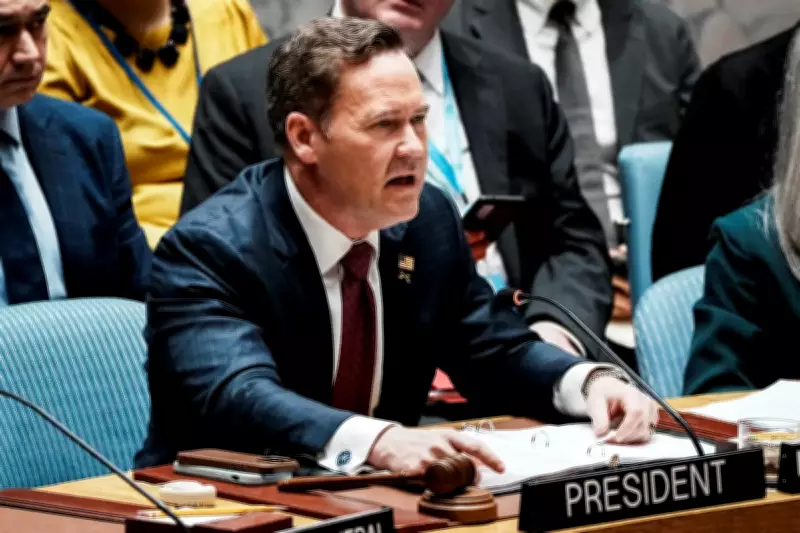
Mike Waltz, the United States Ambassador to the United Nations and former national security adviser to Donald Trump, has made the striking declaration that America has achieved a "dominant victory" in its military conflict with Iran. However, in a significant qualification, he simultaneously refused to rule out the potential deployment of US ground troops to Iranian territory in the coming weeks.
Claims of Unprecedented Military Success
During an appearance on CNN's "State of the Union" with host Jake Tapper, Waltz asserted that American forces have "decimated" Iran's military capabilities across multiple domains. "This has been a dominant victory the likes of which we haven't seen in modern American military history," Waltz proclaimed, specifically citing the degradation of Iran's naval, air, and ballistic missile forces.
Despite this bold claim of victory, Waltz carefully avoided providing any specific timeline for when hostilities might formally conclude. He stated he would "leave it to the president where he decides and when he decides and on what terms he decides as commander-in-chief to end hostilities." He emphasized that the United States currently occupies a "position of strength" while the Iranian regime faces unprecedented weakness regarding its strategic options.
Political and Military Complications
The ambassador's comments arrive amidst a politically delicate moment for the Republican Party. Polling indicates that President Trump's war with Iran remains broadly unpopular with the American public. On Fox News Sunday, Waltz reiterated a point that has proven inconvenient for GOP strategists: the possibility that achieving the White House's stated military objectives might ultimately require putting American boots on the ground in Iran.
Republicans briefed by the administration have similarly declined to rule out such a force deployment, while cautiously distancing the scenario from the prolonged occupations seen in Iraq and Afghanistan. Waltz echoed this careful framing, telling Fox's Shannon Bream, "This isn't going to be another 2003 Iraq. There are not going to be hundreds of thousands of troops occupying urban areas somewhere; certainly not Tehran."
Nevertheless, he added a crucial caveat: if a "targeted" strike utilizing US ground troops became necessary, he was "confident" the Pentagon would present that option to the president.
Strait of Hormuz Crisis and Economic Fallout
A critical unresolved issue remains the strategic Strait of Hormuz. This vital global oil shipping lane has been closed by Iranian minelayers since the conflict began in late February, triggering a severe disruption to global energy markets. The choking of traffic through the strait has propelled oil prices above $100 per barrel.
In the United States, the economic impact is being felt directly by consumers, with average gasoline prices surging by nearly one dollar per gallon in the little over two weeks since the war started. Waltz admitted that the US is actively engaged in discussions about reopening the waterway and is seeking, even "demanding," support from allied nations to help secure commercial vessel passage.
However, Waltz could not identify a single country that has formally committed to sending naval assets to escort tankers through the troubled strait. Reports suggest that commercial ships linked to Iran and China have been granted passage even as the conflict continues, highlighting the complex and fragmented nature of the maritime blockade.
Conflicting Statements on Conflict Resolution
The path to ending the war appears uncertain. Energy Secretary Chris Wright offered a somewhat optimistic prediction in a separate Sunday interview, suggesting a worst-case scenario would see the conflict conclude within "weeks," rather than dragging on for months.
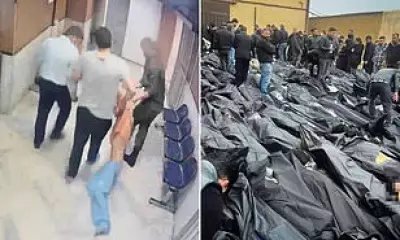
Yet, there are few tangible signs of resolution on the ground. The US has not yet demonstrated an ability to safely reopen the Strait of Hormuz or to halt the escalating barrage of missile and drone attacks proliferating across the region. American casualty figures continue to rise, underscored by the recent crash of a US refueling aircraft in friendly airspace.
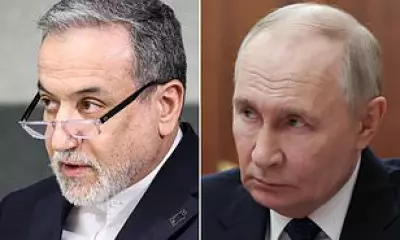
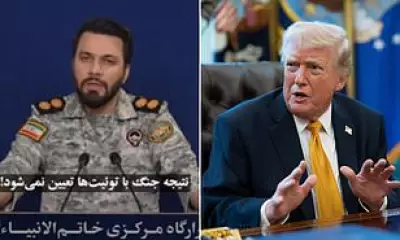
President Trump himself stated on Saturday that he is not prepared to negotiate a peace deal, claiming, "Iran wants to make a deal, and I don't want to make it because the terms aren't good enough yet." This stance was immediately contradicted by Iran's foreign minister, Abbas Araghchi, who denied the US president's claims and vowed that Iran would continue its resistance.
The ongoing conflict and its associated economic pain, particularly at the gas pump, are fueling significant concern among lawmakers on Capitol Hill. With midterm elections approaching, Republicans are looking to the White House for support in defending their congressional majorities, even as the president's approval ratings falter amidst the costly and deadly military engagement.