Major Prisoner Swap Announced Amid Ongoing Peace Negotiations
In a significant diplomatic development, Ukraine and Russia have agreed to exchange 314 prisoners of war, marking the first such swap in five months. The announcement was made by US special envoy Steve Witkoff, who hailed the outcome as a result of "detailed and productive" peace talks currently underway in Abu Dhabi.
Trilateral Talks Yield Tangible Results
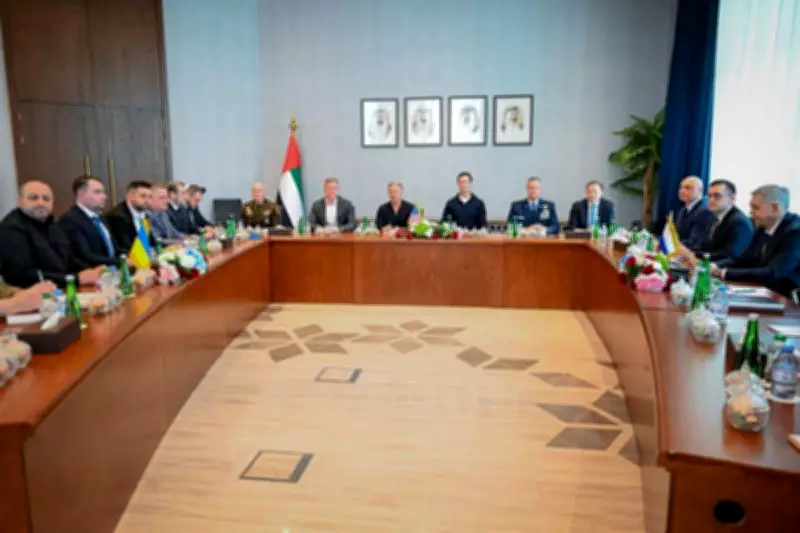
Officials from the United States, Ukraine, and Russia have been engaged in intensive negotiations since Thursday morning, building upon what both sides described as constructive discussions during the first day of talks. Mr Witkoff confirmed the prisoner exchange agreement in a social media post, stating that while significant work remains, this step demonstrates that sustained diplomatic engagement is delivering tangible results in efforts to end the nearly four-year conflict.
The US envoy added that discussions will continue, with additional progress anticipated in the coming weeks. The prisoner swap involves each side exchanging 157 prisoners of war, with Russia's defence ministry confirming through state media that three civilians from the Kursk region were also returned to Russia as part of the arrangement.

Zelensky Reveals Staggering Military Casualty Figures
Meanwhile, Ukrainian President Volodymyr Zelensky has revealed that approximately 55,000 Ukrainian troops have been killed during four years of conflict. This sobering announcement comes as both sides continue to experience significant military losses and civilian casualties.
Ukrainian authorities reported that Russian attacks on Wednesday alone resulted in twelve fatalities and 29 injuries across multiple regions. The eastern Donetsk region suffered particularly heavy losses, with eight people killed including seven in a strike on a market and apartment blocks in Druzhkivka.
Military Developments Amid Diplomatic Efforts
As diplomatic efforts continue, military operations persist on both sides. Ukraine has confirmed successful strikes against a Russian intermediate-range ballistic missile launch site in January, damaging infrastructure at the Kapustin Yar test range near the Caspian Sea. The Ukrainian military employed long-range capabilities including domestically produced Flamingo missiles for these operations.
Conversely, Ukraine has accused Russia of launching a "massive" attack on railway infrastructure in the Sumy region, targeting energy facilities and injuring a train driver. Deputy Prime Minister Oleksiy Kuleba described this as "another act of terrorism" against critical Ukrainian infrastructure.
Kremlin Maintains Firm Stance on Territorial Demands
Despite the diplomatic progress represented by the prisoner exchange, the Kremlin has maintained its uncompromising position regarding territorial demands. Kremlin spokesperson Dmitry Peskov stated that Russian troops would continue fighting until Kyiv makes what Moscow considers the right "decisions" to end the conflict.
This firm stance comes amid reports of behind-the-scenes diplomatic activity, including unconfirmed reports of a visit by French President Emmanuel Macron's top diplomat to Moscow this week. The Kremlin has neither confirmed nor denied these reports, with Peskov noting that French sources were "fond of leaking to the media."
International Engagement and Future Prospects
The peace talks in Abu Dhabi represent a significant international effort to resolve the conflict, with US President Donald Trump's special envoy Steve Witkoff and his son-in-law Jared Kushner leading the American delegation. Ukraine is represented by Rustem Umerov while Russia's delegation includes military intelligence chief Igor Kostyukov.
Vladimir Putin's peace envoy Kirill Dmitriev reported "progress and positive forward movements" from the first day of talks, though he criticised what he described as interference attempts from "warmongers" in Europe and Britain. Dmitriev also revealed that Moscow is actively working to restore relations with the United States through established working groups on economic relations.

As the second day of talks continues in Abu Dhabi, the international community watches closely to see whether this prisoner exchange represents a genuine breakthrough towards peace or merely a temporary humanitarian gesture amid ongoing hostilities.