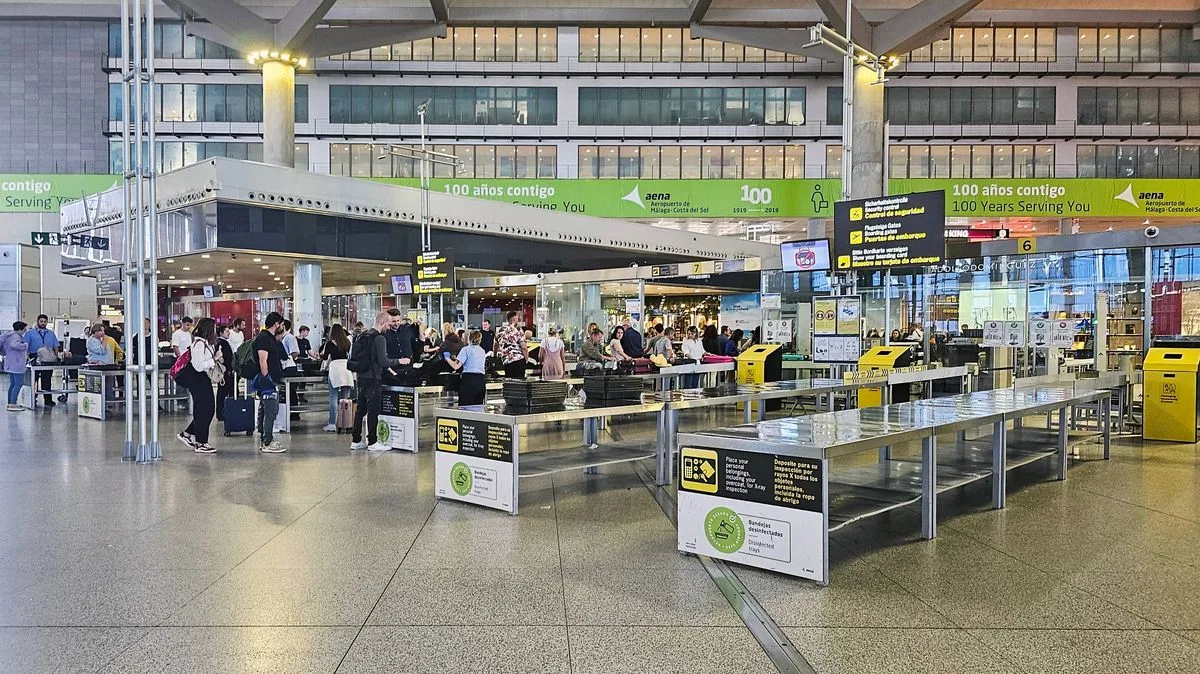
British Traveller Reveals Reality of New EU EES System at Malaga Airport
UK Traveller Shows Reality of New EU EES System in Spain

British Traveller Documents New EU Entry/Exit System Reality at Spanish Airport

A British traveller has provided a firsthand account of the new Entry/Exit System (EES) that is being implemented across the European Union's Schengen zone, revealing significant operational differences for non-EU visitors. Wendy Smyth, a passport holder from Northern Ireland, recently flew to Malaga Airport in Spain where she documented her experience with the automated border control system that is progressively replacing traditional passport stamps throughout continental Europe.

Biometric Registration Requirements for UK Nationals

Wendy Smyth explained through social media platform TikTok that British travellers must now register their biometric information before reaching Passport Control when entering Schengen area countries. "Before you reach Passport Control, if you're a UK national, you will need to register your biometrics on the system," she clarified. "There's plenty of staff around to help you do this, and it involves taking your picture, taking your fingerprints and other information."

The EES represents a significant technological shift in European border management, functioning as an automated IT platform designed specifically for registering non-EU nationals undertaking short-term visits. Each time travellers pass through external frontiers of Schengen nations, the system digitally logs their arrival and departure times, creating a comprehensive electronic record that authorities can access for security and immigration purposes.

Wide Pickt banner — collaborative shopping lists app for Telegram, phone mockup with grocery list

Dramatic Queue Disparities Between EU and Non-EU Travellers

Wendy's documentation revealed stark contrasts in processing times between different categories of travellers at Malaga Airport. She noted that passengers are divided into two distinct channels before Passport Control: one designated for EU citizens and another for non-EU visitors. "If you're unsure, there is a map beforehand, which will show you if you are a 'blue country' or not, what lane you should go in and likewise for 'brown countries'," Wendy explained, referring to the colour-coded guidance system implemented at the airport.

The visual evidence presented a concerning picture for British and other non-EU travellers. The left-hand side queue designated for non-EU citizens appeared extraordinarily lengthy, while EU nationals were observed breezing through their designated lane with minimal waiting time. "You're held in this queue before you get to the ramp to go through into Passport Control," Wendy warned prospective travellers. "This is what may greet you whenever you go through those glass doors."

Mixed Reactions and Implementation Challenges

Online responses to Wendy's documentation revealed mixed reactions to the new system implementation. One TikTok user expressed concern that the apparent delays might discourage travel: "I think this will put a lot of people off travelling." Another traveller reported technical issues with the system's recognition capabilities: "I had my fingerprints and photo taken in Poland but arrived in Spain today and it didn't recognise my passport."

However, not all experiences have been negative. A different traveller recounted a more efficient experience at the same airport: "We went through Malaga on Tuesday and was through passport control in 15 mins. Seen the queues on TikTok and we had nothing!" This suggests that implementation may be inconsistent or that peak times create significantly different conditions for travellers.

Complete Schengen Implementation and Geographical Scope

The EES system is anticipated to become fully functional throughout the entire Schengen area, which currently comprises 29 European countries including:

Pickt after-article banner — collaborative shopping lists app with family illustration
  • Austria, Belgium, Bulgaria, Croatia, Czechia, Denmark
  • Estonia, Finland, France, Germany, Greece, Hungary
  • Iceland, Italy, Latvia, Liechtenstein, Lithuania, Luxembourg
  • Malta, Netherlands, Norway, Poland, Portugal, Romania
  • Slovakia, Slovenia, Spain, Sweden, and Switzerland

It is important to note that the Republic of Ireland and Cyprus are not within the Schengen area, and therefore the EES system does not apply when travelling to these specific destinations. The system represents a fundamental shift in how border control operates within the European Union, moving from physical passport stamps to a comprehensive digital framework designed to enhance security while theoretically accelerating border procedures through automation.

As implementation continues across the continent, British travellers should prepare for additional processing steps when visiting most European destinations, including biometric registration and potentially longer waiting times compared to their EU counterparts. The system's rollout marks a significant post-Brexit development in travel arrangements between the United Kingdom and European Union member states.




