Britain and NATO Allies Redirect Attention from Trump's America to Confront Russian Arctic Operations
While former President Donald Trump intensified military actions against Iran, the United Kingdom orchestrated a covert operation targeting Russian spy submarines in the Arctic region. This strategic move underscores Prime Minister Sir Keir Starmer's commitment to addressing the genuine threats facing the NATO alliance, according to analysis by world affairs editor Sam Kiley.
Secret Arctic Mission Revealed Amid Middle East Turmoil
Just twenty-four hours after Donald Trump proposed transforming the Strait of Hormuz into a lucrative tollbooth partnership between the United States and Iran, the British government disclosed collaborative operations with Norway to safeguard NATO's northern perimeter. The revelation, coupled with Sir Keir Starmer's diplomatic visit to the Arabian Gulf this week, indicates that even Europe's Anglo-Saxon nations are gradually distancing themselves from Washington's foreign policy direction.
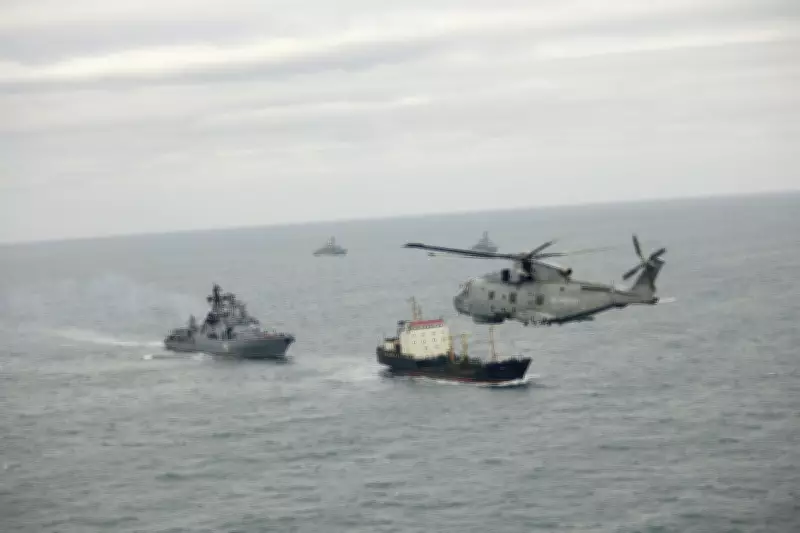
Defence Secretary John Healey confirmed that British frigates and surveillance aircraft had been actively monitoring two Russian spy submarines alongside an attack submarine as they conducted reconnaissance on undersea cables and pipelines in the "high north" Arctic waters. Healey emphasized that Russia had exploited the international focus shifting toward the Middle East following Trump and Israel's controversial strikes against Iran to advance its "hybrid warfare" campaign against NATO members.

Growing Transatlantic Divergence on Security Priorities
Frustrated by NATO members' refusal to participate in attacks against Iran and their reluctance to permit US forces to utilize bases for such operations, Trump has reiterated threats to withdraw America from the alliance entirely. Meanwhile, British officials maintain that Russia's Arctic activities represent a direct threat to Western security, whereas Iran's military capabilities pose minimal danger to the American mainland beyond alleged sponsorship of terrorist organizations.
Healey delivered measured but pointed remarks regarding the latest NATO operation, which involved Norwegian naval and air assets working alongside the Royal Navy. The upcoming Operation Firecrest will feature HMS Prince of Wales leading a carrier strike group into the high north and North Atlantic regions, demonstrating continued commitment to Arctic security.
Public Declaration Against Russian Submarine Activity
"In recent weeks, while international attention focused on the Middle East, the United Kingdom, in partnership with Norway and other allies, has responded to increased Russian activity in the Atlantic north of the UK," Healey stated during a London press conference. "Our armed forces left them in no doubt they were being monitored, that their movements were not covert as President Putin intended, and that their attempted secret operation had been exposed."
The Defence Secretary directly addressed Vladimir Putin, declaring: "We see you, we see your activity over our cables and pipelines, and you should know that any attempt to damage them will not be tolerated and will have serious consequences." He emphasized that the high north remains equally vital to UK security despite ongoing Middle Eastern conflicts.
Diplomatic Navigation Through Complex Regional Dynamics
The United Kingdom has advocated for a comprehensive Middle East ceasefire including immediate cessation of hostilities in Lebanon, where Israel has launched invasions and airstrikes targeting Iranian-backed Hezbollah forces. Tehran has stipulated that any ceasefire agreement with the United States must incorporate Lebanese considerations.
In another subtle indication of divergence from Trump administration proposals, British officials dismissed the feasibility of establishing tollbooth arrangements in the Strait of Hormuz, insisting instead on upholding international maritime law. Gulf nations have reportedly expressed concerns that such systems could establish dangerous precedents compromising freedom of navigation principles.

Strategic Reorientation Toward Core NATO Responsibilities
America's Gulf allies have expressed alarm following Trump's joint military actions with Israel, whose prime minister faces potential indictment for crimes against humanity. Iranian retaliatory measures have disrupted oil exports and targeted regional territories, creating additional instability.
Sir Keir Starmer's Gulf visit provides Britain with opportunities to exercise diplomatic influence in a region where it historically maintained colonial dominance until the 1970s. Simultaneously, the United Kingdom is spearheading efforts to maintain NATO's focus on what it identifies as the primary security threat in the North Atlantic region.
"We recognize Russia as the primary threat to the UK and to NATO, and we will not take our eyes off Putin," Healey affirmed. "At the same time, we act to protect our British interests and our British allies in the Middle East."
Broader Geopolitical Implications and Administration Positions
Russian intelligence sharing with Iran, including training and drone technology transfers used in attacks against Gulf states, the United States, and other NATO members in the Middle East, continues unabated. The Trump administration has notably avoided addressing Vladimir Putin's support for Iran since initiating conflict in February.
Meanwhile, Vice President JD Vance's controversial visit to Hungary, where he openly endorsed Viktor Orbán's candidacy ahead of national elections, violated established diplomatic protocols. Vance has promoted the "great replacement" conspiracy theory alleging European civilizational erosion through non-white immigration.
The Trump administration has adopted explicitly anti-European Union and anti-Ukrainian positions throughout the past year, supporting Russian territorial claims in eastern Ukraine while reducing military assistance to Kyiv. In Hungary, Vance accused the European Union of election interference against Orbán's sixteen-year administration, which similarly aligns with Russian interests against EU policies.
Reinforcing European Leadership Within NATO Framework
Healey clarified, without directly naming Trump or Vance, that American leadership was misdirected in its strategic priorities and alliances. "The UK will step up on European leadership within NATO," he declared. "That is exactly what we're accomplishing through this operation. We're demonstrating cooperation with allies against threats to NATO's northern flank and reinforcing deterrence and defense where threats are greatest—from Russia in the high north."
Ultimately, the United Kingdom and its NATO partners are intensifying collaborative defense efforts to protect Western interests while attempting to counterbalance what they perceive as misguided American foreign policy directions that could undermine transatlantic security architecture.