Trump's Iran War Could Provoke Nuclear Crisis Under New Supreme Leader
Donald Trump's escalating conflict with Iran could push the nation's new Supreme Leader to pursue "the worst thing" with nuclear weapons, according to a leading Iran researcher. The warning comes as tensions continue to mount across the Middle East following recent airstrikes and retaliatory attacks.
New Leadership, Greater Risks
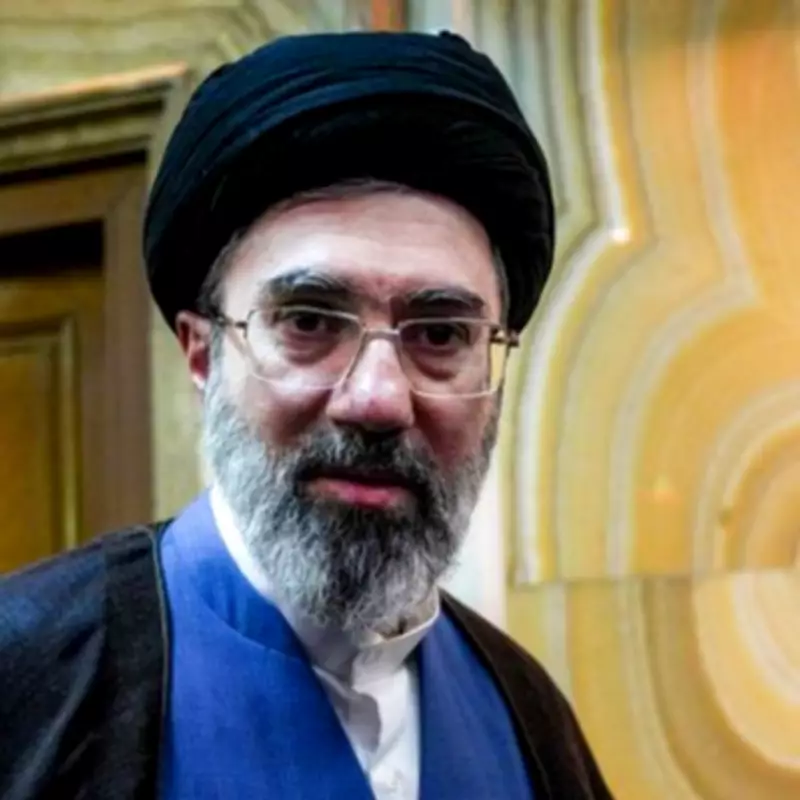
Raz Zimmt, head of the Iran program at the Institute for National Security Studies, has expressed serious concerns about Mojtaba Khamenei, who has succeeded his late father Ayatollah Ali Khamenei as Iran's Supreme Leader. Zimmt believes the younger Khamenei could emerge from the current Middle East conflict with a more hard-line stance than his predecessor.
"The only good thing which one could say about Ali Khamenei was that he was usually very cautious," Zimmt told Newsweek. "He didn't take very risky decisions. And I think that the new leadership under Mojtaba might be willing to take more risks."
Nuclear Breakout Concerns
Zimmt's primary concern centers on Iran's substantial stockpile of enriched uranium. The researcher explained that if Iran retains access to its fissile material after the current conflict, the country could potentially pursue nuclear weapons development.
"If Iran, after the war, will be able to still use the fissile material which is still left in Iran, there is 450 or 400 kilograms of enriched uranium to 60% - in order to enrich uranium to 90%, then convert that to uranium metal and break out, which is certainly a possibility," Zimmt stated.
He added that this scenario represents "the worst thing we could expect from him" and would constitute a "very negative development" for regional and global security.
Regional Conflict Escalation
The warning comes amid ongoing hostilities that began more than two weeks ago when the United States and Israel launched strikes on Iran, resulting in the death of Ayatollah Ali Khamenei and much of his immediate family. Iran has responded with multiple strikes across military bases throughout the Middle East and beyond.
Recent developments include:
- Drones and rockets striking the US embassy in Baghdad this morning
- The United Arab Emirates briefly closing its airspace due to missile and drone threats from Iran
- Continued retaliatory attacks across the region
International Response and Concerns
Last week, Donald Trump called on multiple nations to help secure the Strait of Hormuz, a crucial shipping route through which approximately 20% of the world's oil transits. Writing on Truth Social, Trump specifically mentioned the UK, China, France, Japan, and South Korea as countries that should send warships to protect the waterway.
Meanwhile, leaders from the UK, Canada, France, Germany, and Italy have warned that a major Israeli ground offensive in Lebanon could have "devastating humanitarian consequences." The conflict has already claimed at least 886 lives, including 38 health workers.
Leadership Transition and Injuries
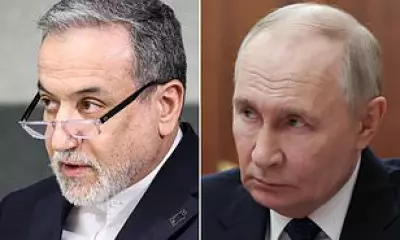
Adding to the complex situation, reports indicate that Mojtaba Khamenei was injured in the recent US-Israeli strikes and was subsequently flown to Moscow for leg surgery. The medical treatment was reportedly "personally offered by Putin," highlighting the geopolitical dimensions of Iran's leadership transition during this crisis.
As the conflict continues to evolve, experts warn that the combination of new leadership in Iran, ongoing military hostilities, and existing nuclear capabilities creates a particularly dangerous situation that could escalate beyond conventional warfare.