Trump's Dramatic Reversal on Iran War Assistance Opens Door for British Influence
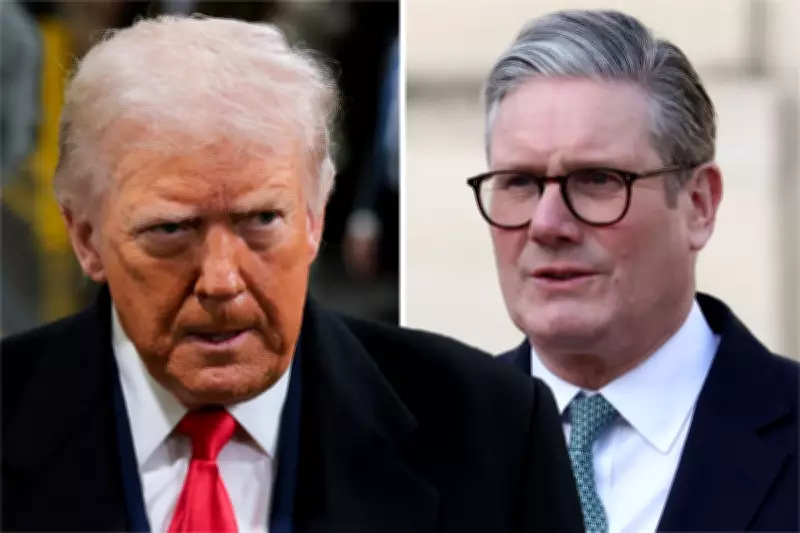
In a striking about-turn, former US President Donald Trump has publicly appealed for international military aid to secure the Strait of Hormuz, directly contradicting his previous dismissive stance towards British assistance. This reversal presents Prime Minister Keir Starmer with a pivotal opportunity to shape Western strategy in the escalating Iran conflict.
From Insults to Invitations: Trump's Shifting Stance
Trump's recent social media plea for naval support from "China, France, Japan, South Korea, the UK, and others" marks a dramatic departure from his earlier rhetoric. Just weeks prior, he had mocked Prime Minister Starmer's consideration of deploying aircraft carriers with the dismissive comment: "We don't need them any longer – But we will remember. We don't need people that join Wars after we've already won!"
This shift underscores America's growing need for allies in a conflict that has spiraled beyond control. The US Navy's notable absence from the mined and dangerous waters of the Strait of Hormuz, coupled with Trump's failure to enlist Russian support, reveals significant strategic vulnerabilities.
Britain's Delicate Balancing Act: Alliance Versus Autonomy
The British response to this public plea requires careful navigation of competing priorities. While all political parties agree actions must serve "the British national interest," defining that interest proves complex. The UK remains critically dependent on American military might for nuclear deterrence, intelligence sharing, and advanced weaponry, despite Washington's increasingly unreliable partnership.
No European framework can replace NATO in the short term, and NATO itself remains fundamentally dependent on US leadership. This makes maintaining functional relations with America essential, even as Britain must resist becoming merely an order-taker in Washington's foreign policy adventures.
Strategic Considerations for Limited Military Engagement
Prime Minister Starmer's government is rightly considering cautious military deployment to protect international shipping in the Gulf. Such action aligns with multiple British interests:
- Protecting global economic stability from shipping disruptions
- Upholding maritime law and preventing civilian casualties
- Supporting British living standards through secure trade routes
The ideal scenario would involve a UN Security Council resolution, though Trump's consistent contempt for the United Nations makes this challenging. A more realistic approach might involve providing defensive assets like mine-busting drones, consistent with Starmer's policy of limited defensive actions rather than joining aggressive warfare.
The Critical Distinction Between Defense and Aggression
There exists a fundamental difference between bombing civilian areas in Tehran and clearing mines threatening merchant vessels in the Persian Gulf. This distinction, while seemingly legalistic, carries profound moral and strategic implications. The Independent, which opposed the Iraq war two decades ago, has applauded Starmer's measured approach thus far.
With each escalation – Israeli raids on Beirut, drone attacks on Riyadh, and shrapnel damaging Dubai skyscrapers – Starmer's decision to limit British involvement appears increasingly justified. Even his conservative critics have conceded that full-scale war participation doesn't serve British interests.
Diplomatic Opportunities in a Flawed Conflict
Historical lessons are being painfully revisited: civilian bombing typically strengthens resistance rather than breaking it. The "spirit of the Blitz" manifests globally, not just in Britain. Meanwhile, Trump has rejected an Iranian peace offer without specifying required terms, despite the war lacking coherent strategic objectives.
Remarkably, America had already achieved its primary strategic goal before hostilities began. Indirect talks brokered by Oman had secured Iran's pledge to never stockpile enriched uranium, effectively ending its nuclear weapons program. This makes the subsequent conflict appear particularly futile and unnecessary.
Leveraging Assistance for Diplomatic Influence
This moment presents medium-sized powers like Britain, France, and Japan with rare leverage over Washington. In exchange for naval assistance securing the Strait of Hormuz, these nations should demand:
- A meaningful voice in US decision-making regarding Operation Epic Fury
- Immediate de-escalation before the operation becomes "Epic Disaster"
- Explicit rejection of any plans to occupy Iranian territory with US Marines
Britain now possesses a genuine opportunity to temper Western actions and push for the "negotiated settlement" Starmer has advocated from the beginning. Regime change has never been achieved through aerial bombardment alone, and there's no indication Iran's leadership will relinquish power under current circumstances. The optimal path forward involves using military assistance as diplomatic currency to end a conflict that serves nobody's long-term interests.