
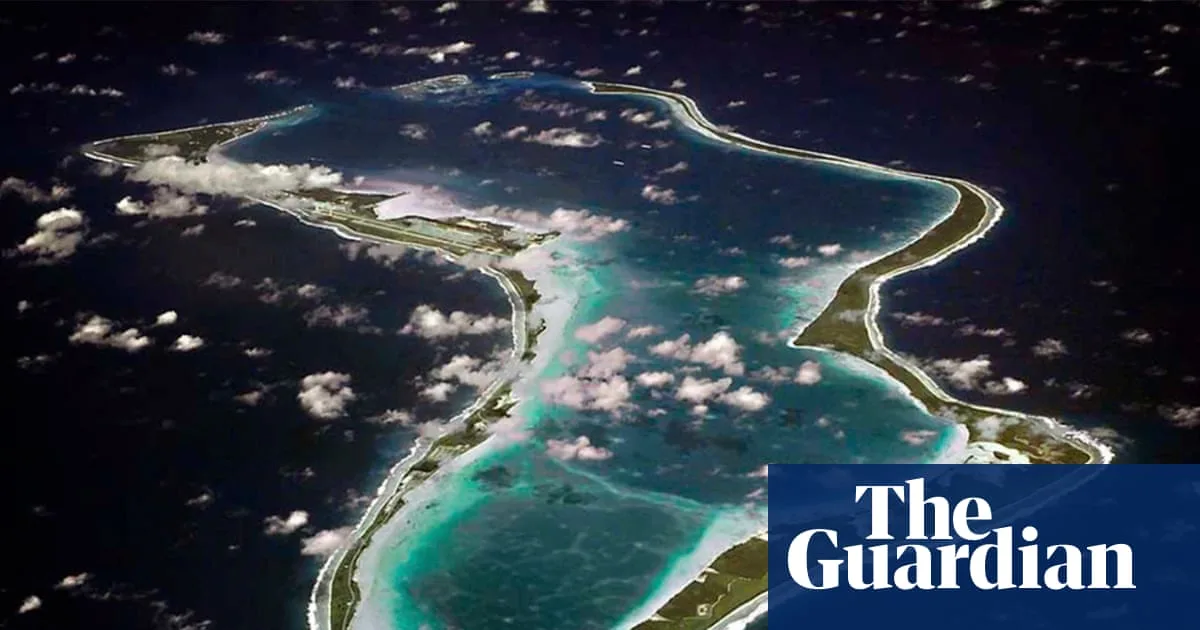
Sir Keir Starmer has said that US intelligence agencies disagree with Donald Trump's newly expressed opposition to the Chagos Islands deal, as Downing Street sources described the agreement as a 'done deal' that will not be scuppered by the US president. The prime minister made the remarks on a flight to Beijing for a visit covering UK national security, after Trump called the handover an 'act of great stupidity'.
Downing Street sources told the Guardian that the UK government had heard nothing from the US State Department or US intelligence agencies to suggest they had changed their minds, despite Trump's fiery rhetoric. The sources suggested Trump's apparent U-turn was linked to his attempts to acquire Greenland, with the president having cited the Chagos deal as a reason for wanting to take over the Arctic territory.
Starmer said the deal had been reviewed at agency level during a three-month pause after the Trump administration took office, and that the US had then 'very clear' supported it, with announcements from Defence Secretary Pete Hegseth, Secretary of State Marco Rubio, and President Trump himself. He added that the agency review focused on security and intelligence before concluding the deal was worth backing.
The Labour government agreed in October 2024 to hand over sovereignty of the Chagos Islands to Mauritius, while maintaining an initial 99-year lease of Diego Garcia, which hosts a joint UK-US military base. The lease is projected to cost £3.4 billion. British officials say the deal was agreed under pressure from Washington, which was concerned about the base's future if Mauritius won a case at the International Court of Justice.
The next stage of the bill connected to the handover has been delayed in the House of Lords. A No 10 spokesperson said: 'We’re continuing to work with the US. We’ve worked with them throughout in terms of developing this treaty.'




