Trump Considers NATO Troop Withdrawal in Retaliation for Iran War Stance
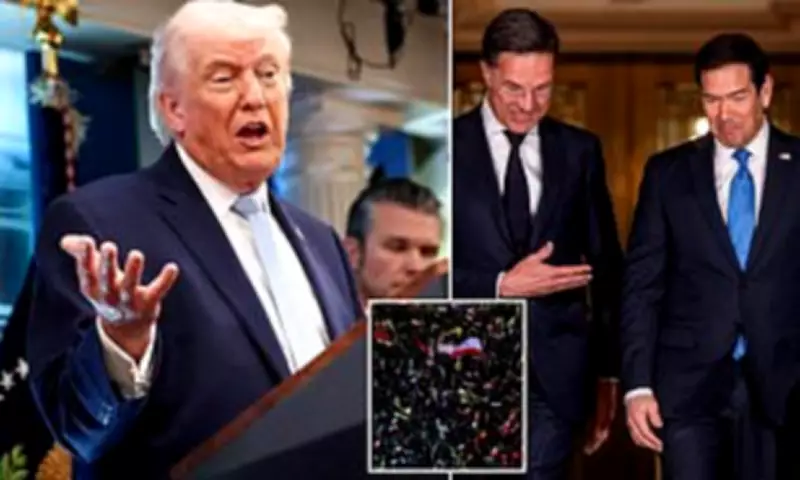
Former President Donald Trump is allegedly plotting revenge against NATO allies who declined to support his military campaign in Iran by potentially withdrawing US troops from their territories. This drastic move follows a widening rift between Washington and the alliance, highlighted by Trump's recent meeting with NATO Secretary-General Mark Rutte.
Social Media Outburst and Greenland Reference
Trump expressed his fury towards NATO in a scathing social media post, writing in all caps: 'NATO WASN'T THERE WHEN WE NEEDED THEM, AND THEY WON'T BE THERE IF WE NEED THEM AGAIN.' He added, 'REMEMBER GREENLAND, THAT BIG, POORLY RUN, PIECE OF ICE!!!' This reference points to his previous attempt to annex Greenland, which is under Danish control and opposed by Rutte and other NATO leaders.
Targeted NATO Members and Military Plans
According to administration officials, Trump may relocate troops stationed in NATO countries that refused to assist in waging war against Iran. While Canada, the Czech Republic, Albania, North Macedonia, Lithuania, and Latvia publicly backed the strikes, others like the United Kingdom, Portugal, and Germany only permitted use of military bases. Notably, Spain and France restricted US access to their airspace and joint facilities, further angering Trump.

His greatest disappointment stems from allies' refusal to deploy warships to help reopen the Strait of Hormuz, a critical oil and gas chokepoint shut down by Iran. Although France, Spain, and others agreed to join an international coalition post-conflict, Trump's disdain has intensified, especially after European nations moved troops to Greenland in solidarity against his territorial ambitions.
Rutte's Diplomatic Efforts and White House Statements
In an interview, Rutte acknowledged Trump's frustration, stating, 'He is clearly disappointed with many NATO allies, and I can see his point.' However, he emphasized that most European nations have supported the US with basing, logistics, and overflights. Rutte avoided confirming whether Trump threatened a NATO exit, but reports suggest he may have dissuaded such action.
White House press secretary Karoline Leavitt reinforced Trump's stance, quoting him: 'They were tested and they failed.' She added that withdrawing from NATO was a topic for discussion with Rutte, lamenting that the alliance 'turned their backs on the American people.'
Legal and Historical Context
Congress passed a law in 2023 prohibiting any US president from unilaterally exiting NATO, requiring congressional approval. Trump, a longtime critic, has previously suggested he could leave the alliance independently. The mutual defense pact, established in 1949, was last invoked after the September 11 attacks. It remains unclear if his administration would challenge the law, which was championed by Secretary of State Marco Rubio during his Senate tenure.
Ceasefire Tensions and Regional Conflicts
This development coincides with fragile ceasefire negotiations in the Iran conflict. Vice President JD Vance is leading a delegation to Islamabad for peace talks, but Iran has accused the US of violating ceasefire terms. Parliament Speaker Mohammad Bagher Qalibaf deemed negotiations 'unreasonable,' citing ongoing Israeli attacks in Lebanon and disputes over nuclear capabilities.
Trump asserted on Truth Social that US forces would remain deployed until a 'REAL AGREEMENT' is reached, threatening escalated military action otherwise. Meanwhile, Israeli strikes in Beirut, excluded from the ceasefire by Trump, resulted in significant casualties, highlighting the complex regional dynamics.