Trump's Fury Erupts as Allies Reject Hormuz Assistance Plea
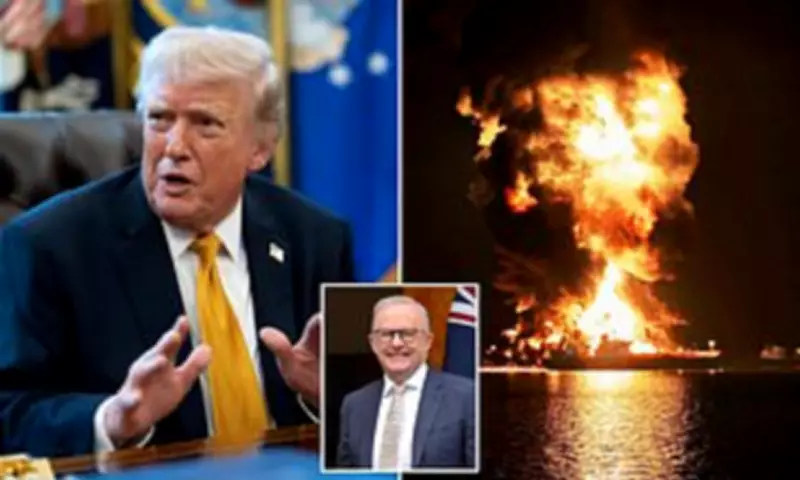
President Donald Trump has launched a scathing attack on America's traditional allies, including Australia, Japan, and South Korea, following their refusal to support US efforts in the Strait of Hormuz. The diplomatic broadside came after these nations declined Trump's urgent request for help amid a blockade by Iranian forces that has severely disrupted global oil supplies.
"We Do Not Need the Help of Anyone"
In a blistering post on Truth Social, Trump declared: "We no longer 'need,' or desire, the NATO countries' assistance - we never did. Likewise, Japan, Australia, or South Korea." The President went further, asserting America's unilateral strength: "In fact, speaking as President of the United States of America, by far the most powerful country anywhere in the world, we do not the help of anyone."
Trump's frustration stems from what he describes as a "one-way street" relationship with NATO, claiming America protects allies who "will do nothing for us, in particular, in a time of need." This rejection has left the US exposed after the United Kingdom, France, Japan, and Australia all declined to help protect commercial shipping through the critical waterway.
Economic Fallout and Military Escalation
The strategic Strait of Hormuz, through which approximately one-fifth of the world's oil flows, remains blockaded by Iranian mines and missiles. This has triggered severe economic consequences, with gas prices surging from $2.90 to $3.80 per gallon in just three weeks since the conflict began.
Senator Lindsey Graham, a key Trump ally, revealed after speaking with the President: "I have never heard him so angry" over Europe's unwillingness to assist. The UK received particular criticism, with Trump renewing his comparison of Prime Minister Sir Keir Starmer to Winston Churchill, stating bluntly: "Unfortunately, Keir is not Winston Churchill."
Trump disclosed that he personally requested British minesweepers, only to be told consultations were necessary first. Sir Keir responded by stating Britain would "not be drawn into the wider war" while taking necessary defensive actions.
Mounting Human and Financial Costs
The conflict has exacted a heavy toll, with thirteen US troops killed and more than 200 injured across seven countries. Israel claims to have killed two high-ranking Iranian commanders overnight, including security chief Ali Larijani and Basij forces commander Gholamreza Soleimani.
Financially, the Pentagon has burned through $5.6 billion worth of munitions in just the first two days of hostilities. Despite US naval and aerial superiority, the Navy remains unable to guarantee safe passage for commercial oil tankers through the Strait.
Ground Invasion Fears and Political Ramifications
Sources close to the White House warn that Trump may now be forced to deploy ground troops in Iran to salvage victory, as Iran shows no signs of relenting. "We clearly just kicked [Iran's] a** in the field, but, to a large extent, they hold the cards now," a source told Politico. "They decide how long we're involved, and they decide if we put boots on the ground."
This escalation risks dragging Trump into an open-ended conflict just as midterm elections approach, with the war threatening to drive up living costs for voters already concerned about affordability. The situation has also caused divisions within Trump's MAGA movement, with figures like Tucker Carlson and Megyn Kelly at odds over Middle East policy.
Intelligence Assessments and Regional Dynamics
US intelligence has determined that Iran's regime will likely remain in power despite relentless airstrikes, with the Islamic Revolutionary Guard Corps expected to tighten its domestic control. Iran's Supreme Leader Ayatollah Mojtaba Khamenei, who hasn't been seen since the war began, insists the US and Israel must be "brought to their knees" before any peace deal is possible.
The US military has moved additional forces to the region, including the USS Tripoli with its 2,000-strong Marine Expeditionary Unit capable of seizing Iranian ports. This deployment has led to speculation about a potential limited ground offensive to alleviate the global oil crisis.
As one source familiar with military operations summarized: "For the White House, now the only easy day was yesterday. They need to worry about an unraveling." Despite administration claims of "tremendous success," the path forward remains dangerously uncertain.