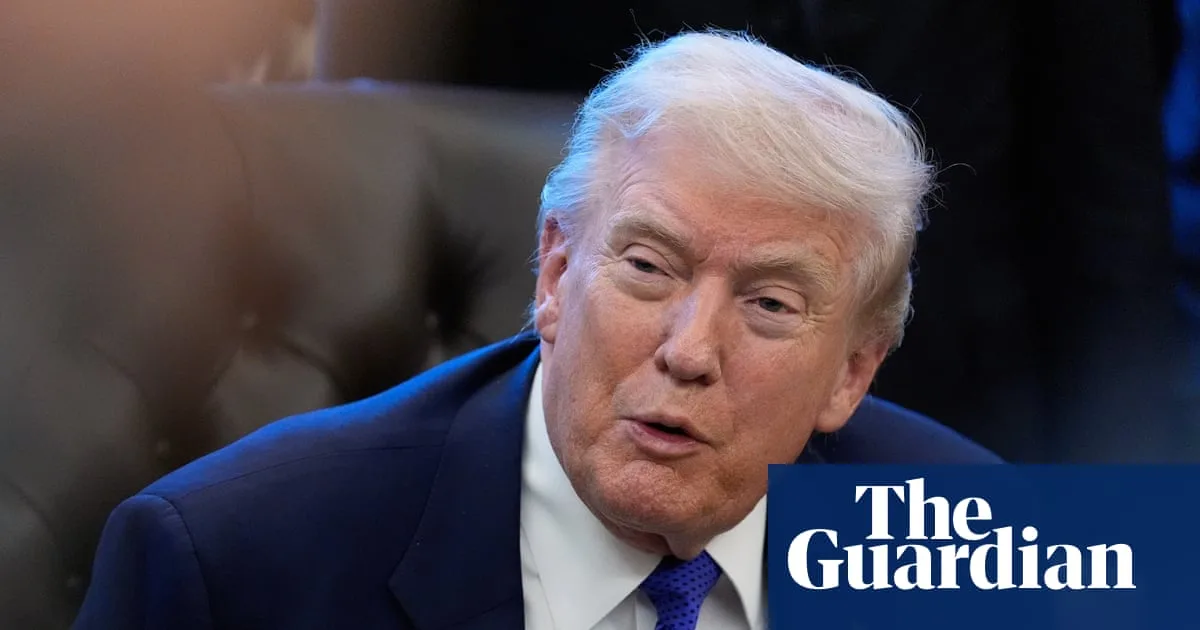
Former US President Donald Trump left members of the White House press corps momentarily lost for words during a significant diplomatic meeting at his Florida estate. The incident occurred as he hosted Ukrainian President Volodymyr Zelensky to discuss a potential 20-point plan to end the ongoing war with Russia.
A Contentious Offer to the Press Corps
During a pause in the high-stakes discussions on Sunday, Trump turned his attention to the assembled journalists. He provocatively asked if they would consider accepting a complimentary lunch at Mar-a-Lago to be a form of bribery, suggesting it might compromise their reporting. "I think you could sit outside and have some food," Trump stated. "Would you like to have some food, or would you consider that a bribe, and therefore you cannot write honestly, or therefore you have to write a bad story?"
The remark drew some chuckles from advisors and officials gathered around the table, including US Secretary of State Marco Rubio, Secretary of War Pete Hegseth, Special Envoy Steve Witkoff, and Trump's son-in-law Jared Kushner. When one reporter eventually replied, "Yes sir," Trump instructed a staff member to "tell the chef to serve them a little lunch."
Despite the gesture, Trump continued his long-running critique of the media, telling his advisors, "That should guarantee you good stories, but it won't. It'll only get worse. They'll go out of their way to make them worse." This exchange underscores the former president's frequently adversarial relationship with the press, which has seen him publicly insult individual reporters in the past.
Progress and Stumbling Blocks in Ukraine Negotiations
The primary purpose of the summit was to advance a potential peace deal between Ukraine and Russia. Trump revealed that the negotiations, based on an American 20-point plan, are "very close" to completion, with only "one or two thorny issues" remaining. The proposed agreement would see the United States guarantee Ukraine's future security, primarily through supporting its EU membership and maintaining a large, Western-funded peacetime army.
President Zelensky, who earlier stated the proposal was about 90% ready, acknowledged the difficulty of the final hurdles. A major point of contention remains the future status of the Donbas region. Zelensky emphasised Ukraine's clear position on respecting its territorial integrity, while Trump noted that some land "has been taken" and "may be up for grabs."
Trump warned of dire consequences if the deal collapses, stating, "They keep fighting and they keep dying." He indicated that the outcome could be known within weeks, but cautioned that a single unresolved issue could derail the entire process.
International Reactions and Ongoing Violence
The diplomatic efforts in Florida stood in stark contrast to the reality on the ground in Ukraine. The meeting took place just one day after Russia launched a missile barrage on Kyiv, killing at least one person and injuring 20 others. Zelensky, who had discussed the summit in a call with British Prime Minister Keir Starmer, reiterated that his sole priority was ending the war, which requires continued global support for air defences and weaponry.
Trump claimed to have had a "very productive" call with Russian President Vladimir Putin, asserting that Russia "wants to see Ukraine succeed" and was prepared to offer favourable terms on energy supplies. This optimistic characterisation was immediately challenged by the recent attacks. Meanwhile, Russian Foreign Minister Sergei Lavrov praised Trump's peace efforts while criticising the European Union as "the main obstacle to peace."
The Mar-a-Lago meeting, punctuated by the unusual exchange with the press, highlights the complex and fragile state of the peace negotiations. With significant issues like Donbas unresolved and violence continuing, the path to a lasting settlement remains fraught with difficulty, even as both leaders express a desire to end the conflict.