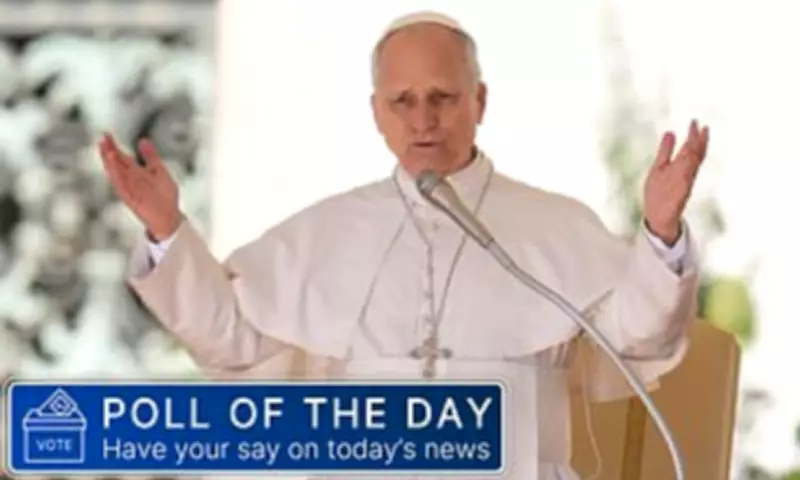
Former US President Donald Trump has ignited a firestorm of controversy this week with his sharp criticisms of Pope Leo XIV and a series of inflammatory social media posts. The political maverick branded the pontiff as 'weak on crime' and 'terrible for foreign policy' following the Pope's public statements opposing the Iran war, a move that has drawn widespread condemnation from leaders and religious communities globally.
Global Outrage Over Trump's Remarks
The backlash intensified when Trump posted an image on social media depicting himself as Jesus, a gesture that deeply offended Christians around the world and sparked accusations of blasphemy and disrespect. In response, Pope Leo XIV asserted that he harbours 'no fear' of Mr Trump, standing firm in his convictions despite the verbal onslaught.
Italian Prime Minister Enters the Fray
Adding to the diplomatic tensions, Italian Prime Minister Giorgia Meloni denounced Trump's recent tirades against the Pope as 'unacceptable', prompting the US leader to launch a scathing counter-attack. This exchange has further strained international relations and highlighted the volatile nature of Trump's political rhetoric.

Vice President Vance Heckled During Speech
Meanwhile, Vice President JD Vance faced interruptions during a speech in Georgia, where he was heckled by an audience member while criticising Pope Leo over his stance on the Iran conflict. This incident underscores the polarising effect of the controversy, even within domestic political events.
Public Opinion and Polling Insights
As the debate rages on, public opinion is being sought on whether Mr Trump should issue an apology for his actions. In a related poll, Mail readers were previously asked about minor speeding offences in 20mph zones, with over 5,000 votes cast. The results showed a overwhelming 91 per cent opposed to penalty points for such infractions, while only 9 per cent supported the measure, reflecting strong public sentiment on regulatory issues.
The unfolding saga continues to dominate headlines, raising questions about the boundaries of political discourse and religious sensitivity in the modern era.