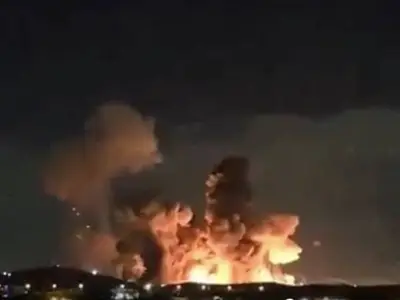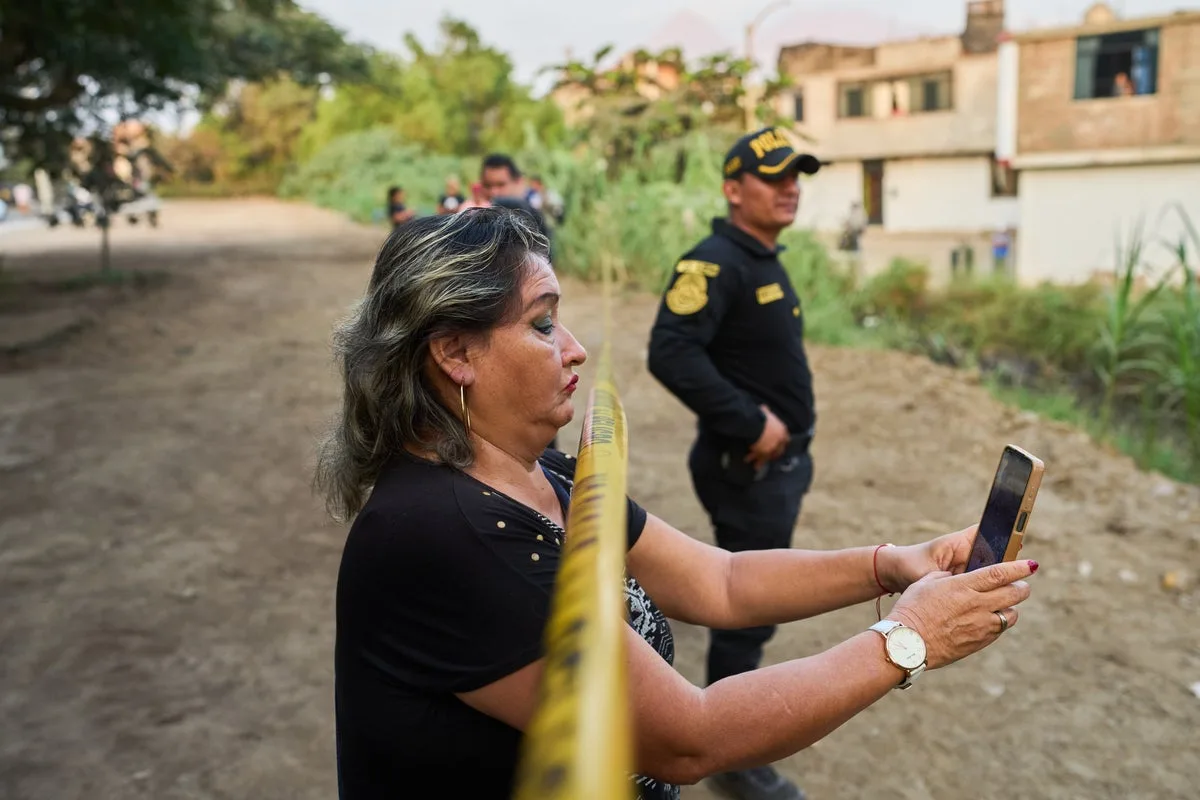
In a desert area along northwestern Peru’s Pacific coast, Gladys Saavedra eyed with suspicion the strangers who arrive at the small market where she works alongside a group of women who, despite meagre sales, must collectively give $300 a month to extortionists or risk paying an even higher price. The market in Trujillo was set on fire last June when the women refused to give in to threats. Days later, they marched, demanding protection from authorities. Nothing changed. But that didn’t surprise Saavedra, as police had failed her in August 2024, when her house was attacked with explosives in another extortion attempt.
That level of violence by Peruvian gangs is the main concern for voters who will elect a new president in a runoff election Sunday. Many will leave their homes to vote fearful of becoming crime victims again during their trip to the polls. “You can’t even stick your head out for fear of being shot,” Saavedra, 49, said.
The first extortion cases reported in Trujillo took place more than 20 years ago, but the phenomenon has spread throughout Peru in the last five years. During that period, extortion complaints increased fivefold, reaching 28,948 cases last year, while murders doubled, reaching 2,226 in 2025, according to official data. Police and security experts attribute the expansion of criminal gangs in Trujillo to their involvement in illegal gold mining. They say the gangs initially profited by providing security to illegal gold miners in a nearby town, then used the proceeds to hire hitmen, buy weapons and strengthen their presence in the city.

According to official data, illegal mining generates approximately $7 billion annually, much more than the roughly $1.2 billion generated annually by drug trafficking. The first victims of extortion were public transportation companies, whose drivers were killed if payment was not made. Transportation workers continue to be targeted, with at least 239 drivers killed last year across the country, according to the independent Observatory of Crime and Violence. Of those killed, more than half were motorcycle taxi drivers, widely used on the outskirts of cities where roads are often unpaved. But it has been the murders of bus drivers that have triggered transportation strikes and protests.
Experts attribute the increasing power of organised crime in Peru to the profits that decades-old criminal groups are earning from illegal gold mining in the Andes and the Amazon. In 2025, Peru exported 100 tons of illegally mined gold, nearly matching the 109 tons of legally mined gold it exported. In a Trujillo neighbourhood where a quarter of the country’s footwear is manufactured, union leader Máximo Varas said that around 1,500 small business owners in that industry pay extortionists to be able to work. “Everyone pays — even I get extorted. No one is safe,” he said.
Across Trujillo, several buses, restaurants, corner stores, nightclubs and even schools have stickers placed on their facades. These include a puma, a cross and a Batman logo. Police said the stickers indicate that the businesses have paid extortion fees. So, authorities sometimes go around Trujillo removing those stickers and replacing them with ones from law enforcement. For businessman Iván Díaz, 58, violence has increased “unreasonably” in Trujillo. In 2023, he was kidnapped for 11 days by criminals dressed as police officers who dragged him from his office. To obtain a $250,000 ransom, his captors cut off part of two fingers on his right hand and sent videos of the torture to his family to “advance the payment.” “I had to adapt to reality and keep a cool head,” Díaz said. In May, the courts sentenced four members of the criminal group Los Pulpos, which emerged in Trujillo in the 1990s and later expanded to neighbouring Chile, to life imprisonment for Díaz’s kidnapping.

The Ministry of Economy estimated in July that crime costs Peruvians some $5 billion annually. This figure includes state investment to fund police operations, but also private spending on surveillance cameras and security guards. Peru’s outlying neighbourhoods lack paved roads, potable water and electricity, but above all, they lack a police presence. In contrast, wealthier municipalities like the capital’s San Borja, where the two presidential candidates — the conservative Keiko Fujimori and the progressive Roberto Sánchez — live, have a large number of uniformed officers as well as an additional force of private security.