Trump Intensifies Criticism of Pope Leo Amid Iran Conflict Dispute
Former US President Donald Trump has launched a new verbal assault on Pope Leo, directly challenging the pontiff's stance on the ongoing war in Iran. In a late-night post on his Truth Social platform, Trump demanded that someone inform the Pope about alleged atrocities in Iran, claiming the regime has killed at least 42,000 innocent protesters in recent months.
Pope Vows to Continue Anti-War Advocacy Despite Trump's Attacks
Pope Leo, the first American to hold the position, has emerged as a significant critic of Trump's approach to the Iran conflict. Despite facing sustained public criticism from the former president, the Pope has reaffirmed his commitment to speaking out loudly against warfare. This principled stand has positioned him as an influential voice representing 1.4 billion Catholics worldwide who question Trump's foreign policy decisions.
The escalating tension between the two powerful figures began earlier this month when Pope Leo condemned Trump's threats against Iran as "unacceptable." Trump responded with what has become a pattern of furious attacks against the religious leader, whom he has previously described as "weak on crime" and "terrible for foreign policy."

Trump's Social Media Outburst Targets Multiple Allies
In his latest inflammatory post, Trump wrote: "Will someone please tell Pope Leo that Iran has killed at least 42,000 innocent, completely unarmed, protesters in the last two months, and that for Iran to have a Nuclear Bomb is absolutely unacceptable. Thank you for your attention to this matter. AMERICA IS BACK!!!"
The former president simultaneously risked further alienating military allies by launching another assault on NATO members. He asserted that the alliance "wasn't there for us, and they won't be there for us in the future!" This dual-front criticism comes as the Iran war shows no signs of reaching a lasting resolution, with Trump increasingly blaming allies for what he perceives as their failure to support an increasingly unpopular military engagement.
Political and Religious Backlash Grows Against Trump
Vice President JD Vance, himself a Catholic, entered the fray with an extraordinary intervention, suggesting that Pope Leo should exercise caution when discussing theological matters. This remark from a senior administration official highlighted the deepening political dimensions of the religious dispute.
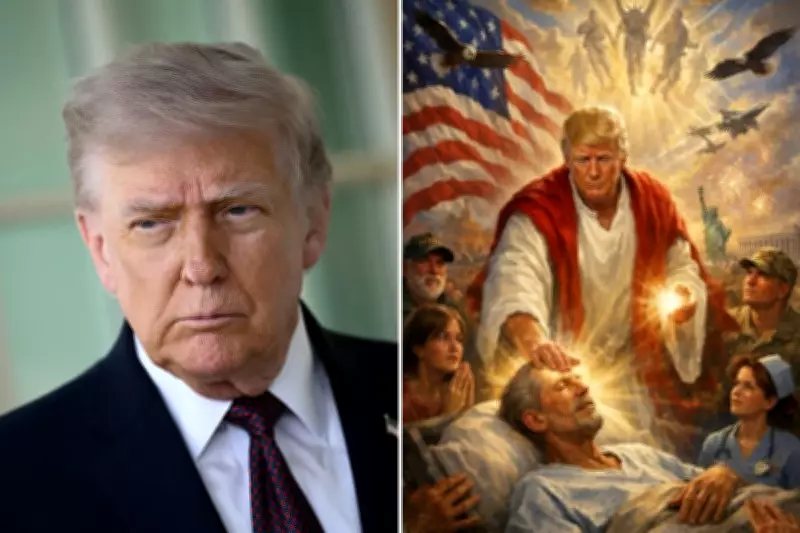
Trump continues to face criticism from within his own political base for sharing an AI-generated image that many interpreted as depicting him in a Christ-like manner. The controversial rendering showed Trump wearing white and red robes with light emanating from his hands as he tended to the sick. Although Trump later claimed the image portrayed him as a doctor rather than Jesus, the damage to his reputation among religious conservatives appears significant.
International condemnation has been swift and widespread. Italian Prime Minister Giorgia Meloni, traditionally a Trump ally, described his comments about the Pope as "unacceptable" and expressed solidarity with the religious leader. Trump responded by calling Meloni "unacceptable" himself, stating he was "shocked by her" and admitting "I thought she was brave, but I was wrong."
Iran Seizes Opportunity to Criticise Trump
The Iranian government quickly capitalised on the diplomatic rift, with President Masoud Pezeshkian condemning Trump's "insult" against the Pope as unacceptable. In a message posted on social media platform X, Pezeshkian wrote: "Your Excellency Pope Leo XIV, on behalf of the great nation of Iran, I condemn the insult to Your Excellency and declare that the desecration of Jesus (peace be upon him), the Prophet of peace and brotherhood, is unacceptable to any free person."
Meanwhile, former Trump ally Marjorie Taylor Greene described the president's depiction as Christ as "more than blasphemy. It's an Antichrist spirit," adding that she "completely denounces this and is praying against it." This criticism from within Trump's traditional support base indicates potential fractures in his political coalition as the 2026 political landscape continues to evolve.

The Pope's recent warning about democracies sliding into "majoritarian tyranny" appears increasingly relevant as this extraordinary public dispute between political and religious leadership continues to unfold with significant implications for international relations and domestic politics in multiple nations.