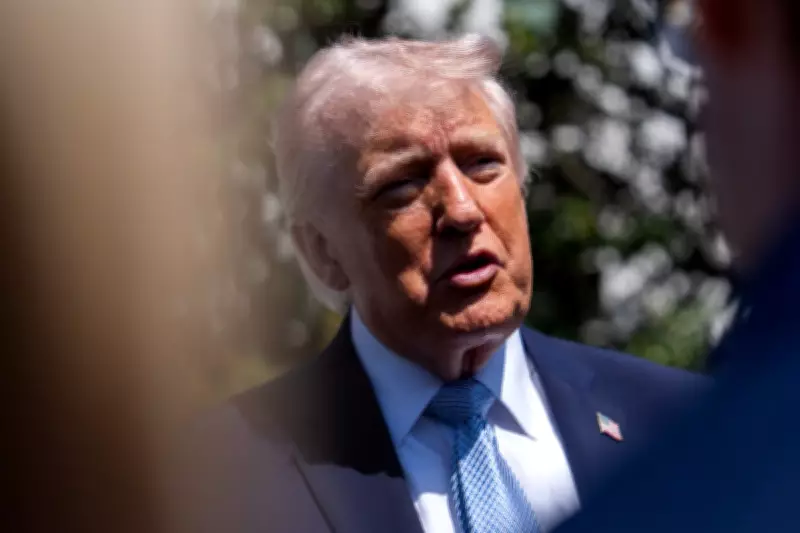
In a dramatic turn of events, former US President Donald Trump has agreed to a provisional two-week ceasefire in the ongoing conflict with Iran. This decision came less than two hours before a critical deadline he had set for Tehran to end its blockade of the vital Strait of Hormuz waterway.
Last-Minute Diplomatic Intervention
The breakthrough followed intensive mediation efforts by Pakistan, which has been acting as a key intermediary between the warring sides. Trump announced the suspension of his threat to escalate military strikes against Iranian power plants and bridges, stating this was "subject to the COMPLETE, IMMEDIATE, and SAFE OPENING of the Strait of Hormuz."
Iran's Conditional Cooperation
Iran's Supreme National Security Council confirmed acceptance of the temporary truce but issued a stark warning that "our hands remain upon the trigger." The regime emphasized that any "slightest error" by opposing forces would be met with "full force."

Iranian Foreign Minister Abbas Araghchi clarified that vessels would be permitted safe passage through the strait over the next fortnight, but only "via coordination with Iran's armed forces and with due consideration of technical limitations." This represents a significant shift from the complete chokehold Iran had maintained on this critical shipping artery.
The Ten-Point Proposal
Trump revealed that Tehran had submitted a comprehensive ten-point plan which he described as providing "a workable basis on which to negotiate." He expressed optimism that "almost all of the various points of past contention have been agreed to between the United States and Iran."
However, potential complications emerged as Iran indicated the strait would be subject to "regulated passage... under the coordination of the armed forces of Iran," which Tehran claims would "confer upon Iran a unique economic and geopolitical standing." This appears to conflict directly with Trump's demand for completely unrestricted access.
Regional and International Reactions
Pakistan Prime Minister Shehbaz Sharif has invited both Iranian and American officials to Islamabad for talks commencing Friday. The White House confirmed that Israel has also accepted the ceasefire terms.
Earlier, Trump had issued an apocalyptic warning on his Truth Social platform, stating "a whole civilisation will die tonight, never to be brought back again." This rhetoric drew sharp criticism, including from Pope Leo XIV who branded it "truly unacceptable."
Economic Implications
The conflict has had severe global economic consequences, with Iran's blockade sending oil and gas prices skyrocketing and creating widespread market uncertainty. The Strait of Hormuz handles approximately one-fifth of the world's petroleum consumption, making its accessibility crucial to global energy markets.
In a related development, the UK recently chaired a meeting of military planners from a coalition of over thirty nations, examining long-term measures to ensure the shipping route remains safe and accessible once hostilities conclude.
The US State Department confirmed that Secretary of State Marco Rubio had discussed with foreign counterparts "the critical importance of restoring freedom of navigation in the Strait of Hormuz" and agreed on "the need for international efforts to ensure shipping can move freely and energy supplies can reach global markets."
This two-week ceasefire window represents a fragile opportunity for diplomatic resolution to a conflict that has threatened to escalate into broader regional warfare with devastating global economic consequences.