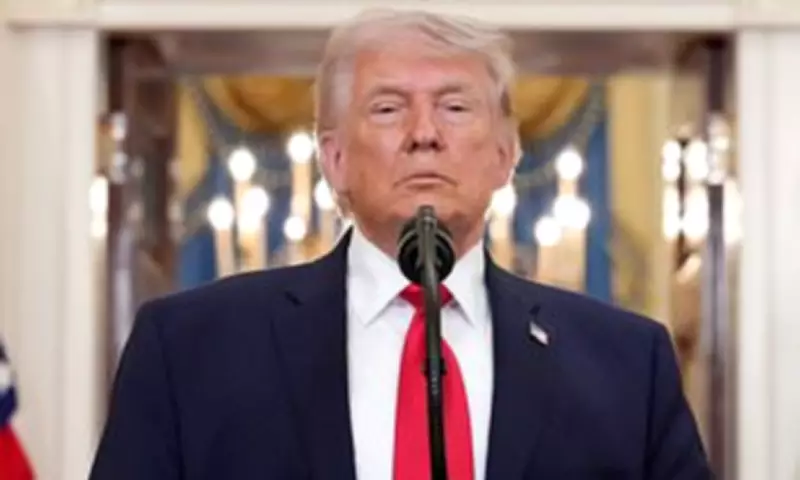
Global Relief as Trump Halts Iran Attack at Eleventh Hour
The international community breathed a collective sigh of relief overnight as former US President Donald Trump agreed to a two-week ceasefire with Iran, mere hours before executing his threat to destroy what he termed "a whole civilisation." The dramatic de-escalation followed intense diplomatic negotiations mediated by Pakistan, averting a potentially catastrophic military confrontation.
Brinkmanship and Last-Minute Diplomacy
Trump had issued an ultimatum demanding Iran reopen the strategically vital Strait of Hormuz by 8pm EST (1am BST), threatening devastating attacks on Iranian bridges and power stations if his demands weren't met. As the deadline approached, US bombers were already mobilised, with one munitions-loaded aircraft spotted departing RAF Fairford in Gloucestershire, apparently en route to Iran.
Pakistan's Prime Minister Shehbaz Sharif emerged as the crucial mediator, publicly urging Trump to extend his looming deadline via a social media post that declared diplomatic efforts were "progressing steadily, strongly and powerfully." Within an hour of Sharif's intervention, both American and Iranian officials were engaged in what Trump described as "heated negotiations."

The Ceasefire Agreement
At 11:32pm—less than 90 minutes before his deadline—Trump announced on his Truth Social platform that he would suspend the planned attack for two weeks, conditional upon Iran completely reopening the Strait of Hormuz. The former president framed the decision as a "double sided ceasefire" and revealed that Iran had submitted a ten-point proposal that he considered "a workable basis on which to negotiate."
Iranian officials confirmed to the New York Times that Supreme Leader Ayatollah Mojtaba Khamenei had approved the ceasefire following frantic diplomatic efforts involving both Pakistan and China. Tehran agreed to gradually reopen the Strait over the next two weeks under military coordination, though Iran's Supreme National Security Council cautioned that negotiations "do not signify the termination of the war" and warned that "our hands remain upon the trigger."
Regional Tensions and Military Posturing
Even as diplomatic efforts intensified, military activity continued across the Middle East. Israel, the United Arab Emirates, and Qatar intercepted multiple drones headed for their cities, while Israel conducted strikes on Iranian infrastructure including the Yahya Abad railway bridge in Kashan. The US had earlier bombed Kharg Island, which handles 90% of Iran's oil exports, striking more than 50 targets.
In response to the escalating threats, Iranian authorities urged citizens to form "human chains" around bridges and power plants, with thousands reportedly gathering at vulnerable sites. Vice President J D Vance issued a chilling warning about "tools in our toolkit that we so far haven't decided to use," though the White House denied this constituted a nuclear threat.
International Reactions and Concerns
Trump's increasingly bellicose rhetoric had raised alarm internationally, with former communications director Anthony Scaramucci warning that the former president's threats amounted to "calling for a nuclear strike" and urging his removal from office. Former counter-terrorism chief Joe Kent cautioned that attempting to "eradicate Iranian civilisation" would transform America's global standing from stabilising force to "agent of chaos."
Pope Leo XIV condemned Trump's threats as "truly unacceptable," framing the situation as "a moral issue, for the good of the people entirely." Meanwhile, US Secretary of State Marco Rubio accused Iran of "violating every law known" through its closure of the Strait of Hormuz.
Path Forward and Negotiations
According to the agreement, negotiations between the US and Iran will commence in Islamabad beginning Friday, with both sides expressing cautious optimism about reaching a "definitive Agreement concerning Longterm PEACE with Iran, and PEACE in the Middle East," as Trump described it. The White House confirmed that Israel had also agreed to the temporary ceasefire.

The eleventh-hour agreement represents a significant diplomatic achievement for Pakistan's mediation efforts, though regional tensions remain high with all parties maintaining military readiness during the two-week negotiation window.