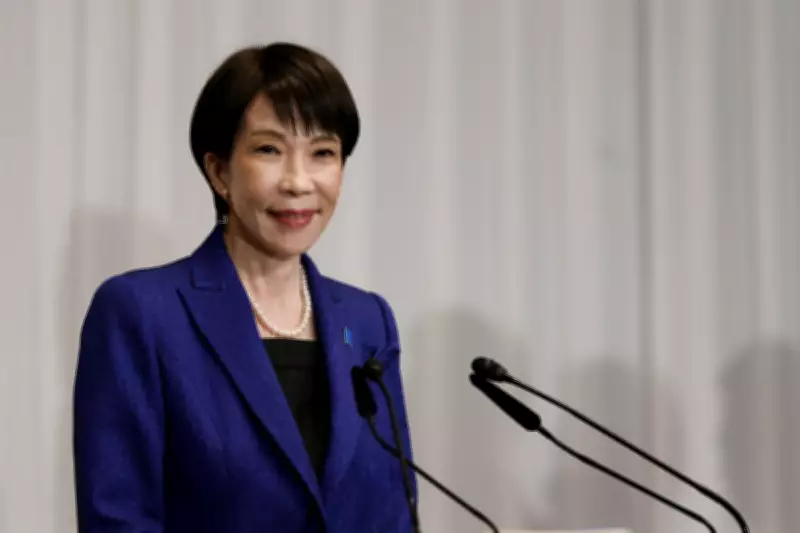
Japan's Takaichi Secures Second Term with Landslide Election Victory
Prime Minister Sanae Takaichi has been formally reappointed as Japan's leader following a decisive electoral triumph last week, granting her a robust public mandate to advance a pronounced rightward shift in national policy. The parliamentary confirmation on Wednesday represents a procedural step, yet Takaichi aims to leverage the occasion to reinforce her Liberal Democratic Party's dominance, capitalising on a commanding two-thirds supermajority in the powerful lower house.
Supermajority Powers Enable Aggressive Legislative Agenda
With control over 465 seats in the lower chamber, Takaichi's coalition can dominate key committee positions and override rejections from the upper house, where the ruling bloc lacks a majority. This legislative strength underpins her ambitious goals, which include significantly enhancing military capabilities, increasing government expenditure, and fortifying conservative social policies.
Immediate Economic Challenges and Fiscal Policies
Her administration's first urgent priority involves tackling rising consumer prices and stagnant wages, with a delayed budget bill now set for passage to fund these measures. Takaichi proposes a two-year sales tax reduction on food items to alleviate household living costs, though economic experts warn that such liberal fiscal approaches could exacerbate inflationary pressures and hinder efforts to reduce Japan's substantial national debt.

Strengthening Military and Security Posture
Takaichi has pledged to revise security and defence policies by December, focusing on bolstering Japan's military prowess through measures like lifting bans on lethal weapons exports and distancing from postwar pacifist principles. The government is considering developing nuclear-powered submarines to enhance offensive capabilities, alongside plans to improve intelligence-gathering and establish a national agency for closer collaboration with allies such as the United States, Australia, and Britain.
Hawkish Stance on China and Diplomatic Maneuvers
The prime minister's November remarks suggesting potential Japanese action if China militarily moves against Taiwan have drawn diplomatic and economic reprisals from Beijing, yet many Japanese citizens, frustrated by China's growing assertiveness, have welcomed her firm stance. Emboldened by her electoral success, Takaichi is expected to adopt a more hawkish approach towards China, while also working to gain support for a visit to Tokyo's controversial Yasukuni Shrine, a site viewed by neighbouring nations as symbolic of insufficient remorse for Japan's wartime history.
Upcoming Summit with U.S. President Donald Trump
Takaichi is preparing for a critical summit next month with U.S. President Donald Trump, who endorsed her ahead of the Japanese election and is anticipated to seek delivery on a $550 billion investment package pledged by Japan in October. Japan faces pressure to increase annual defence spending, with policy experts noting the public's divided expectations on whether Takaichi should confront or comply with Trump to ensure national security.
Stricter Immigration and Traditional Social Policies
The government has approved tougher regulations on permanent residency and naturalisation, alongside measures to prevent unpaid taxes and social insurance, reflecting growing domestic frustration with immigration. Takaichi also promotes traditional family values, supporting male-only imperial succession, opposing same-sex marriage, and resisting revisions to civil law that would allow married couples to retain separate surnames, a move critics argue pressures women into abandoning their family names.
Controversial Anti-Espionage Law and Civil Rights Concerns
Takaichi backs a contentious anti-espionage law primarily targeting Chinese spies, though some analysts caution it could undermine civil liberties in Japan. As she navigates these complex policy areas, her administration must balance ambitious rightward shifts with pressing economic and demographic challenges, including a declining population and ongoing military security worries.