
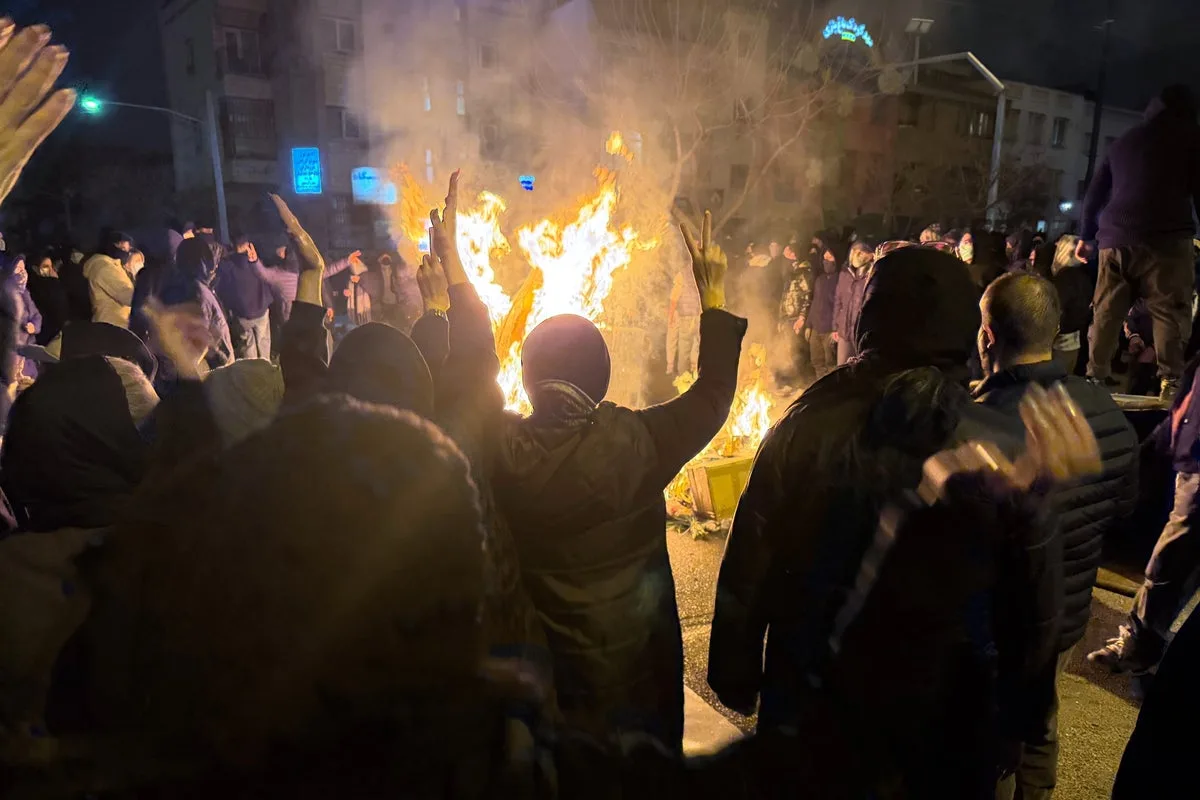
Iran’s exiled crown prince, Reza Pahlavi, has accused the Tehran regime of killing an Iranian protester “every 14 seconds” as he declared the “slaughter has not stopped”. Pahlavi, the exiled son of the last Shah, said that the Islamic Republic “will fall soon” and called on the international community to support the Iranian people in the face of a brutal crackdown.
His comments came after the US moved the nuclear-powered USS Abraham Lincoln aircraft carrier to the Middle East, a signal of mounting tensions between Washington and Iran. Trump has warned the regime to halt the killing of protesters but appeared to step back from military action earlier this week, saying he had received assurances that planned executions were not taking place.
“The Iranian people are taking decisive action on the ground. It is now time for the international community to join them fully,” Pahlavi said, vowing that he would return to Iran because he is “uniquely positioned to ensure a stable transition”. “The regime will fall. Stand with the people now or watch the cycle of instability continue,” he continued. Addressing the international community, he said: “My brave compatriots ... we need your urgent help right now.”
The American warship and its strike group have moved west from the Indo-Pacific region, satellite data from Copernicus shows, carrying with it fighter jets, guided missile destroyers and an attack submarine. The Trump administration had warned Tehran there would be “grave consequences” if there was further bloodshed in Tehran, after serious unrest in Iran saw the death toll surpass 2,500. Pahlavi claimed that 12,000 Iranians had been killed since the protests began late last month.
The protests began over economic grievances before spiralling into some of the most widespread and deadly protests in years. However, the unrest appears to have receded in recent days, largely due to an internet blackout. Fears also grew that hundreds of Iranians were set to be executed by the Iranian regime, which in 2025 carried out nearly twice as many executions as it did in 2024.
White House spokesperson Karoline Leavitt said Trump had received assurances that 800 scheduled executions were halted, but that the president was keeping “all of his options on the table”. Erfan Soltani, 26, was named by Norway-based Kurdish human rights organisation Hengaw as the first Iranian scheduled for execution in relation to the protests. His family had been told he faced execution on Wednesday, just days after he was arrested. But Iran’s judiciary later denied it had scheduled his execution.




