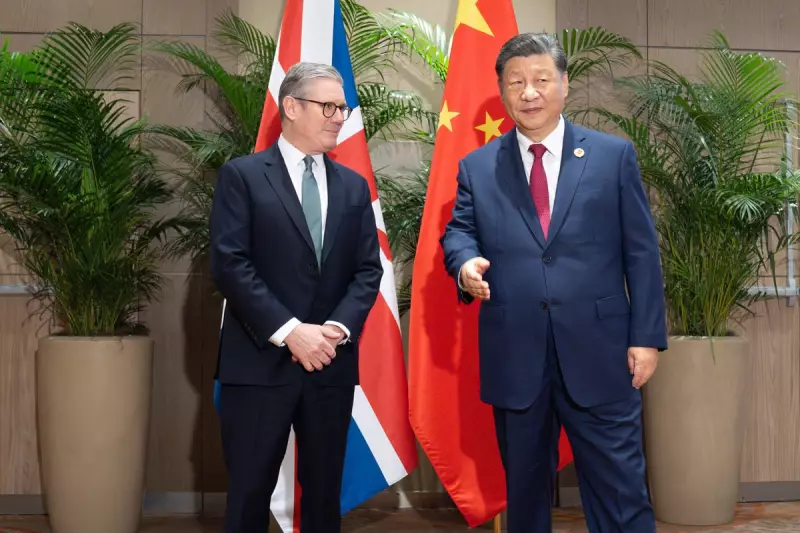
Prime Minister Sir Keir Starmer has outlined a robust yet pragmatic foreign policy towards China, acknowledging it poses significant national security threats to the UK while arguing that engagement is essential. The speech, delivered at the annual Mansion House address, comes just days before a critical government decision on a controversial new Chinese super embassy in London.
A Delicate Balancing Act on China
In his keynote foreign policy speech, Sir Keir described China as a nation of "immense scale, ambition and ingenuity," but was unequivocal about the risks. He stated that Beijing "poses national security threats to the UK", marking a clear-eyed assessment of the challenge. However, he criticised the UK's past approach of swinging between a "golden age" of relations and an "Ice Age" of hostility, pledging to reject this binary choice.
"Our response will not be driven by fear, nor softened by illusion," the Prime Minister declared. "It will be grounded in strength, clarity and sober realism." He emphasised that protecting national security was "non-negotiable" and the government's first duty, but argued this security foundation would enable cooperation in other, less sensitive areas.
Super Embassy Decision and Security Scrutiny
The timing of the speech is pivotal, with Communities Secretary Steve Reed set to announce a decision on 10 December regarding the proposed new Chinese embassy complex at Royal Mint Court. The project has been delayed amid intense scrutiny over potential espionage risks and national security implications.
This issue remains highly sensitive for the Labour government, which recently faced criticism after the collapse of a trial in October involving two alleged Chinese spies operating in Parliament. Ministers argued that the failure to formally designate China as a national security threat at the time of the alleged offences hampered the prosecution.
Sir Keir sought to delineate areas where cooperation with China could proceed. He listed financial and professional services, creative industries, pharmaceuticals, and luxury goods as sectors where "the export opportunities are huge" and where the government would back British businesses, provided all necessary security mitigations were in place.
Brexit Critique and Internationalist Vision
Beyond China, the Prime Minister used the platform to critique the delivery of Brexit and position himself against what he called a "corrosive, inward-looking attitude." While ruling out rejoining the EU or the single market, he took aim at those advocating for leaving the European Convention on Human Rights (ECHR).
He singled out figures like Nigel Farage and Reform UK, as well as former Tory minister Kemi Badenoch, for promoting policies that would "unpick international relationships." Sir Keir argued that the Brexit vote was a democratic expression to be respected, but that "wild promises were made to the British people and not fulfilled."
"In these times, we deliver for Britain by looking outward with renewed purpose and pride," he concluded. "Not by shrinking back. In these times, internationalism is patriotism." This stance reinforces his active role on the global stage since taking office, including leading support for Ukraine and pursuing deals with the US, India, and the EU, even as opponents accuse him of neglecting domestic priorities.