
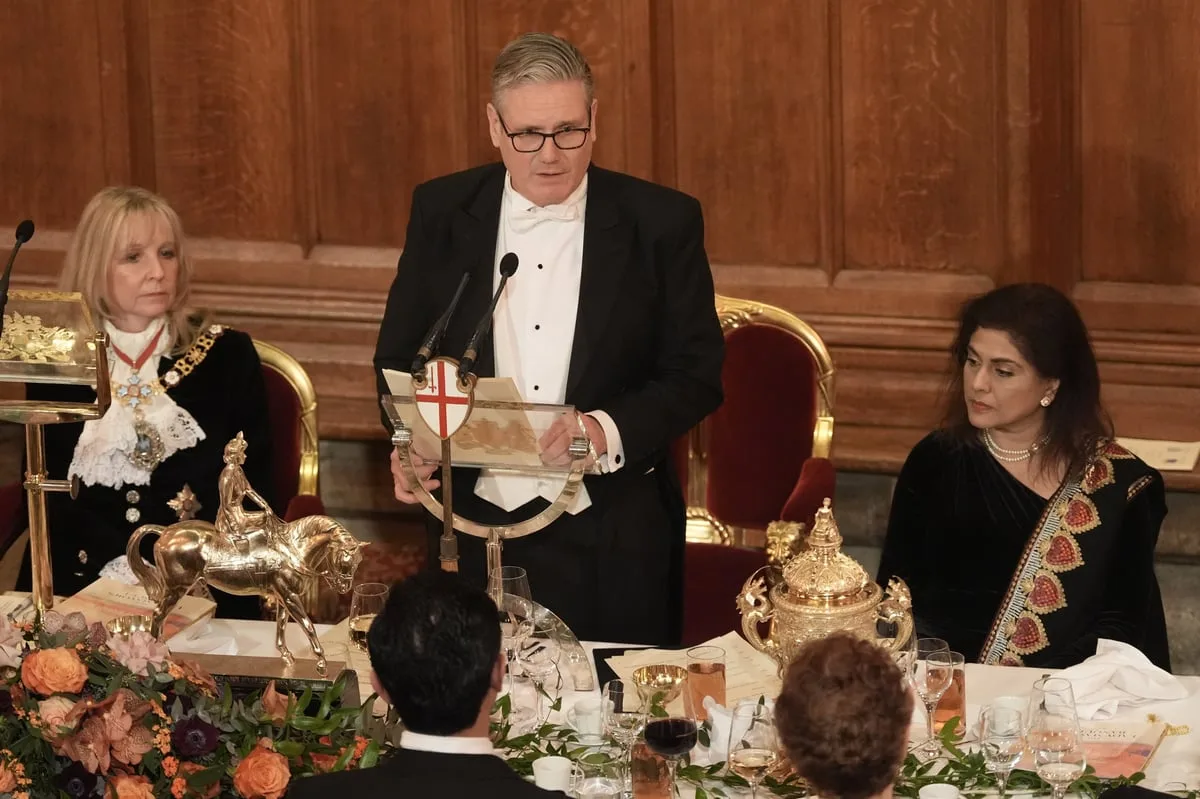
Prime Minister Sir Keir Starmer has called on Britain to embrace internationalism rather than retreat from a “chaotic world”, in his annual Guildhall speech on foreign policy. He criticised opposition politicians for offering a “corrosive, inward-looking attitude” and accused those advocating leaving the European Convention on Human Rights or Nato of peddling “grievance rather than hope” and “a declinist vision of a lesser Britain”.
Starmer argued that the world is “more dangerous and unstable than at any point for a generation” and that international events directly affect British lives. He said: “In these times, we deliver for Britain by looking outward with renewed purpose and pride, not by shrinking back. In these times, internationalism is patriotism.”
The Prime Minister defended his active foreign policy, which includes deals with the US, India and the EU, and leading the “coalition of the willing” in support of Ukraine. He described his approach as “the biggest shift in British foreign policy since Brexit” and “a decisive move to face outward again”.
On Brexit, Starmer said he would “always respect” the vote but criticised how it was “sold and delivered”, claiming “wild promises were made to the British people and not fulfilled”. He also defended the Government’s thaw in relations with China, rejecting a “binary choice” between the “golden age” under David Cameron and the “ice age” under recent Conservative PMs. He stated that failing to engage with China would be “a dereliction of duty”.
Conservative shadow foreign secretary Dame Priti Patel responded by calling Starmer “Beijing’s useful idiot in Britain”, accusing him of a “naive one-way street” that puts the UK at risk. She claimed his “love letter to the Chinese Communist Party” was a desperate ploy for economic growth following his “Budget of lies”.




