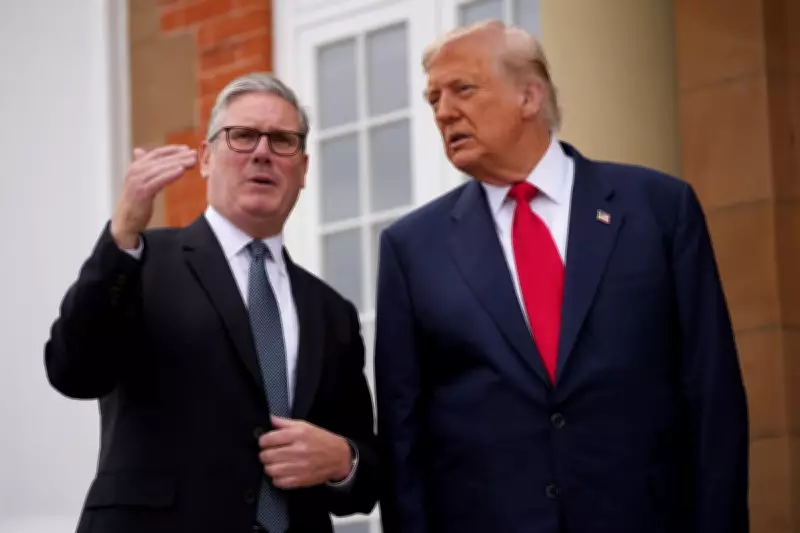
Starmer Issues Blunt Rebuke of Trump's Iran Rhetoric
UK Prime Minister Sir Keir Starmer has delivered a sharp criticism of US President Donald Trump's threats to "wipe out a whole civilisation" in the ongoing conflict with Iran. In an interview with ITV's Robert Peston, Sir Keir emphasised that such language starkly contradicts the core values and principles held by the United Kingdom.
A Stark Contrast in Diplomatic Approach
"They are not words I would use, ever use, because I come at this with our British values and principles," Sir Keir stated firmly. This pointed remark underscores a significant divergence in diplomatic tone between the two allied nations, highlighting the Prime Minister's commitment to a more measured and principled foreign policy stance.
The Prime Minister's comments emerge at a sensitive juncture, just ahead of the scheduled state visit to the United States by King Charles and Queen Camilla later this month. During this high-profile trip, the royal couple are anticipated to meet with President Trump, potentially adding a layer of diplomatic complexity to the already tense international relations.

Broader Calls for Regional De-escalation
Beyond addressing the inflammatory rhetoric, Sir Keir also advocated for concrete steps to reduce tensions in the Middle East. He explicitly called for the immediate reopening of the strategically vital Strait of Hormuz, a critical chokepoint for global oil shipments whose closure has exacerbated regional instability.
Furthermore, the Prime Minister urged Israel to halt its bombing campaigns in Lebanon, warning that such military actions are dangerously undermining the fragile ceasefire currently in place. He expressed concern that these operations could trigger a wider escalation, jeopardising precarious peace efforts across the region.
Uncertainty Surrounding Ceasefire Details
Adding to the complexity, Sir Keir admitted that the full specifics of the ceasefire agreement negotiated between Iran and the United States remain unclear to him and other allied nations. This lack of transparency, he suggested, complicates coordinated international responses and fosters an environment of uncertainty, making it harder to build a sustainable and peaceful resolution to the conflict.
The Prime Minister's forthright statements signal a clear intent to uphold what he defines as British diplomatic values—prioritising dialogue, restraint, and multilateral cooperation over aggressive posturing. This stance sets a distinct tone for the UK's foreign policy direction under his leadership, particularly in managing relations with powerful allies like the United States during periods of international crisis.