
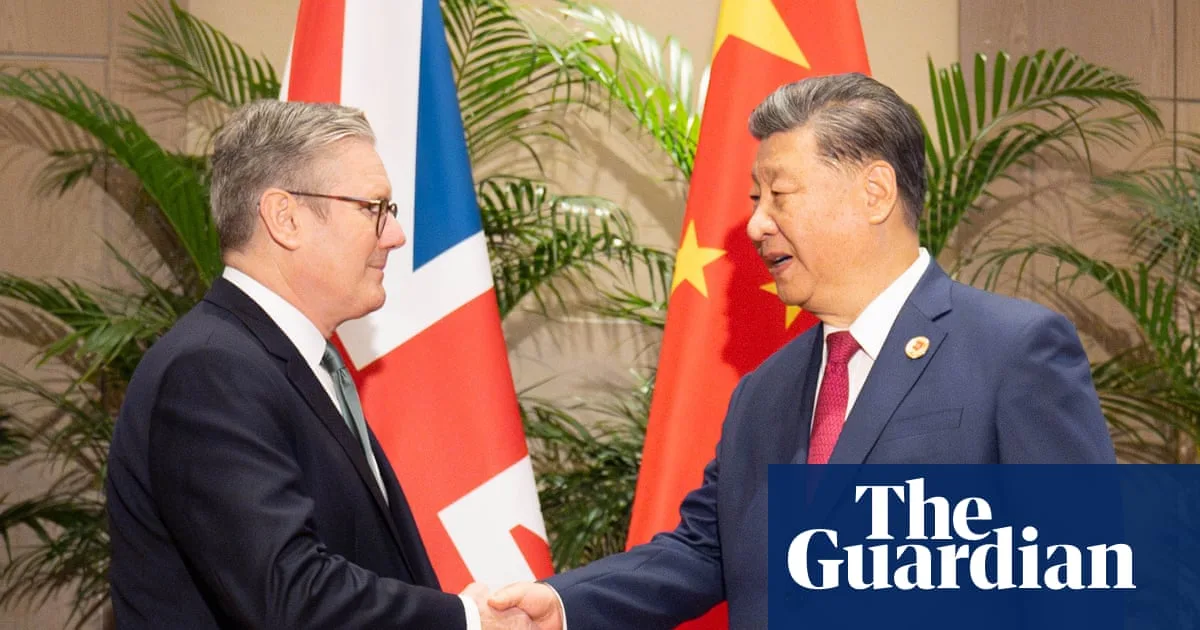
Prime Minister Keir Starmer has pledged to remain 'clear-eyed and realistic' about the national security threat posed by China as he travels to Beijing for the first visit by a UK leader in eight years. Speaking before his departure, Starmer emphasised the need for 'stability and clarity' in the UK's approach to China, criticising what he described as years of 'inconsistency' under the previous Conservative government.
Starmer is set to meet Chinese President Xi Jinping and Premier Li Qiang on Thursday for talks focused on economic ties. Downing Street said the prime minister would maintain 'guardrails' on national security while pursuing trade opportunities, arguing that China, as the world's second-largest economy and the UK's third-largest trading partner, supports 370,000 British jobs.
The visit has drawn criticism from the Conservatives, with shadow foreign secretary Priti Patel accusing Starmer of 'bending over backwards to appease Beijing' and lacking the backbone to stand up for Britain. Patel cited concerns over China's alleged recruitment of informants in parliament, harassment of Hong Kong activists, and cyber-attacks.
However, a Downing Street source defended the trip, stating that refusing to engage with China would be 'a staggering dereliction of duty' that would make the British people less safe and cut off economic opportunities. The source noted that other Western leaders, including US President Donald Trump and French President Emmanuel Macron, have also engaged with China in recent years.
Starmer is accompanied by a delegation of about 60 British businesses and cultural organisations, including HSBC, GSK, Jaguar Land Rover, and the National Theatre. The prime minister argued that a pragmatic relationship with China is 'firmly in our national interest,' even while raising areas of disagreement such as human rights abuses.




